

Sustainable Nitte
SUSTAINABLE CITIES AND COMMUNITIES
PREAMBLE.png)
Sustainable Development Goal 11 (SDG 11) seeks to make cities and human settlements inclusive, safe, resilient, and sustainable. This goal addresses the complex and interconnected challenges arising from rapid urbanization, including environmental degradation, inadequate public infrastructure, widening socio-economic disparities, and increased vulnerability to climate-related risks. With the global urban population projected to grow significantly in the coming decades, there is an urgent need for integrated and forward-looking strategies that promote sustainable urban development while enhancing the quality of life for all residents. Institutions such as Nitte, with a diverse portfolio encompassing education, healthcare, and community-oriented initiatives, play a crucial role in translating the vision of SDG 11 into actionable outcomes at the local level. Through a comprehensive approach that integrates academic programs, public health services, sustainability initiatives, and community engagement, Nitte contributes meaningfully to the development of inclusive and resilient communities.
This report provides an overview of Nitte’s active engagement with SDG 11, highlighting a series of well-planned events, campaigns, and programs that reflect its sustained commitment to sustainable urban development. From fostering environmental awareness and promoting effective waste management practices to addressing key urban challenges such as noise pollution and healthcare accessibility, Nitte’s initiatives demonstrate how localized actions can effectively align with and advance global sustainability goals. By encouraging collaboration among students, faculty, local communities, and governmental bodies, Nitte exemplifies a holistic and participatory model of urban sustainability. These efforts not only respond to immediate local needs but also contribute to the broader objective of building cities that are more equitable, livable, and resilient to future challenges. In this way, Nitte stands as a model for how educational institutions can champion the principles of SDG 11 and inspire meaningful transformation at the community level.

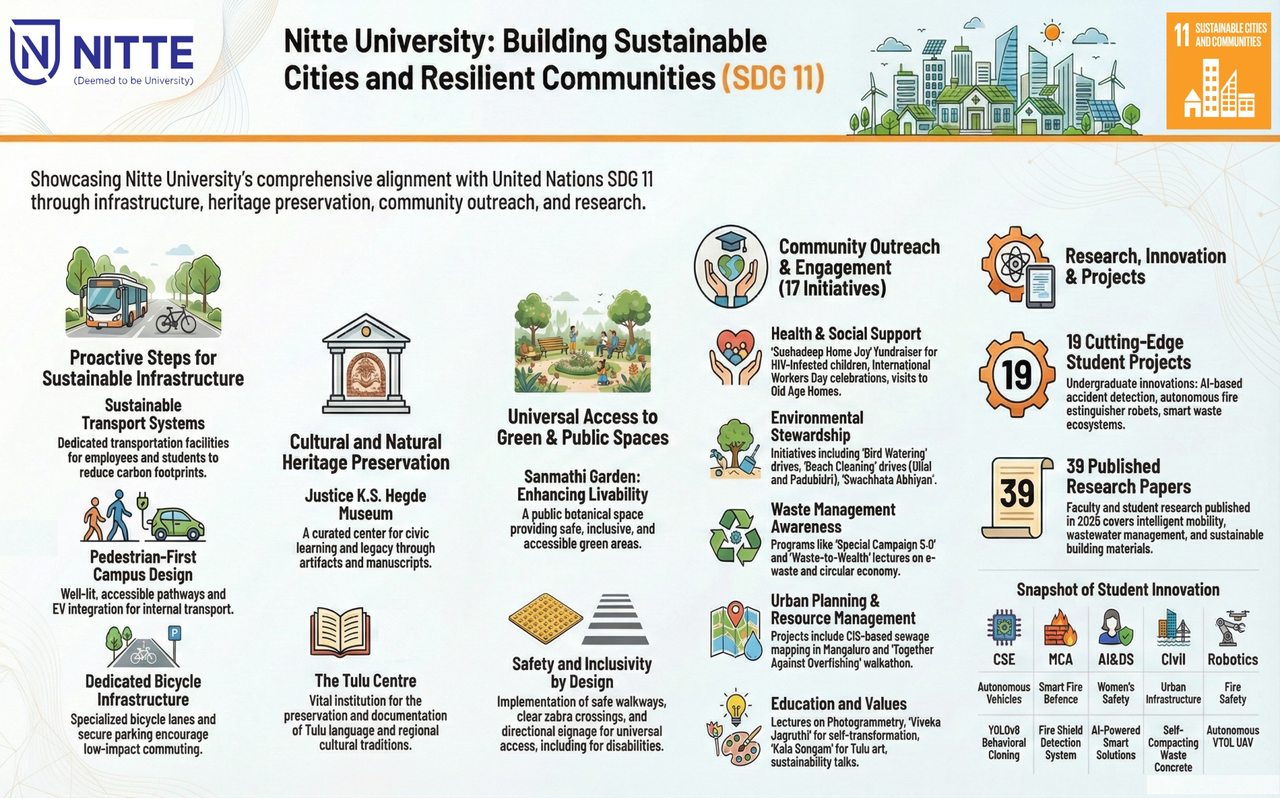
PROACTIVE STEPS TAKEN BY NU
Affordable and Sustainable Transport Systems
- Infrastructure and Amenities for University Employees: Nitte is committed to creating a supportive and inclusive work environment by prioritizing employee comfort, accessibility, and well-being. As part of its welfare initiatives, the University provides free college bus transportation to staff across its constituent colleges, ensuring safe and convenient commuting while promoting sustainable mobility through reduced private vehicle use and lower carbon emissions. In addition, staff quarters are provided to faculty and staff requiring accommodation, offering a secure on-campus living environment that fosters community, improves work–life balance, and encourages active participation in university activities. Through these facilities, Nitte demonstrates its commitment to employee welfare, institutional sustainability, and the objectives of Sustainable Development Goal 11 (SDG 11).
- Pedestrian Pathways and Electric Vehicles: Development and maintenance of well-lit, accessible pedestrian pathways across the constituent college campuses to encourage walking and reduce reliance on motorized transport. Promotion and integration of electric vehicles for internal campus transport, including electric shuttles or charging infrastructure for personal electric vehicles.
- Bicycle Infrastructure: Creation of dedicated bicycle lanes and secure parking facilities to encourage cycling.
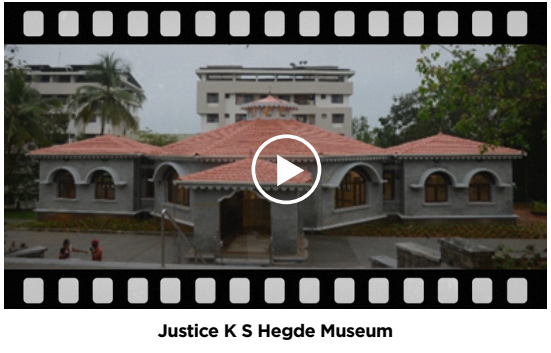
- Advancing Inclusivity through Heritage and Education: The Justice K.S. Hegde Museum is dedicated to honouring the life and legacy of Justice K.S. Hegde, an eminent jurist, parliamentarian, and former Speaker of the Lok Sabha. Located within the campus of Nitte (Deemed to be University), the museum showcases a curated collection of artifacts, photographs, manuscripts, awards, and personal memorabilia that trace his journey from a rural background to a distinguished national leader. The exhibits highlight his commitment to justice, democracy, and human rights, while interactive displays and guided tours make the museum an engaging centre for civic learning, legal awareness, and social inspiration.
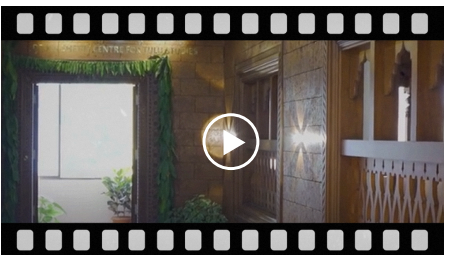
- Tulu Centre: The Tulu Centre plays a vital role in preserving and promoting the Tulu language and culture. The documentation includes activities from 2024 onwards, potentially linking to their YouTube channel or other digital archives to highlight their work.
- Provide Universal Access to Safe, Inclusive and
Accessible Green and Public Spaces
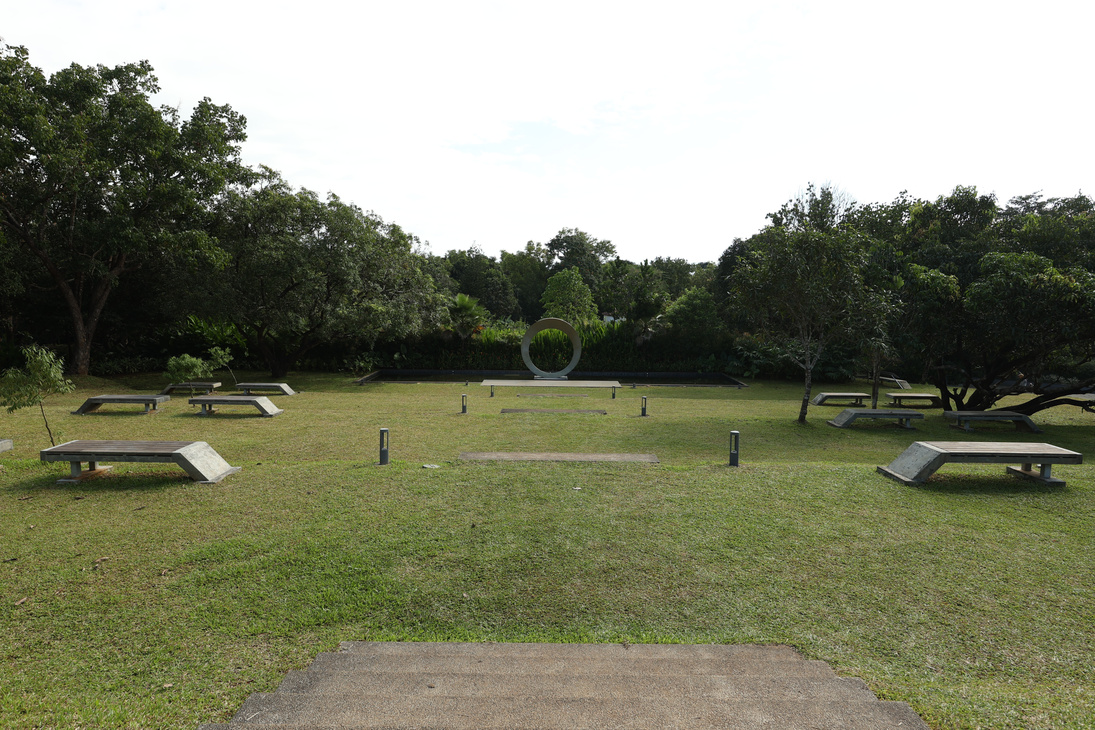
Enhancing Urban Liveability through Public Green Spaces: The garden situated on the campus stands as a vibrant symbol of nature’s harmony, offering visitors a refreshing escape into greenery and tranquillity. Spread across several acres, this beautifully landscaped botanical haven is home to a rich diversity of plant life—ranging from ornamental flowers to majestic trees— that together create a soothing and rejuvenating environment. Designed to provide both aesthetic appeal and ecological value, the garden serves as a peaceful refuge from the fast pace of urban life. Beyond its scenic charm, the garden actively engages the local community by organizing educational workshops, awareness drives, and eco-focused events that foster a deeper understanding of environmental stewardship and sustainable living. Its ongoing commitment to biodiversity conservation and public learning underscores its role as more than just a green space—it is a living classroom and a community hub. Open to all and free of charge, the botanical garden reflects the spirit of inclusivity and the importance of accessible natural spaces in building sustainable urban communities.
Cultural and Natural Heritage
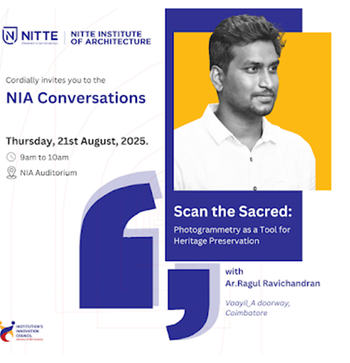
NIA Conversations Series - Promoting Cultural Heritage
As part of the NIA Conversations series, on 21st August 2025 at Nitte Institute of Architecture, Ar. Ragul Ravichandran, founder of Vaayil, A Doorway, delivered a lecture on “Scan the Sacred: Photogrammetry as a Tool for Heritage Preservation. ” He highlighted his work documenting over 194 heritage structures across India using photogrammetry, drone mapping, and 3D modelling. Through engaging case studies and 3D prototypes, he demonstrated how technology supports conservation efforts, including contributions to the UNESCO World Heritage nomination of the Hoysala temples. The session was both technically enriching and inspiring, emphasizing innovative approaches to preserving cultural heritage.
Beach Cleaning Drive
Sustainable Cities and Communities, the NSS Unit of A.B. Shetty Memorial Institute of Dental Sciences organized a Beach Cleaning Drive at Ullal Beach on 26th October 2025 under the Swachhata Action Plan – Special Campaign 5.0, as directed by the Ministry of Youth Affairs & Sports, GoI. Around 40 NSS volunteers actively participated. The drive was inaugurated by Mr. Santosh Kumar D, Sub-Inspector, Ullal Police Station, who encouraged students to promote cleanliness and community responsibility.
Awareness program on “Special Campaign for Disposal of Pending Matters 5.0”
Department of Oral & Maxillofacial Pathology & Oral Microbiology, in association with the NSS Unit of ABSMIDS, organized an awareness program on “Waste-to-Wealth” under the Special Campaign for Disposal of Pending Matters 5.0 on 24th October 2025 at Avishkar Auditorium.
Students contribute to Major GIS-Based Sewage Mapping Project in Mangaluru
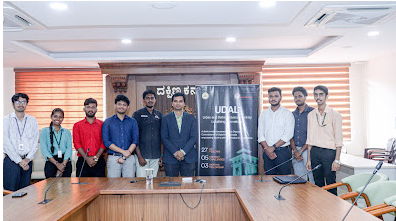
Three students from Nitte University — Shresthi and Avyaya Sharma P and Vasavi Nagaraj Joshi are contributing to the Digital Cartography (DC) Project focused on mapping Mangaluru’s Underground Drainage (UGD) network. The project is being carried out in Wards 37, 38, and 40 of Mangaluru under the guidance of AEE M.N. Shivalingappa (Mangalore City Corporation) and Project Manager Ananya A. Bangera, led by the Dakshina Kannada DC Office and co-organised by InUnity (CEOL) under the UDAL Project. Over 933 manholes have been digitally mapped using GIS and the QField app, contributing to improved urban drainage management.
Nitte’s initiatives in education, healthcare, and environmental sustainability reflect a holistic and inclusive approach to achieving Sustainable Development Goal 11—Sustainable Cities and Communities. The university actively collaborates with local stakeholders to address key urban challenges such as noise pollution, waste management, affordable healthcare, and access to green spaces. Efforts like, public botanical gardens, and mobile health camps exemplify its commitment to inclusive infrastructure and community well-being. Through cultural preservation projects like the Justice K.S. Hegde Museum and eco-friendly campus practices, Nitte promotes sustainable living and civic engagement. These integrated actions highlight the power of local institutions in shaping resilient, inclusive, and sustainable urban futures. Achieving SDG 11 requires a concerted effort to transform our cities and communities into sustainable, inclusive, and resilient spaces. The documentation and awareness initiatives outlined in this report are crucial for tracking progress and fostering continued engagement.