
Sustainable Nitte
RESPONSIBLE CONSUMPTION AND PRODUCTION
PREAMBLE.png)
Sustainable Development Goal (SDG) 12 focuses on promoting responsible consumption and production patterns to ensure optimal use of natural resources, reduction of waste, and minimization of environmental impacts. With global material consumption exceeding 100 billion tonnes annually and recycling rates remaining critically low, sustainable resource management has become an urgent global priority. Unsustainable production systems, rising food waste, and increasing electronic and plastic waste pose significant environmental, economic, and social challenges.
During 2025, governments and institutions worldwide strengthened commitments toward circular economy principles, extended producer responsibility, sustainable procurement, and climate-conscious lifestyles. In India, national initiatives such as the Lifestyle for Environment (LiFE) Mission continued to encourage environmentally responsible behaviors at individual and institutional levels. Higher education institutions play a pivotal role in translating these policy frameworks into practice through education, innovation, and community engagement.
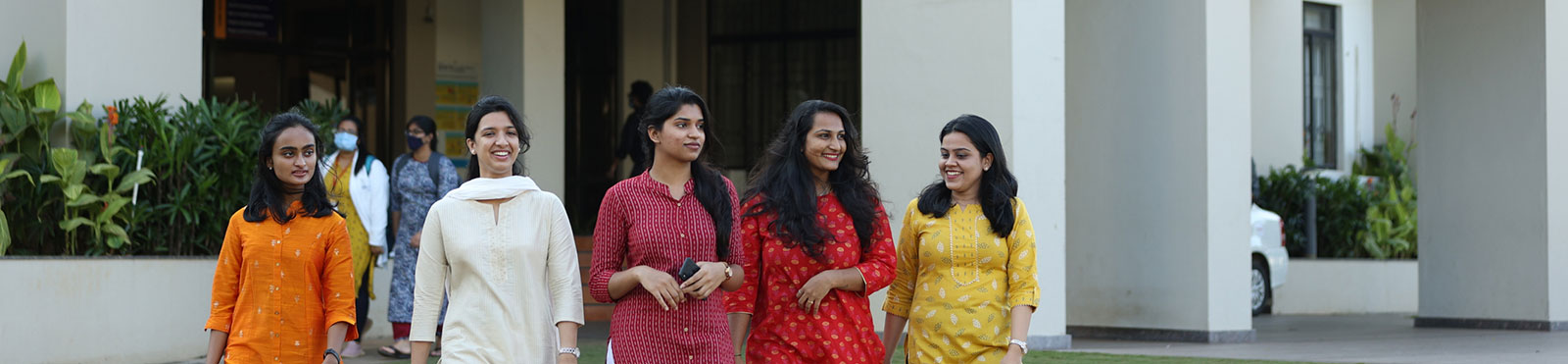
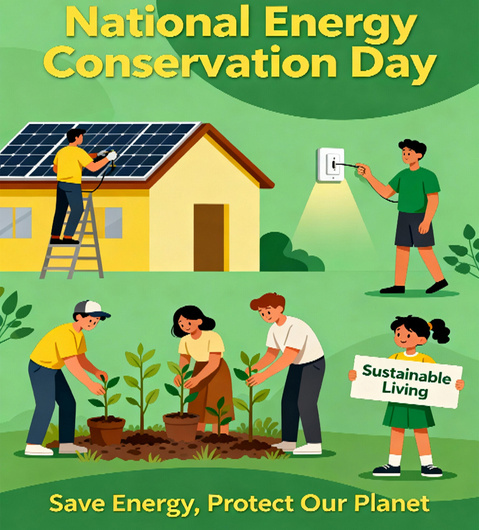
In alignment with these priorities, Nitte (Deemed to be University) actively implemented SDG 12–oriented initiatives during 2025 to promote efficient resource utilization, waste minimization, and sustainable campus practices. The University emphasized waste segregation, reduced use of paper and single-use plastics, encouraged eco-friendly mobility, and fostered awareness on sustainable consumption among students and staff. These initiatives contributed to cultivating environmentally responsible behavior and strengthening institutional sustainability practices.
PROACTIVE STEPS TAKEN BY NITTE DU
Saving paper:
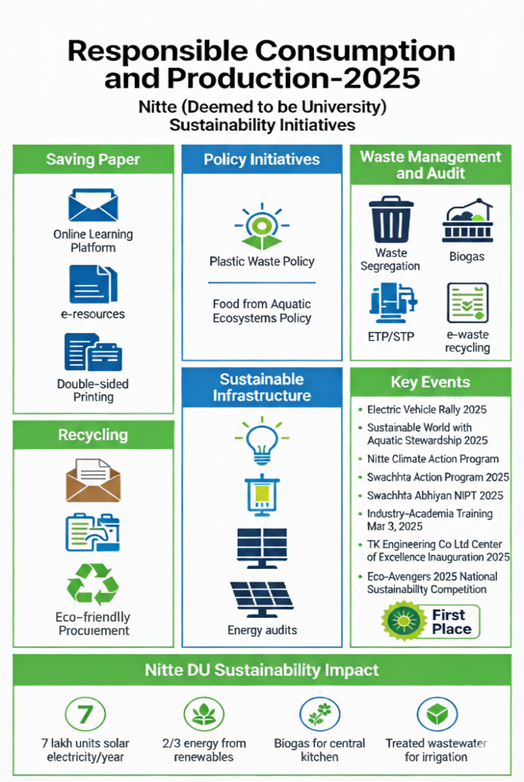
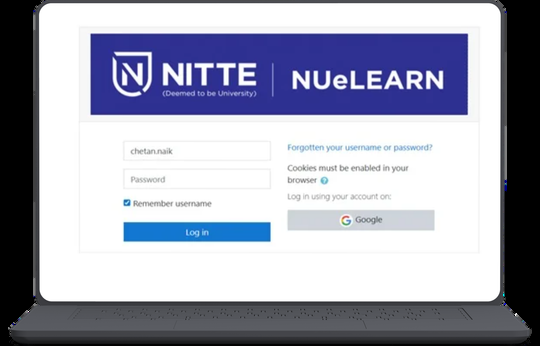
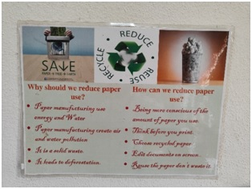
To reduce paper consumption, the University has implemented multiple eco-friendly digital practices. Official communications are predominantly conducted through email, minimizing printed correspondence. Academic activities are supported by the NUeLearn online learning management system, enabling digital teaching, learning, and assessment. Students are encouraged to use electronic devices for academic purposes. The Central Library has strengthened access to e-resources to promote paperless reading and research. Faculty members utilize the NUeLearn platform for online quizzes and uploading lecture materials, reducing the need for printed handouts. When printing is unavoidable, both sides of the paper are used. Draft documents are printed on previously used one-side blank sheets. Used cardboard boxes and plastic containers from medical supplies are systematically collected. These materials are disposed of through authorized recycling vendors, supporting sustainable waste Management practices.
Recycling
Paper waste, cardboard boxes, and plastic cans generated on campus are systematically channelized to certified vendors for recycling. The Purchasing Department actively promotes the use of eco-friendly materials that are recyclable or made from recycled content. It also plays a proactive role in ensuring responsible procurement practices by minimizing redundancy in purchases and preventing the under-utilization of materials and equipment.
Policy initiatives
Policy on Reducing Plastic Waste: Nitte (Deemed to be University) is committed to minimizing plastic waste through systematic reduction, reuse, and recycling practices across the campus. The University has implemented targeted initiatives and policies to restrict and gradually eliminate the use of plastic materials. Recognizing the extensive role of plastic in daily operations, the institution acknowledges that achieving complete plastic-free status is challenging. Despite these limitations, sustained efforts are made to reduce plastic dependency wherever feasible. These initiatives reflect the University’s commitment to responsible waste management and environmental sustainability.
http://nitte.edu.in/naac/2023/THE_IMPACT/Policies/plastic_Waste_policy.pdf
Policy on Food from aquatic ecosystems: Food from aquatic ecosystems include fish, shellfish, seaweeds, crustaceans, molluscs, algae, sea vegetables, and fish eggs. Fish and aquatic food systems are recognized as key sources to enhance food production and nutritional security. However, unsustainable use of aquatic ecosystems can lead to environmental degradation and collapse of established biodiversity and ecosystems. Currently, Nitte DU campuses does not serve food from aquatic ecosystems. This policy is drafted to ensure that the food on campus that comes from aquatic ecosystems is sustainably harvested in the event of introducing seafood/food from aquatic ecosystems on campuses in the future.
http://nitte.edu.in/naac/2023/THE_IMPACT/Policies/plastic_Waste_policy.pdf
Waste management and audit
Nitte (Deemed to be University) is dedicated to implementing environmentally responsible waste management practices. Through a well-structured approach, the university aims to reduce its environmental footprint, minimize landfill contributions, and cultivate a culture of sustainability among students and staff.
Solid waste:
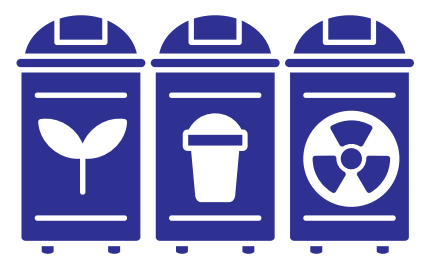
The university follows a structured waste segregation system, categorizing waste into biodegradable, non-biodegradable, and hazardous waste. Vermicomposting is a primary method for biodegradable waste management, utilizing earthworms to convert organic waste into nutrient-rich compost, which is used for landscaping and gardening. Biodegradable waste is composted in campus pits, non-biodegradable waste is sent to authorized recyclers, and hazardous waste is handled as per safety guidelines.
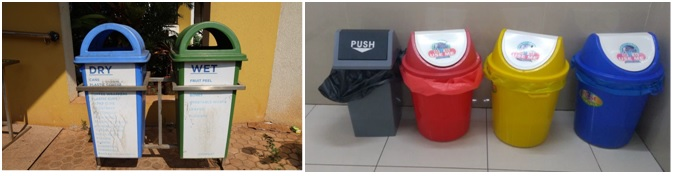
Promoting Sustainable Waste Management Through Campus Segregation Bins
Waste segregation bins across campus promote responsible waste management by encouraging the separation of different types of waste such as dry, wet, recyclable, and general trash. This system helps reduce landfill waste and supports recycling and composting efforts, conserving natural resources and minimizing environmental pollution. Clearly labeled and color-coded bins make it easy for students, staff, and visitors to dispose of waste correctly, fostering a culture of sustainability and cleanliness. By adopting these practices, the campus community contributes to efficient resource use and environmental protection, while raising awareness about the importance of reducing waste and promoting eco-friendly habits in everyday life.
Biogas Plant: A 200-liter biogas digester at the university campus converts organic waste into biogas, which is used in the Central Kitchen.
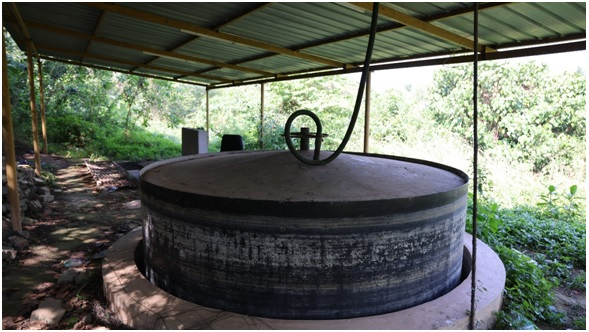
Biogas plant at central kitchen
E waste: E-waste, including old computers, printers, and other electronics, is collected separately and handed over to authorized recyclers for safe, compliant disposal.
Nitte (Deemed to be University) has implemented a comprehensive waste management system aligned with global sustainability standards. Through source segregation, municipal collaborations, and innovative reduction strategies, the University sets a benchmark in responsible waste disposal. By adopting the 3R principles—Reduce, Reuse, and Recycle—it promotes a green and sustainable campus environment.
Special Campaign for Disposal of Pending Matters 5.0
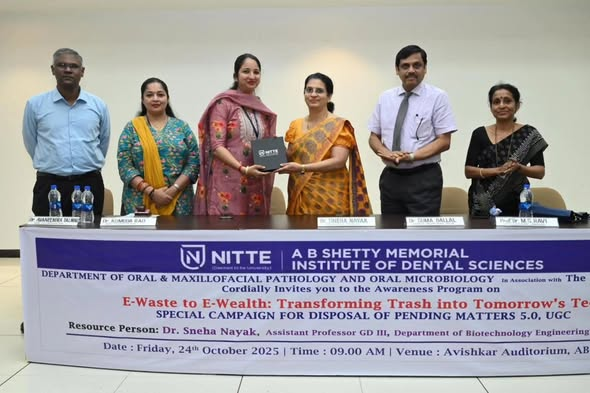
The Department of Oral & Maxillofacial Pathology & Oral Microbiology, in association with the NSS Unit of ABSMIDS conducted an awareness program on “Special Campaign for Disposal of Pending Matters 5.0” with the theme, Waste-to-Wealth on 24th October 2025 at Avishkar Auditorium.
Beach Cleaning Drive
Promoting responsible environmental practices and sustainable waste management, the NSS Unit of AB Shetty Memorial Institute of Dental Sciences, Nitte (Deemed to be University), organized a Beach Cleaning Drive at Ullal Beach on 26th October 2025. The initiative was conducted as part of the Special Campaign 5.0 Activities under the Swachhata Action Plan, in accordance with the directive of the Ministry of Youth Affairs and Sports, Government of India. The drive focused on reducing coastal pollution, encouraging mindful waste disposal, and fostering a sense of environmental responsibility among the student community. Around 40 NSS student volunteers actively participated, contributing to the restoration and cleanliness of the beach ecosystem
Beach cleaning at Someshwar beach, Ullal
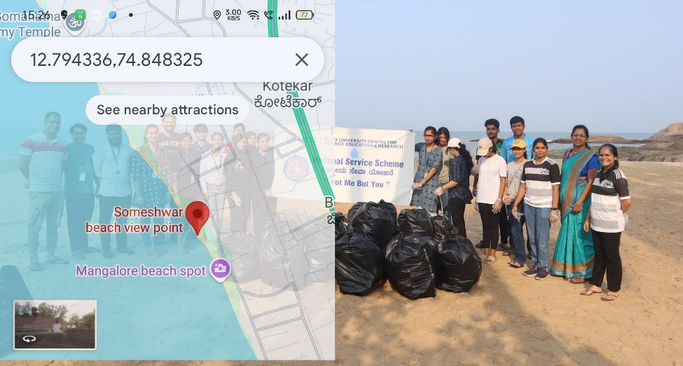
In alignment with the principles of responsible consumption and sustainable environmental practices, the NSS Cell of NUCSER commemorated Earth Day on 19th April 2025 through a beach cleaning initiative at Someshwar Beach, Ullal. This effort underscored the collective responsibility to reduce waste generation and protect marine ecosystems from the growing threat of pollution. The initiative brought together dedicated student volunteers from NUCSER along with staff members from COE and the Aquamarine Project, Government of Karnataka. Equipped with gloves and biodegradable waste bags, participants systematically collected plastic debris and other non-biodegradable pollutants, demonstrating practical action toward minimizing environmental impact.