

Sustainable Nitte
PEACE, JUSTICE AND STRONG INSTITUTIONS
PREAMBLE.png)
At Nitte (Deemed to be University), we recognize that sustainable development is rooted not only in scientific and technological advancement but in the foundations of peace, justice, transparency, and resilient institutions. Sustainable Development Goal 16 which champions peace, justice, and strong institutions resonates deeply with our mission to cultivate responsible leaders and ethical professionals. We commit to fostering a safe, inclusive, and equitable campus and community where conflicts are resolved through dialogue, justice is accessible to all, and institutional frameworks uphold integrity and accountability. Through education, research, and community engagement, Nitte DU strives to strengthen the rule of law, protect human rights, and empower every individual with dignity and respect. In pursuit of SDG 16, we pledge to nurture a culture of ethical leadership, transparent governance, and societal well-being contributing to a just and peaceful world for present and future generations.
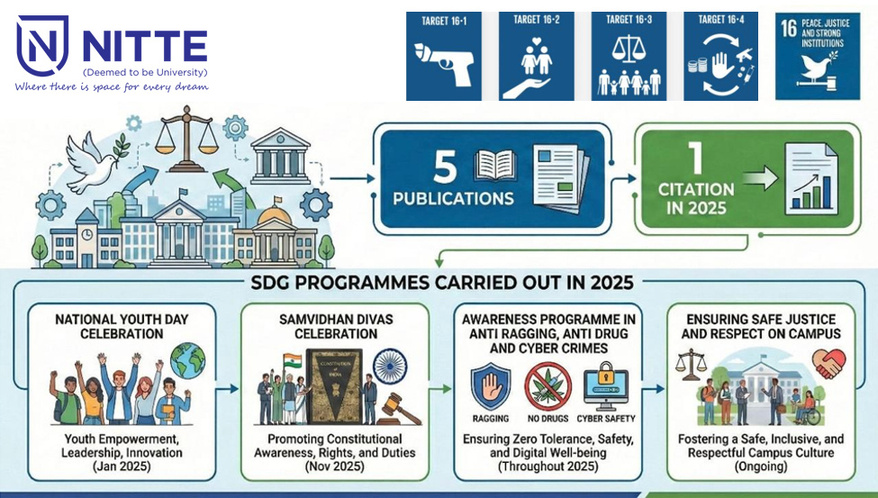
PROACTIVE STEPS TAKEN BY NU
Enhancing Community Safety and Emergency Readiness
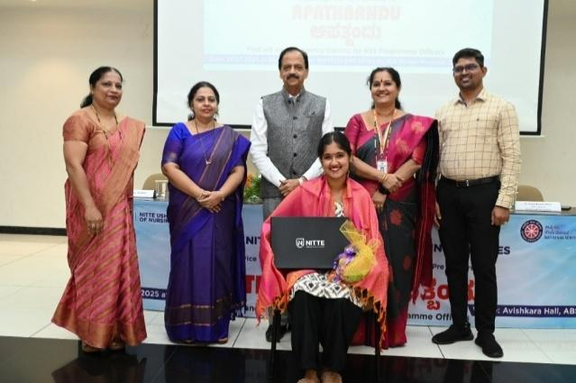
APATHBANDHU – First Aid and Emergency Training, conducted on 25 July 2025 at NU-MEDISIM, KS Hegde Hospital, underscores a commitment to building safe, responsive, and resilient communities. By training 30 NSS Programme Officers under the guidance of medical experts, the initiative strengthened institutional capacity to handle emergencies with efficiency and responsibility. The handson approach enhanced practical skills, encouraged proactive response, and fostered a culture of preparedness and public service. Such efforts contribute to strengthening community trust, improving public safety mechanisms, and reinforcing the role of well-prepared institutions in ensuring collective well-being.
Strengthening Democratic Dialogue and Media Accountability
The Debate on “Media Accountability and Substance Use, ” conducted on 16 August 2025 at Paneer Campus by the Nitte Institute of Communication under the Nasha Mukt Bharat Abhiyaan, served as a platform for advancing responsible dialogue and civic awareness. With Mr. Jayanth Kodkani as judge and guidance from Prof. Dr. P. V. Satya Prasad, the event encouraged students to critically examine the intersection of media, law, and societal wellbeing. By engaging in discussions on media ethics, legal frameworks, and social justice, participants developed a deeper understanding of the importance of transparency, accountability, and informed decision-making. The initiative promoted a culture of critical inquiry and responsible communication, reinforcing the role of youth in upholding fairness, integrity, and public trust within society.
Ensuring Safety, Justice, and Respect on Campus
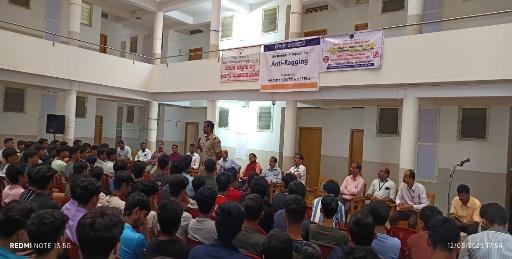
Nitte University organized the Anti-Ragging Week Programme on 12 August 2025 to foster a safe and respectful campus environment. Mr. Prasanna M. S., Sub-Inspector of Karkala Rural Police Station, addressed nearly 500 students, highlighting the legal implications of ragging and the importance of responsible conduct. The programme emphasized mutual respect, awareness of legal safeguards, and the shared responsibility of institutions and students in maintaining a secure academic space. It reinforced the values of fairness, safety, and accountable governance, contributing to a culture of trust and discipline within the campus community.
Preventing Drug Abuse through Institutional Awareness
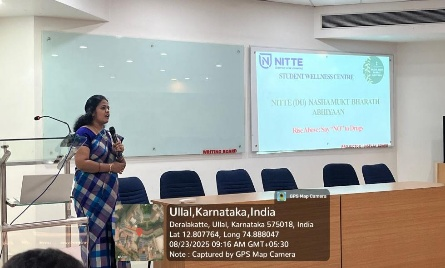
The Nasha Mukt Abhiyaan Awareness Session, held on 23 August 2025 at Chinthana Hall, KS Hegde Hospital, was organized by the Nitte Institute of Speech and Hearing. The session was led by Ms. Pamidigantam Raghava Priya, Lecturer and Counsellor, with active participation from undergraduate and postgraduate students. The programme focused on raising awareness about substance abuse prevention, encouraging informed decision-making, and promoting responsible behaviour. It contributed to fostering a safe, respectful, and harmonious institutional environment built on well-being, accountability, and collective responsibility.
Anti-Ragging Awareness Week
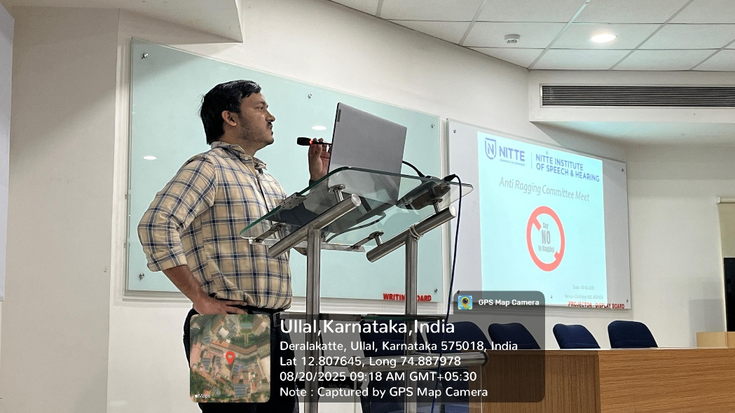
The Nitte Institute of Speech and Hearing observed Anti-Ragging Week from 12th to 20th August 2025, promoting respect, safety, and shared responsibility. Student competitions such as slogan writing, reel-making, logo design, and e-poster creation encouraged awareness and engagement. An awareness session held on 20th August at Chintana Hall highlighted the importance of accountability and inclusive campus practices, with around 145 students and staff participating, reflecting a collective commitment to a safe and respectful academic environment.
Awareness Program on Anti-Ragging, Anti-Drug and Cyber Crimes
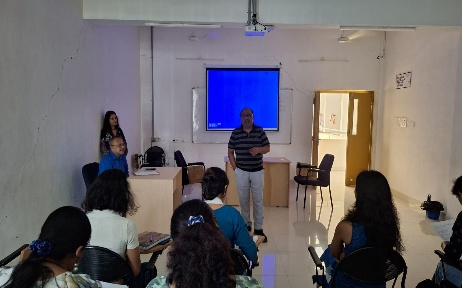
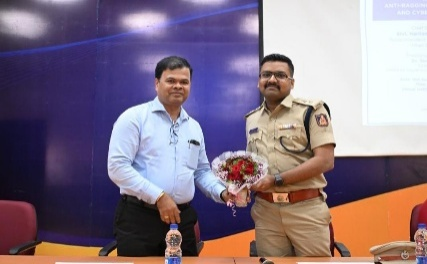
The Anti-Drug and Awareness Committee of JKSHIM organized an awareness programme on 18 September 2025 at the JKSHIM campus. The session was delivered by Mr. Hariram Shankar, IPS, Superintendent of Police, Udupi, and was attended by undergraduate and postgraduate students. The programme addressed key issues such as anti-ragging laws, cybercrime prevention, drug abuse control, and responsible citizenship. It strengthened awareness of legal frameworks, encouraged ethical conduct, and reinforced the shared responsibility of individuals and institutions in ensuring a safe, accountable, and well-governed campus environment.
Counselling for Suicide Prevention: Teachers as Gatekeepers
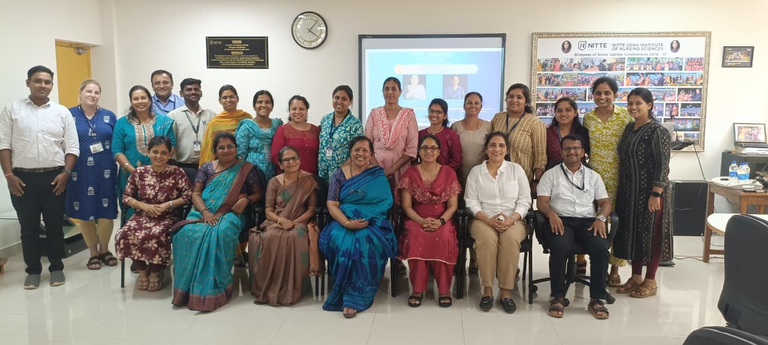
A seminar titled “Counselling for Suicide Prevention: Teachers as Gatekeepers” was conducted on 15 September 2025 at the NUINS Learning Centre. The programme was facilitated by Ms. Usha Rao, Education Consultant, and Ms. Shalini Jenifer Dsouza, Student Counsellor at Fr. Muller Medical College, with participation from faculty members and postgraduate students. The session strengthened institutional capacity for early identification and intervention in mental health concerns, equipping educators with the skills to act as responsible gatekeepers. It promoted an inclusive, supportive, and resilient academic environment, emphasizing care, empathy, and shared responsibility in safeguarding student well-being.
NSS special camp
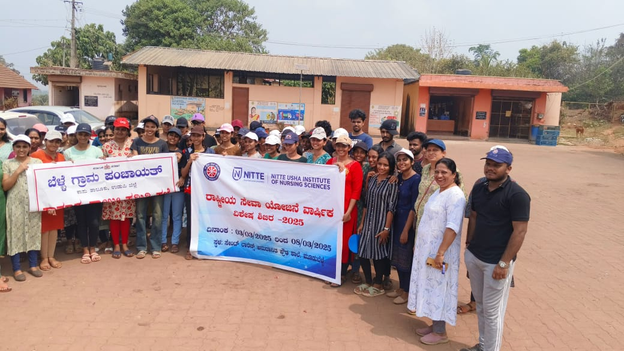
The Annual Special Camp organized by the NSS Unit, NUINS at St. Lawrence Aided High School, Moodubelle, from 3rd to 8th March 2025, served as a platform for community engagement and institutional responsibility. The camp included activities such as environmental cleanliness, infrastructure improvement, community and school awareness programmes, field visits, street plays, first aid training, and personality development sessions. These initiatives promoted civic awareness, responsible behaviour, and active community participation. By fostering collaboration between students, institutions, and the local community, the programme strengthened accountability, encouraged social responsibility, and contributed to building a safe, inclusive, and well-coordinated community environment.
Business Conclave with Policymakers
Nitte University participated as a knowledge partner in the ET Now Business Conclave and Awards 2025 – Mangaluru Edition held on 30 October 2025 at the TMA Pai International Convention Centre, Mangaluru. The event brought together policymakers, industry leaders, entrepreneurs, and academicians to discuss Karnataka’s role in driving inclusive, data-driven, and sustainable growth. The university contributed to shaping discussions on innovation, development, and institutional collaboration, while reinforcing the vision of Mangaluru as an emerging “Silicon Beach” that integrates education, entrepreneurship, and innovation. Student moderators also took part, gaining exposure to industry and policy dialogue and enhancing their leadership and communication skills.
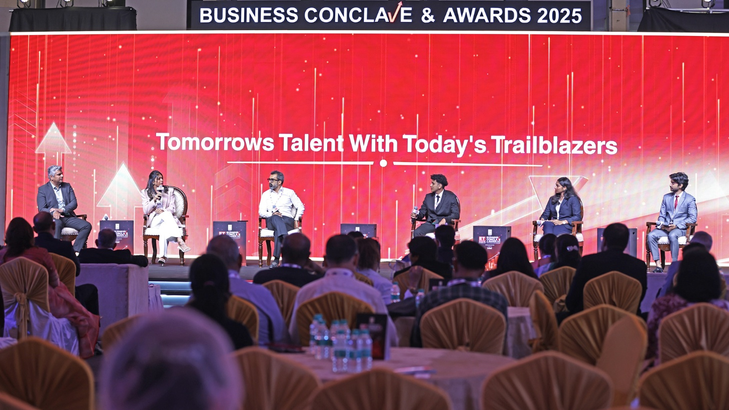
Overall, the conclave highlighted the importance of collaboration between academia and industry in addressing contemporary challenges and supporting regional growth and innovation.
Strengthening institutional responsibility in heritage governance through digital documentation
An academic lecture was conducted on the use of photogrammetry for heritage preservation, focusing on institutional responsibility in safeguarding cultural assets. The session highlighted how heritage structures such as temples, stepwells, tanks, and shrines can be systematically documented using a blend of traditional methods and digital tools. Techniques including photogrammetry, drone mapping, and 3D modeling were presented as effective means for creating accurate digital records of endangered heritage sites. Case studies demonstrated how these tools support informed decision-making and structured conservation planning. The discussion emphasized the role of institutions in ensuring transparent, technology-driven documentation and accountability in heritage governance. It also underscored the importance of evidence-based approaches to protect cultural heritage for future generations.