Relationships with regional NGOs and government for SDG policy
- UMMID initiative in collaboration with the Department of Biotechnology, Ministry of Science and Technology, Government of India
Congenital and hereditary genetic diseases are a significant health burden in India, and hence there is a need for adequate and effective genetic testing and counselling services. In India’s urban areas, congenital malformations and genetic disorders are the third most common cause of mortality in newborns. The diagnostic tests for many of the genetic disorders available in India are at a relatively nascent stage. While antenatal diagnostics for a few genetic diseases are available, these are available in very few hospitals. Considering these facts, the Department, in the year 2019, launched the DBT-UMMID initiative with the objectives of establishing Genetic Diagnostic Units called National Inherited Diseases Administration (NIDAN) Kendras in Government Hospitals, producing skilled clinicians in the area of Human Genetics (Biochemical Genetics, Cytogenetics, Molecular Genetics, Clinical Genetics and Comprehensive Clinical Care), and screening of pregnant women and newborn babies for diagnosis of inherited genetic diseases in aspirational districts to provide comprehensive clinical care.
GOI has launched the ‘Transformation of Aspirational Districts’ initiative, of the 112 identified districts. Wayanad district of Kerala state is one where the health indicators are far below the national average, hence it has been taken up for rapid transformation and inclusive growth of all its citizens.
GOI has chosen Justice KS Hegde Charitable Hospital, a unit of Nitte (Deemed to be University) to establish a Diagnostic Centre for Inherited Disorders, a DBT-UMMID Initiative to screen pregnant women and newborns in the Aspirational District Wayanad-Kerala.
Proposed Objectives:- To establish prenatal screening services at aspirational district hospital for high risk pregnancies and hemoglobinopathies.
- To establish newborn screening services at aspirational district hospital to identify relatively common treatable genetic metabolic disorders and to provide patient care.
- To train the medical officers, nursing staff and other paramedical workers in the genetic screening and counselling of pregnant mothers carrying fetuses with high risk of genetic disorders in order to increase the awareness about hereditary disorders.
Links to publicly accessible description/evidence:https://kshegdehospital.in/news-all.php
- Unnat Bharat Abhiyaan
- Participation in National Health Programs of Government Health Agencies
- National Tuberculosis Elimination Programme (NTEP)
- National AIDS Control Organization (NACO)
- National Programme for Prevention & Control of Cancer Diabetes, Cardiovascular Disease & Stroke (NPCDCS)
- Intensified Mission Indradhanush 5.0 (IMI 5.0)
- National Vector Borne Disease Control Programme (NVBDCP)
- National Oral Health Program (NOHP)
- Research Advisory Committee (RAC) of Central Institute of Brackish Water Aquculture (CIBA)
- Food Safety Risk Assessment Committee (FSRAC) for providing scientific and technical support.
- Research Advisory Committee (RAC) meeting of the Central Institute of Brackishwater Aquaculture (CIBA)
- ICMR-FoodNet Task Force Project: Surveillance of Food-Borne Pathogens in North East India
- Screening committee for DBT- Research Associateship program, Government of India
- National-Level Expert Committee Membership – ICAR NASF
- Membership in FSSAI Expert Committee-I for Approval of Non-Specified Foods and Food Ingredients
- Membership in BIRAC Area Review Panel (ARP) and Technical Evaluation Panel (TEP)
- Membership in the Ministry of Fisheries Expert Panel on Establishing Disease-Free Zones in Aquaculture
- Expert Consultation with the Ministry of Fisheries on Veterinary Health Certificate for Shrimp Exports to the United States
- Expert Membership in FSSAI Food Safety Risk Assessment Committee (FSRAC)
- Strengthening global scientific collaboration on food systems and nutrition through WHO advisory engagement
- ICAR Quinquennial Review Team Meeting to Strengthen CIFT’s Research and Training Roadmap
- WOAH-Led Global Partnership on Responsible Aquaculture Practices
- Strengthening international partnerships in food safety at SFDA, Riyadh
- National Partnership with ICAR-CIBA on aquaculture medicine policy
- Building Partnerships with Government and Regional Stakeholders for SDG-Aligned Food Safety Policies
- Expert contributions by Dr. Karunasagar supported NAAS policy formulation on emerging contaminants and fisheries governance
- Dr. Indrani Karunasagar at AQUAMAP 2025, CUSAT, Kochi, fostering aquaculture health knowledge exchange and collaboration.
- Contributing to SDG goals, Dr. Indrani Karunasagar leads discussions on aquatic disease challenges and preparedness frameworks.
- Dr. Indrani Karunasagar providing expert input into AMR policy strategies and sustainable aquaculture initiatives aligned with SDGs.
- International collaboration at FAO Rome advancing aquatic disease early warning systems.
- Dr. Indrani Karunasagar contributed expert input to FAO-led aquatic disease surveillance roadmap and guideline development.
- Dr. Indrani Karunasagar serves as a Member of the Advisory Committee of the IDSSD
- Collaboration with ICAR–CIFE for Sustainable Aquaculture Capacity Building
- Strengthening Seafood Safety and Sustainable Disease Management through Expert Engagement with ICAR–CIFE
- Knowledge Exchange on Phage Therapy for AMR Mitigation with KSTA, Government of Karnataka
- National Scientific Collaboration for Advancing Marine Nutraceuticals and Sustainable Bioeconomy
- Strengthening Institutional Collaboration through Participation in ICAR–CICFR Quinquennial Review Team
- Strengthening Research Collaboration through Membership in ICAR–IIAB Research Advisory Committee
- Global Knowledge Exchange on Food Safety and Risk Assessment through FSSAI–WHO Collaboration
- Engagement with Regional Organisations on Sustainable Water Management
- Building Partnerships for Sustainable Aquaculture through Aquatic Health Expertise
- Global Knowledge Partnership for Sustainable Fisheries through Blue Horizon 2025
- Fostering Research Partnerships in Human, Animal and Plant Virology through Virocon-2025
- Strengthening Global Aquaculture Networks
- Collaborative Knowledge Contribution to National Fisheries and Veterinary Initiatives
Unnat Bharat Abhiyan is a flagship program of the Ministry for Human Resource Development (MHRD), Government of India, which aims to bring about transformational change in rural development processes by leveraging expertise of Knowledge Institutions. It’s mission is to link the Higher Education Institutions with a set of villages, so that these institutions can contribute to the economic and social betterment of these village communities using their knowledgebase.
Nitte (Deemed to be University) has adopted five villages in Dakshina Kannada and Udupi districts—Manjanady, Belma, Sasihithlu, Neere, and Thokur—under the ‘Unnat Bharat Abhiyaan’. The university is currently assessing the communities' needs to prioritize development plans. By collaborating with government and non-governmental agencies, the university aims to provide its expertise and resources to address these needs effectively.
Links to publicly accessible description/evidence:https://unnatbharatabhiyan.gov.in/list-participating-institutes/210?csrf_uba=59a2fd9d6eb917fbb25738149d5a0ee5&aishe_code=&institute_id=&state_id=15&district_id=&submitSearch="
https://unnatbharatabhiyan.gov.in/baseline-survey?csrf_uba=62e3325d1013d50a64db1319690d91c5&state_id=15&district_id=312&institute_id=469"
https://www.nitte.edu.in/housing-aid.php
NitteDU participates in delivery of National Health Programs coordinated by Government agencies of the Department of Health and family Welfare. These include:
https://nitte.edu.in/health-care-extension.php#nhp
The Indian Council of Agricultural Research reconstituted the Research Advisory Committee (RAC) of Central Institute of Brackish Water Aquaculture (CIBA), Chennai and invited Dr. Iddya Karunasagar to be the Chairman of RAC.
Links to publicly accessible description/evidence:https://ciba.res.in/wp-content/uploads/2025/06/RTI-audit-document-CIBA-Chennai-2024-25.pdf
http://nitte.edu.in/naac/2024/THE_IMPACT/SDG17/1.B_Chairman-CIBA.pdf
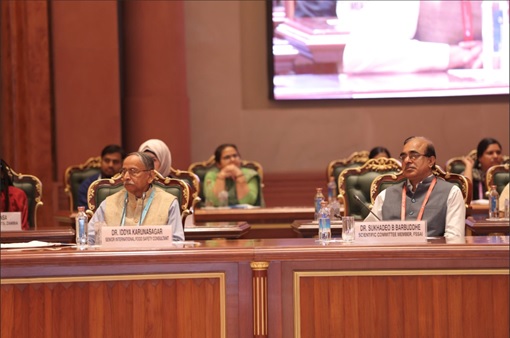
The Food Safety Risk Assessment Committee (FSRAC) has been constituted as a risk assessment body and is responsible for providing technical and scientific support in both normal and emergency situations. The Committee shall provide preliminary risk assessment information to identify emergency situations and their levels of severity, thereby supporting decision-making by the Food Safety Coordination Committee (FSCC) and the Food Safety and Standards Authority of India (FSSAI). Dr. Iddya Karunasagar has been nominated as a Member of the Committee.
Links to publicly accessible description/evidence:https://fssai.gov.in/upload/uploadfiles/files/FSRAC%20reconstituted%20order_28_08_2025.pdf "
http://nitte.edu.in/naac/2025/THE_IMPACT/SDG17/17_FSRAC_Constitution_Order.pdf
The 30th RAC meeting of ICAR CIBA was conducted at CIBA Headquarters during 06th and 7th February 2025 under the Chairmanship of Dr Iddya Karunasagar. The meeting was held at the conference hall of ICAR-CIBA, headquarters Chennai.
Under the Chairpersonship of Prof. Iddya Karunasagar, NITTE University, Mangalore, and International Consultant, FAO, a review meeting was held on 09th to 12th September 2025 at SMIMS, Gangtok, Sikkim.
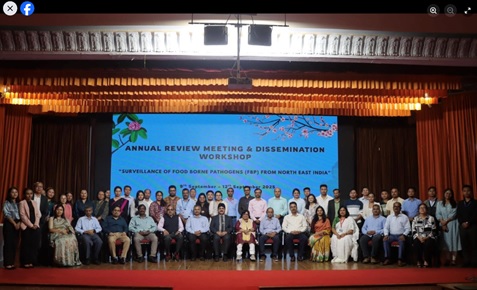
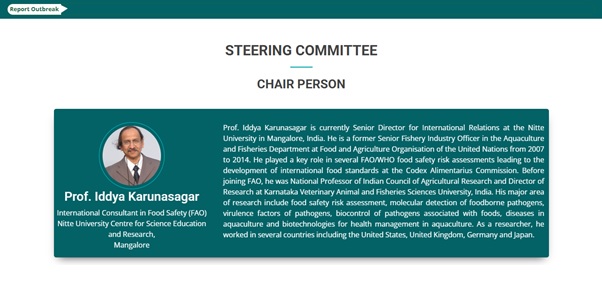
Links to publicly accessible description/evidence:
https://www.icmrfoodnet.in/projectteam
Dr. Indrani Karunasagar has been appointed as a member of the Screening Committee for the DBT Research Associateship Program, established by the Department of Biotechnology, Government of India.
Links to publicly accessible description/evidence:http://nitte.edu.in/naac/2025/THE_IMPACT/SDG17/17_Screening_committee_for_DBT_Research_Associateship_program.pdf
Dr. Iddya Karunasagar was invited by the Indian Council of Agricultural Research (ICAR) to serve as a Member of the Expert Committee for reviewing and recommending research projects and identifying priority areas for funding under the National Agricultural Science Fund (NASF) in the domain of biotic and abiotic stress and quality traits in plants, animals, and fisheries. He participated in the Expert Committee meeting held on 17–18 June 2025, where he evaluated research proposals and contributed to recommendations for strengthening research and development priorities in the fisheries sector.
Dr. Iddya Karunasagar was invited by the Food Safety and Standards Authority of India (FSSAI) to serve as a Member of Expert Committee-I for the approval of non-specified foods and food ingredients. During 2025, he participated in the 20th (7 January), 21st (9 April), 22nd (9 July), and 23rd (7 October) Expert Committee meetings, where he evaluated applications and provided scientific recommendations on the safety, quality, and suitability of products for regulatory approval by FSSAI. His contributions supported evidence-based decision-making and the strengthening of the national food safety regulatory framework.
Dr. Iddya Karunasagar was invited by the Biotechnology Industry Research Assistance Council (BIRAC) to serve as a Member of the Area Review Panel (ARP) and Technical Evaluation Panel (TEP) for evaluating research and innovation proposals in aquaculture and fisheries. During 2025, he participated in panel meetings held on 13–14 February, 22 May, 1–2 July, and 15–16 July, where he reviewed proposals and recommended priority areas for funding to promote technological innovation and entrepreneurship in the aquaculture sector. He was also invited as an Expert Member to undertake a project site evaluation in Hyderabad on 4 December 2025 for assessing a proposal considered for BIRAC funding. Through these roles, he provided strategic recommendations on technological needs and innovation priorities for the aquaculture sector, supporting national biotechnology and entrepreneurship initiatives.
Dr. Iddya Karunasagar served as a Member of the Expert Panel constituted by the Ministry of Fisheries, Animal Husbandry and Dairying, Government of India, on “Establishing Disease-Free Zones in Aquaculture.” He participated in the Second Expert Panel Meeting held on 9 January 2025, where he provided scientific recommendations for strengthening India's aquatic animal health management framework. His contributions included proposing capacity-building programmes for State Departments of Fisheries on the World Organisation for Animal Health (WOAH) requirements and procedures for the recognition and declaration of disease-free status, thereby supporting national initiatives to enhance aquaculture health management and facilitate international trade.
Dr. Iddya Karunasagar was invited by the Ministry of Fisheries, Government of India, to participate in an expert consultation held on 1 April 2025 to finalize the Veterinary Health Certificate for shrimp exports to the United States. During the meeting, he contributed scientific recommendations on India's position regarding veterinary health certification for crustaceans, drawing on evidence generated through the National Surveillance Programme for Aquatic Animal Diseases (NSPAAD). His inputs supported the development of science-based export health certification aligned with international sanitary requirements and strengthened India's regulatory framework for seafood exports.
Dr. Iddya Karunasagar was invited by the Food Safety and Standards Authority of India (FSSAI) to serve as a Member of the Food Safety Risk Assessment Committee (FSRAC) in December 2024 to provide scientific advice on the safety of food products failing regulatory compliance tests. During 2025, he participated in the 3rd (24 January), 4th (12 February), 5th (24 March), 6th (24 April), 7th (19–20 May), and 8th (26 June) Committee meetings. As part of his contributions, he developed a draft framework for microbiological risk assessment, which is proposed for incorporation into the Standard Operating Procedures (SOPs) for Risk Assessment at FSSAI, thereby strengthening the scientific basis of national food safety risk assessment and regulatory decision-making.
Dr. Iddya Karunasagar has been appointed by the World Health Organization as a Member of its Technical Advisory Group on Risk–Benefit Assessment of animal-source foods, contributing to global scientific collaboration on evaluating dietary transitions, including the replacement of red meat with plant-based and aquatic foods, through a series of expert virtual meetings.
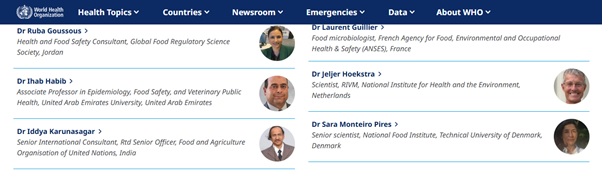
Links to publicly accessible description/evidence:
https://www.who.int/groups/technical-advisory-group-on-risk-benefit-assessment-of-optimal-intake-of-animal-source-foods
The Indian Council of Agricultural Research (ICAR) appointed Dr. Iddya Karunasagar as Chairperson of the Quinquennial Review Team (QRT) for the Central Institute of Fisheries Technology (CIFT). The QRT reviewed CIFT’s work during 2020–2025, with Dr. Karunasagar chairing the first meeting held on December 22–23, 2025. He led the development of a roadmap to enhance CIFT’s role as an international centre for research and training in fishing and fish processing technologies. The recommendations will be submitted to the Director-General, ICAR.
The World Organisation for Animal Health (WOAH) invited Dr. Iddya Karunasagar to be a member of the Ad hoc Expert Group constituted to review and revise Chapter 6.2 of the WOAH Aquatic Animal Health Code. This chapter deals with the prudent and responsible use of antimicrobial agents in aquaculture. The Ad hoc committee held several rounds of online meetings to review the chapter in view of the current situation with respect to diseases in aquatic animals, antimicrobial residues, antimicrobial resistance (AMR), and mitigation of AMR in aquaculture.
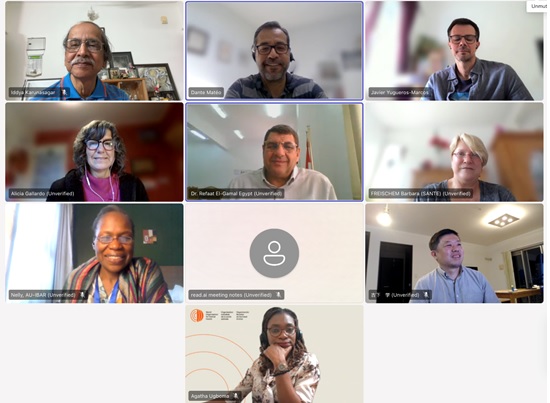
Links to publicly accessible description/evidence:
https://www.woah.org/app/uploads/2025/10/a-ahg-report-chapter-6.2-aquatic-code-29082025-vf.pdf
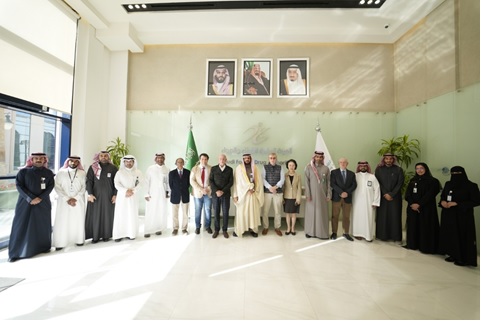
Dr. Iddya Karunasagar was invited by the Saudi Food and Drug Authority to serve as a Member of its International Scientific Advisory Board on Food Safety Risk Assessment. He participated in the Board’s second meeting held in Riyadh, Saudi Arabia, on February 19–20, 2025. During this engagement, Dr. Karunasagar contributed expert guidance on microbiological risk assessment and evaluation, and engaged in focused discussions with SFDA staff. These interactions covered key areas including risk assessment of Pseudomonas aeruginosa in bottled drinking water, laboratory detection methods for Campylobacter and Shigella, strengthening epidemiological linkages, and the application of whole genome sequencing data to predict antimicrobial resistance.
Links to publicly accessible description/evidence:
https://oldsfda.sfda.gov.sa/en/news/2636130
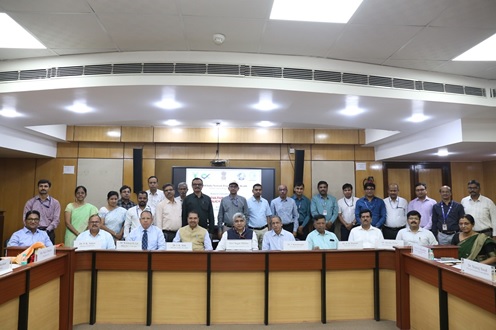
The Indian Council of Agricultural Research, Central Institute of Brackish water Aquaculture (ICAR-CIBA) invited Dr. Iddya Karunasagar to chair the plenary session of Expert Meeting on “Aquaculture Medicine: Research, Policy and Implementation” held at National Academy of Agricultural Sciences, Delhi 8-9 May, 2025. The Plenary session finalised the recommendations that included pathway to authorise medicines in aquaculture, the dosage and withdrawal periods.
Links to publicly accessible description/evidence:
https://ciba.res.in/?p=17095&post_type=edmento_events&utm_source
Dr. Iddya Karunasagar participated as a Panellist at the Global Food Regulators Summit in the Session on Food Safety and Standards Authority of India (FSSAI)-WHO Masterclass on Food Safety Risk Assessment held at Bharat Mandapam, New Delhi, September 26-27, 2025. Dr. Karunasagar spoke about experience with Joint FAO/WHO Expert Meeting on Microbiological Risk Assessment. He also prepared a draft plan for conducting training of FSSAI Officers in microbiological risk assessment.
Links to publicly accessible description/evidence:https://gfrs.fssai.gov.in/Images/GFRS%202025%20Brochure%20and%20Program%20Schedule%20Final.pdf
National Academy of Agricultural Sciences (NAAS) invited Dr. Iddya Karunasagar as Expert to contribute to the Brainstorming Session on “Managing emerging environmental contaminants in aquaculture and fisheries” held at NAAS Headquarters, Delhi, July 18, 2025. The discussion led to development of Policy Paper by NAAS. Dr. Iddya Karunasagar was also one of the Experts involved in NAAS Expert Consultation on the proposed Indian Council of Fisheries and Veterinary sciences, July 04, 2025. The output of this consultation would enable decision on the need for such Council.
Links to publicly accessible description/evidence:https://naas.org.in/page.php?pageid=218&utm
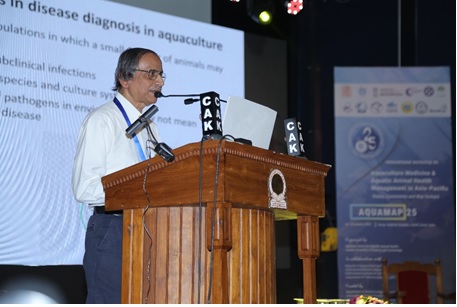
Dr. Indrani Karunasagar contributed as a Distinguished Guest and Resource Person at the International Symposium on Aquaculture Medicine and Aquatic Animal Health Management (AQUAMAP), organized by Cochin University of Science and Technology (CUSAT), Kochi, held from 16–18 January 2025. Her participation strengthened academic and institutional collaborations by sharing expertise and fostering knowledge exchange in the field of aquaculture medicine and aquatic animal health management.
Links to publicly accessible description/evidence:
https://www.ncaah.ac.in/wp-content/uploads/2025/01/AQUAMAP25-Programme-Schedule-Updated.pdf
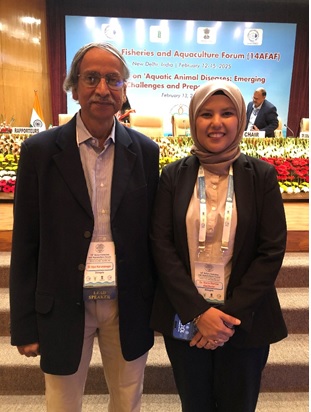
Dr. Indrani Karunasagar co-chaired a special symposium titled “Aquatic Animal Diseases: Emerging Challenges and Preparedness,” which was organized as a parallel event during the 14th Asian Fisheries and Aquaculture Forum (14AFAF) held on 13 February 2025 in New Delhi.s
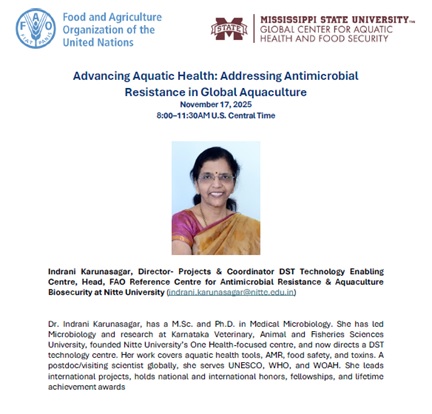
Dr. Indrani Karunasagar participated in the World Antibiotic Awareness Week (WAAW) event titled “Advancing Aquatic Health – Addressing AMR in Global Aquaculture,” hosted by Mississippi State University on 17 November 2025, contributing to discussions on antimicrobial resistance (AMR) management and sustainable aquaculture practices.
Links to publicly accessible description/evidence:
https://www.gcahfs.msstate.edu/events/2025/10/advancing-aquatic-health-addressing-antimicrobial-resistance-global-aquaculture
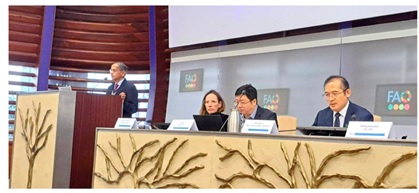
Dr. Iddya Karunasagar participated in the FAO validation workshop on the Technical Roadmap for the Early Warning System (EWS) for Aquatic Diseases, contributing scientific expertise to discussions on disease surveillance, risk assessment, and sustainable aquaculture strategies, Rome, 9–11 December 2025.
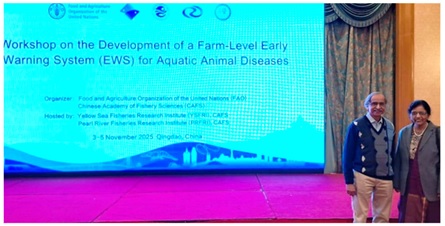
Dr. Indrani Karunasagar delivered an expert talk in the programme “Development of Farm-Level Early Warning System for Aquatic Animal Disease,” contributing technical expertise to the formulation of guidelines and the development of a roadmap for strengthening aquatic animal health surveillance and evidence-based disease management strategies. The programme was organized by the Yellow Sea Fisheries Research Institute (YSFRI; 3–5 November 2025), the Pearl River Fisheries Research Institute (PRFRI; 7–9 November 2025), and the Food and Agriculture Organization (FAO) in collaboration with the Chinese Academy of Fishery Sciences (CAFS).
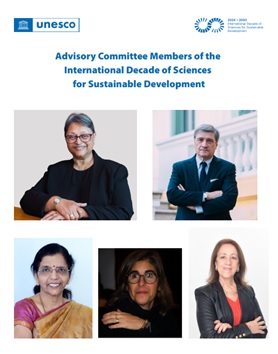
Dr. Indrani Karunasagar is currently serving as a Member of the Advisory Committee for the Implementation of the International Decade of Sciences for Sustainable Development (IDSSD), appointed for a two-year term.
Links to publicly accessible description/evidence:
https://www.un-sciences-decade.org/en/governance
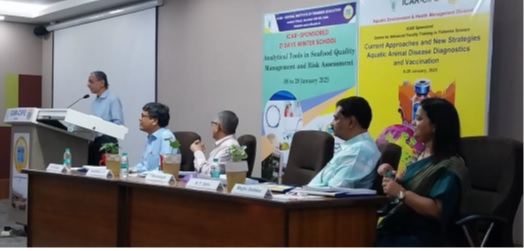
Dr. Iddya Karunasagar participated as Chief Guest at the ICAR-CIFE Winter School on 8 January 2025. He highlighted the role of international risk assessments in establishing food safety standards under the Codex Alimentarius Commission and the importance of World Organisation for Animal Health (WOAH) standards in import risk analysis and control measures for trade in aquatic animals and their products. His contribution supported knowledge exchange on science-based regulatory frameworks for food safety and aquatic animal health.
Links to publicly accessible description/evidence:
https://cife.edu.in/sites/default/files/newsletter_english_jan_mar2025_final.pdf
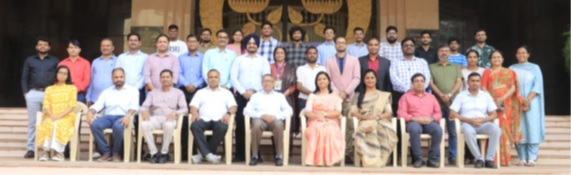
Dr. Indrani Karunasagar was invited by ICAR–Central Institute of Fisheries Education (ICAR–CIFE), Mumbai, to deliver expert lectures on 13 January 2025 during the ICAR-sponsored Winter School on Analytical Tools in Seafood Quality Management and Risk Assessment. Her talks covered “Application of Phages in Food and Water Safety,” “Harnessing Bacteriophages for Disease Management in Aquaculture,” “Bacteriophage-based Control of Seafood Pathogens,” and “Changing Scenarios of Seafood-borne Pathogen Risks.” The Winter School was attended by faculty from various universities and ICAR institutes, facilitating knowledge exchange on seafood safety, pathogen risk assessment, and sustainable disease management in fisheries and aquaculture.
Links to publicly accessible description/evidence:
https://www.cife.edu.in/sites/default/files/winter-school-programme-9-12-2024.pdf
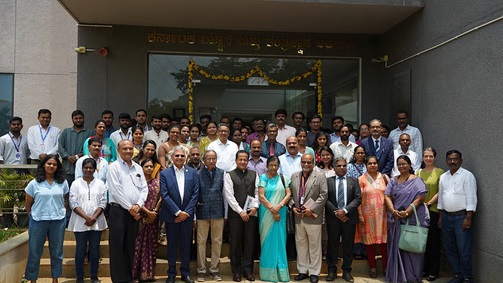
Dr. Indrani Karunasagar was invited to deliver an expert lecture on “Phage Therapy for Mitigation of Antimicrobial Resistance” during the National Conference on “Antimicrobial Resistance: Strategies for Prevention and Alternatives” organized by the Karnataka Science and Technology Academy (KSTA), Government of Karnataka, Bengaluru, on 14–16 May 2025. The interaction promoted scientific knowledge exchange on phage-based approaches for combating antimicrobial resistance, fostered institutional collaboration with a government organization, and supported capacity enhancement in sustainable disease control and antimicrobial stewardship.
Links to publicly accessible description/evidence:
https://kstacademy.in/en/uncategorized-en/national-conference-on-antimicrobial-resistance-strategies-for-prevention-and-alternatives/
https://www.deccanherald.com/india/karnataka/bengaluru/experts-call-for-collaborative-efforts-to-address-antimicrobial-resistance-3540887
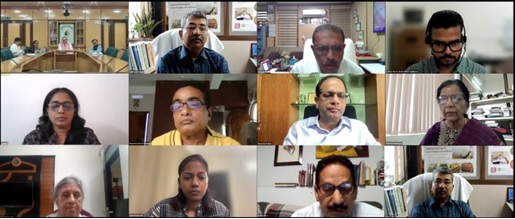
Dr. Indrani Karunasagar served as a panelist in the brainstorming session on “Marine Nutraceuticals for Boosting Bio Economy in India” organized by the National Academy of Agricultural Sciences (NAAS) held on 28 July 2025 in hybrid mode. She contributed to the panel discussion on “Nutraceutical Potential of Carotenoid Pigments from Marine Algae – A New Frontier in Dietary Supplements,” sharing scientific insights on marine-derived bioactive compounds, functional food applications, and sustainable utilization of marine resources. The engagement promoted knowledge exchange and strengthened collaboration with a national scientific forum towards advancing marine biotechnology, nutraceutical innovation, and India’s bioeconomy.
Dr. Indrani Karunasagar was nominated as a Member of the Quinquennial Review Team (QRT) of ICAR–Central Institute of Coldwater Fisheries Research (ICAR–CICFR), Bhimtal, vide ICAR Office Order dated 1 October 2025. The assignment involved reviewing the institute’s research and development activities for the period 1 April 2018 to 31 March 2023, contributing expert evaluation and strategic inputs towards strengthening institutional performance, research outcomes, and national fisheries research priorities. The engagement reflects collaboration with a premier national research organization and supports evidence-based planning and advancement of fisheries science.
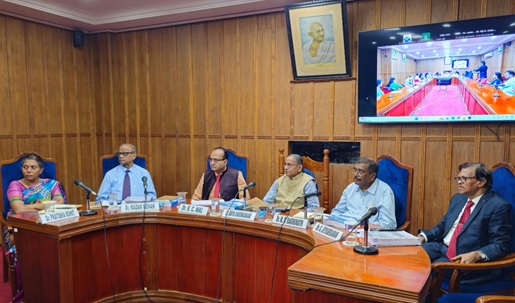
Dr. Indrani Karunasagar was nominated as a Member of the Research Advisory Committee (RAC) of ICAR–Indian Institute of Agricultural Biotechnology (IIAB), Ranchi for a period of three years from 19 May 2023 to 18 May 2026. The appointment facilitated expert participation in research planning, evaluation, and strategic guidance for advancing agricultural biotechnology initiatives. The engagement strengthened collaboration with a premier national research institution and contributed to enhancing research outcomes through knowledge sharing, scientific advisory inputs, and institutional partnership.
Dr. Indrani Karunasagar participated in the Global Food Regulators Summit (GFRS) as an invited expert for the round table discussion under the FSSAI–WHO Master Class Programme in Food Safety & Risk Assessment held on 26 September 2025 at Bharat Mandapam, Pragati Maidan, New Delhi. The interaction facilitated exchange of scientific perspectives on emerging food safety issues, regulatory science, and risk assessment strategies among national and international stakeholders. The engagement strengthened collaborative efforts towards advancing food safety systems, harmonized regulatory practices, and knowledge-driven approaches for safeguarding public health.
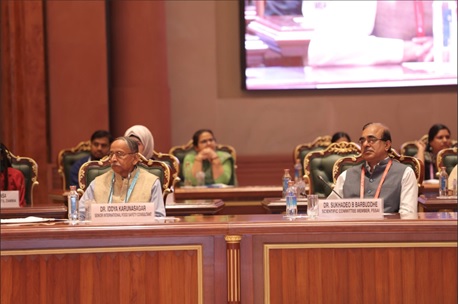
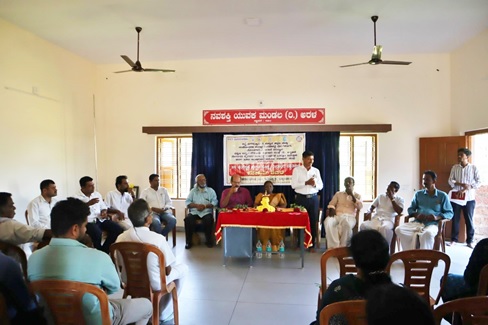
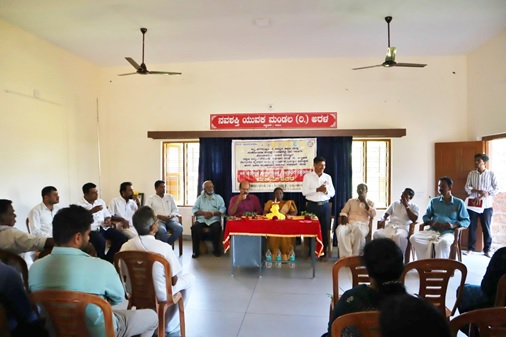
On 25 November 2025, NUCSER, Nitte (Deemed to be University), in association with the Department of Horticulture, Bantwal, the Netravati Farmers Development Association Union, and the Dakshina Kannada Cooperative Society, Annalike, organised an awareness programme on Water Conservation and Micro-Irrigation at Navashakthi Yuvaka Mandala, Arala, Bantwal, with 40 participants. The programme addressed regional water management challenges, micro-irrigation technologies, sustainable farming practices, and government schemes supporting irrigation.
Dr. Indrani Karunasagar was invited to participate in the 12th Symposium on Diseases in Asian Aquaculture (12th DAA) held in Chennai during 23–27 September 2025 and chaired the technical session on “Aquatic Animal Disease Diagnostics, Prophylactics and Therapeutics.” The engagement fostered collaboration among researchers, academicians, and professionals working in aquatic health by facilitating exchange of expertise on disease surveillance, prevention, and therapeutic approaches. The contribution strengthened partnerships for advancing sustainable aquaculture practices and promoted collective efforts towards improving aquatic animal health management.
Links to publicly accessible description/evidence:
https://eafpbulletin.scholasticahq.com/article/159143-the-12th-symposium-on-diseases-in-asian-aquaculture-daa12
Dr. Indrani Karunasagar was invited as a plenary speaker at the international conference “Blue Horizon 2025: Rethinking Fisheries for Sustainable Future” conducted through online mode on 17 December 2025. She shared expert insights on sustainable fisheries, aquatic resource management, and science-based strategies for addressing emerging challenges in the fisheries sector. The participation strengthened international knowledge networks, facilitated exchange of scientific expertise, and contributed to collaborative efforts towards sustainable and resilient fisheries development.
Links to publicly accessible description/evidence:https://www.scribd.com/document/1071146237/Updated-blue-Horizon-International-Conference
Dr. Indrani Karunasagar served on the IVS Executive Committee as Vice President (Veterinary Virology) during Virocon-2025, held from 8–10 December 2025 at Pune, India, with the theme “Changing Landscapes in Human, Animal and Plant Viruses: Bridging Basic Science, Innovation and Public Health.” The leadership role facilitated scientific collaboration among experts across veterinary, human, and plant virology domains, promoting knowledge exchange, One Health approaches, and innovation-driven strategies for addressing emerging viral challenges.
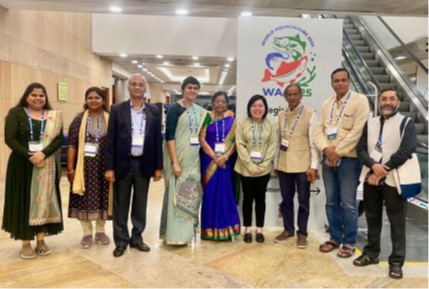
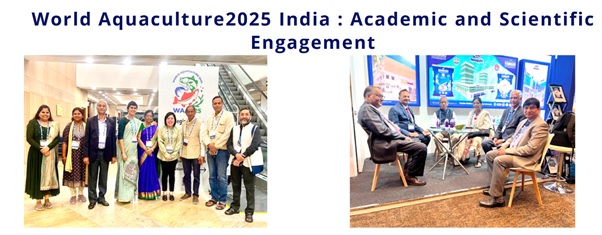
Dr. Indrani Karunasagar was invited to participate in the international conference and exposition organized by the World Aquaculture Society held during 10–13 November 2025 at Hyderabad, India. The engagement provided an international platform for exchange of scientific knowledge, emerging innovations, and best practices in aquaculture. Participation strengthened global research networks and collaborative partnerships towards sustainable aquaculture development, aquatic health management, and advancement of the blue economy.
Dr. Indrani Karunasagar was invited to provide expert consultation on the proposed Indian Council of Fisheries and Veterinary Sciences through a hybrid mode on 04 July 2025. The consultation contributed scientific perspectives and strategic inputs towards strengthening institutional frameworks in fisheries and veterinary sciences. The engagement promoted collaborative knowledge exchange and supported the development of coordinated approaches for advancing research, education, and professional capacity in these sectors.
Cross sectoral dialogue about SDGs
- Collaboration with Dairy Industry Stakeholders through Cross-Sectoral Knowledge Exchange
- Collaboration with aquaculture stakeholders through knowledge exchange on aquatic animal health management and sustainable practices
- Collaboration with the National Academy of Agricultural Sciences on Emerging Challenges in Aquatic Animal Health
- Collaboration with the Karnataka Science and Technology Academy (KSTA) on Antimicrobial Resistance Mitigation
- Collaboration with Fisheries Institutions on Post-Harvest Processing and Food Safety s
- Collaboration with Central Institute of Fisheries Education (CIFE) on Antimicrobial Resistance Mitigation and Seafood Safety
- Collaboration with Central Institute of Fisheries Education (CIFE), Mumbai
- Collaboration with Manipal Academy of Higher Education on Emerging Tropical Diseases Research
- Collaboration with Yenepoya Naturopathy and Yogic Science College on Food Safety and Nutrition
- Collaboration with FSSAI and WHO to advance food safety risk assessment
- Collaborative engagement to advance One Health and antimicrobial resistance awareness.
- Fostering collaborative knowledge exchange in circular economy and sustainable technologies.
- Collaborative Engagement with BASF India on Agro-Chemical Safety and Poisoning Management
- Collaborative Research Dialogue for Sustainable Development Goals at FMCI
- Promoting dialogue and knowledge sharing on gender equity, empowerment, and women’s safety.
- Knowledge sharing on zoonotic diseases and public health through cross-sectoral engagement at ZOONOSPHERE 2025
- Collaborative dialogue on start-up challenges, innovation, and entrepreneurial ecosystems
- Knowledge exchange and interdisciplinary dialogue on One Health and viral immunity research.
- Collaborative learning on intellectual property rights, innovation, and creative solutions
- Facilitating multi-stakeholder dialogue on climate change and sustainable fisheries
- International knowledge exchange on immunology and translational medicine
- Promoting collaboration for food safety and public health awareness
- Collaborative Climate Action and Youth Capacity Building Initiative
- Collaborative partnership between NitteDU and ICAR-DCR for research and innovation
- Cross-Sectoral Partnership for Water Conservation and Sustainable Agricultural Development
- Multi-Stakeholder Engagement for Sustainable Fisheries and Marine Conservation
- Stakeholder Dialogue on Innovation, Entrepreneurship, and Technology Commercialization
- Collaboration for Community Health and Emergency-Care Awareness
- Government–Industry–Academia Engagement on Intellectual Property Rights and Technology Transfer for MSMEs
Dr. Iddya Karunasagar participated in cross-sectoral dialogue by delivering an invited talk on “Sampling and Analysis for Microbiological Quality of Milk and Products” at the Southern Dairy Summit organized by the Indian Dairy Association at the Convention Center, NIMHANS, Bengaluru, from 9–11 January 2025. The session on Technical Regulations and the Dairy Industry provided a platform for interaction between academia and dairy industry stakeholders, who appreciated the insights shared on microbiological sampling and testing practices.
Dr. Iddya Karunasagar delivered a keynote lecture on “Disease Diagnosis in Aquaculture – Practical Approaches to Touch Upon Grassroot Level Health Management” at the AQUAMAPS International Workshop on Aquaculture Medicine and Aquatic Animal Health Management in Asia-Pacific: Status, Constraints and Way Forward, organized by the National Center for Aquatic Animal Health, CUSAT, Cochin, from 16–18 January 2025. The engagement promoted knowledge exchange between academia and aquaculture stakeholders, fostering collaboration for sustainable aquatic animal health management.
Dr. Iddya Karunasagar delivered a lead lecture at the symposium “Aquatic Animal Diseases: Emerging Challenges and Preparedness” during the 14th Asian Fisheries and Aquaculture Forum (AFAF) held at the National Academy of Agricultural Sciences from 12–15 February 2025. The lecture highlighted emerging technologies, including artificial intelligence-based approaches for disease diagnosis and prevention, facilitating knowledge exchange among aquaculture researchers and stakeholders.
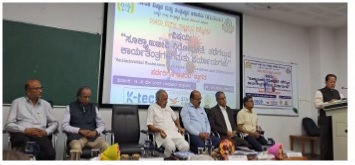
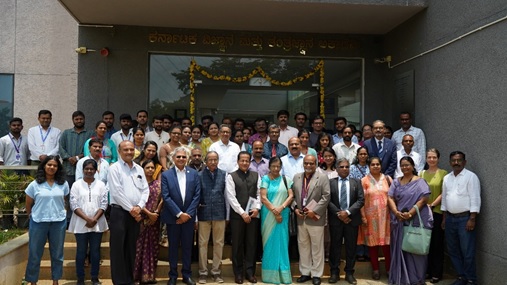
Dr. Iddya Karunasagar participated as Guest of Honour at the inauguration of the National Conference on “Antimicrobial Resistance: Strategies for Prevention and Alternatives” organized by the Karnataka Science and Technology Academy (KSTA), Bengaluru, from 14–16 May 2025, along with Dr. Raghavendra Bhatta, Deputy Director General (Animal Science), ICAR. He also delivered a lead talk on “Capacity Building and International Networks in AMR and Mitigation”, facilitating dialogue and collaboration among researchers, policymakers, and stakeholders on addressing antimicrobial resistance challenges.
Links to publicly accessible description/evidence:
https://www.deccanherald.com/india/karnataka/bengaluru/experts-call-for-collaborative-efforts-to-address-antimicrobial-resistance-3540887
Dr. Iddya Karunasagar was invited as a Sessional Chair at Fisheries Outlook-2 held at the College of Fisheries, Berhampur, Odisha, from 12–14 July 2025. He chaired the session on “Post-Harvest Processing, Value Addition and Food Safety”, contributing to scientific discussions and stakeholder engagement on sustainable fisheries practices and food safety management.
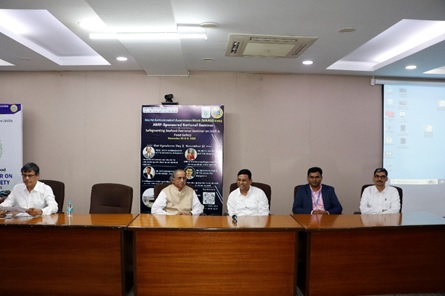
Prof. Dr. Iddya Karunasagar delivered a lecture on “International Resources and Networks for Understanding and Mitigating Antimicrobial Resistance” at the ANRF-sponsored National Seminar on “Safeguarding Seafood – National Seminar on AMR and Food Safety” organized by the Central Institute of Fisheries Education (CIFE), Mumbai, on 21 November 2025. The engagement facilitated scientific exchange and collaboration on antimicrobial resistance mitigation and food safety among researchers and sectoral stakeholders.
Dr. Iddya Karunasagar delivered the inaugural lecture on “International Regulations on Aquatic Animal Health and International Trade” at the ICAR-Center for Advanced Faculty Training (CAFT) programme on “Current Approaches and New Strategies for Aquatic Disease Diagnosis and Vaccination” held at CIFE, Mumbai, on 8 January 2025. The engagement promoted cross-institutional dialogue and knowledge sharing on aquatic animal health regulations and disease management strategies.
Dr. Iddya Karunasagar delivered a talk on “Research and Patent Ideas in Emerging Tropical Diseases” at the Annual Meeting of the Center for Emerging and Tropical Diseases, Manipal Academy of Higher Education, Kasturba Medical College, on 2 June 2025.
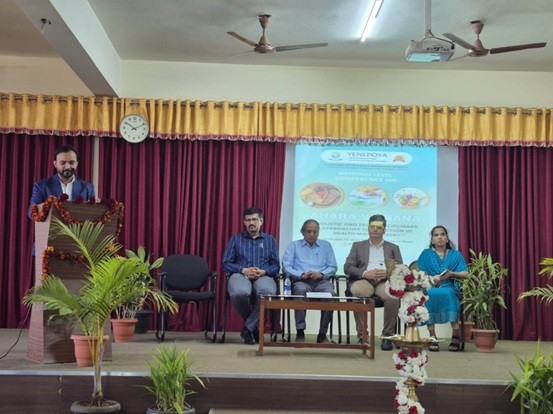
Dr. Iddya Karunasagar was the Chief Guest at the National Conference on “Holistic and Transdisciplinary Approaches to Nutrition in Health Management” held at Yenepoya Naturopathy and Yogic Science College and Hospital, Mangaluru, on 15 December 2025. He delivered a talk on food safety and FSSAI regulations, promoting dialogue on nutrition and health management.
Links to publicly accessible description/evidence:
https://ynysc.yenepoya.edu.in/news-details.php?id=1318&utm_source
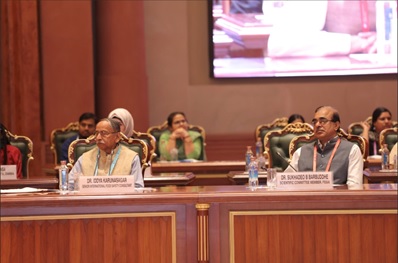
Dr. Iddya Karunasagar participated as a panellist in the FSSAI–WHO Master Class on Food Safety and Risk Assessment held during the Global Food Regulators Summit at Bharat Mandapam, New Delhi, on 26–27 September 2025. He delivered a technical lecture on "Interpreting Susceptibility Testing Data" and participated in the concluding panel discussion on "The Future of Risk Assessment in India."
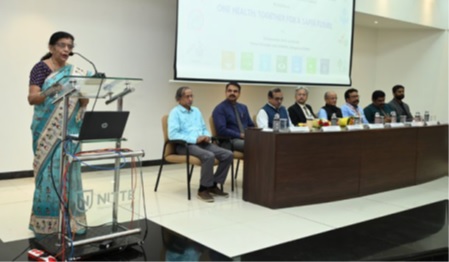
As part of World Antibiotic Awareness Week 2025, Dr. Iddya Karunasagar, on behalf of the FAO Reference Centre for Antimicrobial Resistance and Aquaculture Biosecurity, convened a national workshop titled “One Health – Together for a Safer Future” on 24 November 2025, fostering collaboration among experts from the FAO Reference Centre, ICAR, ICMR, the One Health Consortium, and academia to advance interdisciplinary approaches to One Health and antimicrobial resistance.
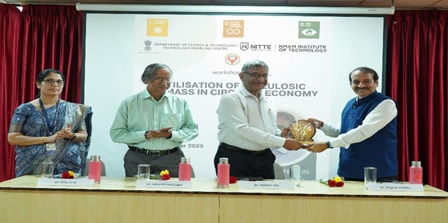
Dr. Iddya Karunasagar organized a national workshop on “Utilisation of Cellulosic Biomass in Circular Economy” at Nitte Mahalinga Adyanthaya Memorial Institute of Technology (NMAMIT), Nitte, on 24 October 2025, facilitating collaborative knowledge exchange among experts and stakeholders in sustainable technologies and circular economy practices. The workshop featured expert contributions from Dr. Rakesh Jain, former Director, National Pulp and Paper Research Institute, and Mr. Seetharam, Indic Initiatives, highlighting advancements in paper-making technologies and the conversion of agro-wastes into value-added products.
Dr. Iddya Karunasagar organized a national workshop on “Diagnosis, Treatment and Management of Accidental Poisoning by Agro-Chemicals” in collaboration with BASF India and K. S. Hegde Medical Academy on 3 July 2025, fostering interaction and knowledge exchange among industry, academia, and healthcare professionals. Dr. Debabrata Kanungo, Former Additional Director General, Ministry of Health and Family Welfare, Government of India, shared insights on diagnostic approaches, differential diagnosis, and management strategies for agro-chemical poisoning.
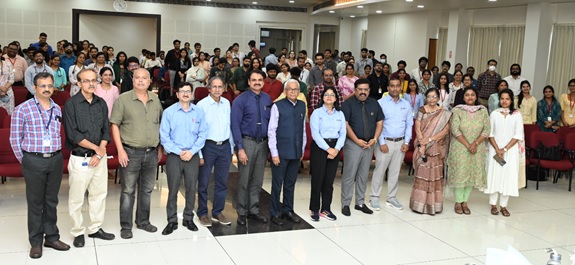
Links to publicly accessible description/evidence:
https://dstnutec.in/user/news/175
Dr. Indrani Karunasagar participated as the Guest of Honour and Keynote Speaker at the “Annual Research Day Celebrations of FMCI” organized by Father Muller Charitable Institutions (FMCI) and Father Muller Research Centre (FMRC), Mangaluru, on 13 June 2025. She delivered a keynote address on “Establishing Research Collaborations”.
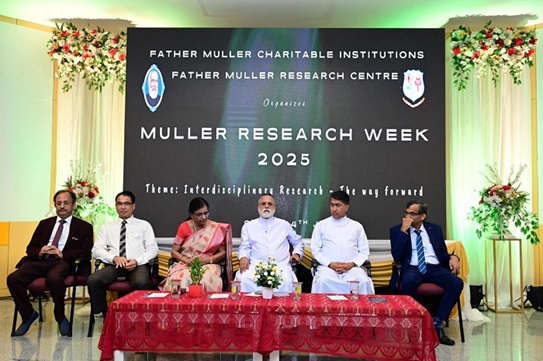
Links to publicly accessible description/evidence:
https://www.daijiworld.com/index.php/news/newsDisplay?newsID=1283298
Dr. Indrani Karunasagar was invited as the Guest of Honour for the International Women’s Day Celebration organized by Nitte Institute of Physiotherapy on 8 March 2025. The celebration, themed “Gender Equality: A Right, Not a Privilege; Sthreeraksha: Measures for Women’s Safety,” emphasized gender equity, women’s empowerment, and initiatives fostering safety and well-being.
Dr. Indrani Karunasagar served as the Chief Guest for “ZOONOSPHERE” organized by Nitte Institute of Allied Health Sciences on 6 December 2025, contributing to knowledge exchange and awareness on zoonotic diseases, public health, and interdisciplinary collaboration.
Dr. Indrani Karunasagar organized a panel discussion on “Challenges Faced by Start-ups” during National Start-up Week on 18 January 2025 at Seminar Hall, NUCSER, facilitating cross-sectoral dialogue, knowledge exchange, and collaborative discussions on entrepreneurship, innovation, and start-up ecosystems.
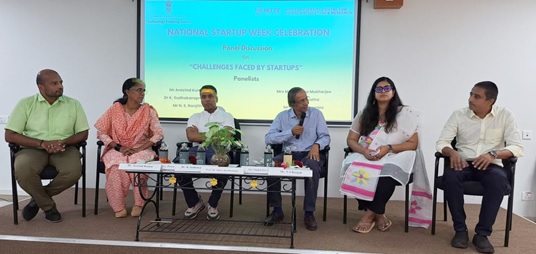
Links to publicly accessible description/evidence:
https://dstnutec.in/user/eventInfo/193
Dr. Indrani Karunasagar organized a distinguished lecture by Dr. M. Suresh, University of Wisconsin School of Veterinary Medicine, USA, on “Tenants of T-cell Immunity to Respiratory Viral Pathogens” as part of the One Health Lecture Series on 27 February 2025 at Seminar Hall, NUCSER, facilitating knowledge exchange and interdisciplinary dialogue in One Health research.
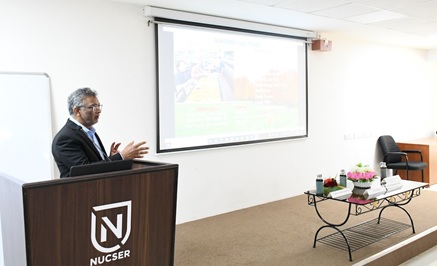
Links to publicly accessible description/evidence:
https://dstnutec.in/user/news/155
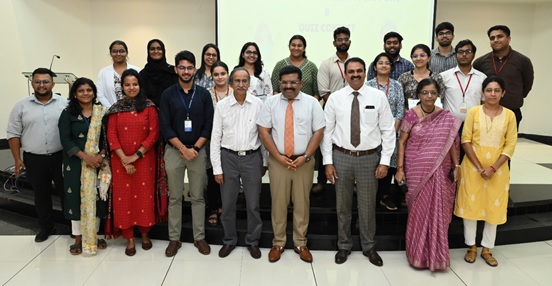
Dr. Indrani Karuna Sagar organized a lecture on “Intellectual Property Rights” and a quiz competition for Health & Allied Sciences students on the occasion of World Intellectual Property Day on 26 April 2025 at Avishkar Hall, ABSMIDS, promoting knowledge exchange, awareness, and engagement on innovation and intellectual property.
Links to publicly accessible description/evidence:
https://www.dstnutec.in/user/news/164
Dr. Indrani Karunasagar was invited as the Opening Plenary Speaker at the international conference “Blue Horizon 2025: Rethinking Fisheries for a Sustainable Future”, hosted by Tamil Nadu Dr. J. Jayalalithaa Fisheries University – Dr. M.G.R. College and Research Institute, Thalainayeru. Her plenary lecture focused on the increasing incidence of infectious diseases and climate change, fostering cross-sectoral dialogue and knowledge exchange on climate resilience, public health, and sustainable fisheries.
Dr. Indrani Karunasagar organized a guest lecture on “Reprogramming Cytokine Networks: Clinical Implications for JAK Inhibitors” by Dr. Ram Savan, University of Washington, Seattle, USA, on 27 December 2025 at Chintana Hall, KSHEMA, facilitating international knowledge exchange and interdisciplinary dialogue on immunology, translational research, and clinical therapeutics.
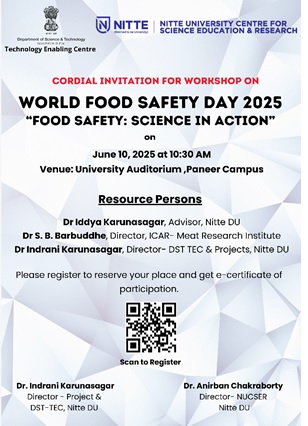
Dr. Indrani Karunasagar organized a workshop on World Food Safety Day 2025, themed “Food Safety: Science in Action,” on 10 June 2025 at the University Auditorium, Paneer Campus, fostering knowledge exchange and cross-sectoral dialogue on food safety, public health, and evidence-based practices.
Links to publicly accessible description/evidence:
https://dstnutec.in/user/news/168
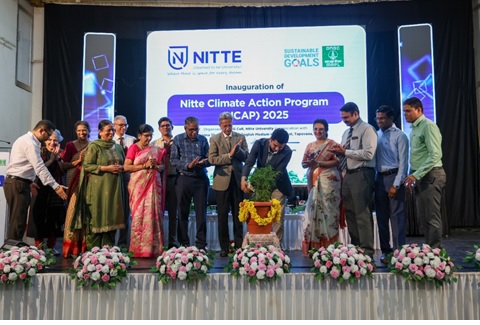
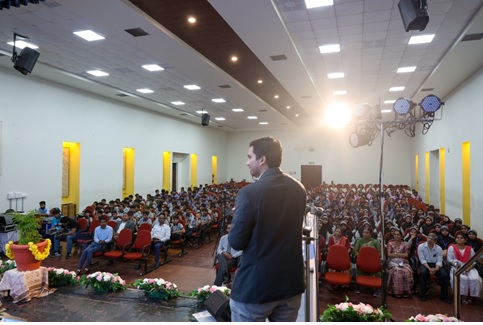
The Nitte Climate Action Program (NCAP), launched on 25th August 2025 in collaboration with Dr. Mundkur Ramanna Shetty Memorial English Medium School, the SDG Cell, and MRPL, stands as a significant cross-sectoral initiative promoting climate awareness and environmental stewardship. The program engaged more than 10,000 students across Dakshina Kannada and Udupi through workshops, interactive learning sessions, and a climate model exhibition, fostering understanding on climate change, sustainability, and eco-friendly practices. By encouraging actions such as water conservation, reduced plastic usage, and sapling plantation, NCAP has strengthened youth leadership in climate responsibility while reinforcing partnerships between academia, schools, and industry for sustainable community development.
Links to publicly accessible description/evidence:
https://www.daijiworld.com/news/newsDisplay?newsID=1290315 "
"https://www.youtube.com/watch?v=1P8F9NDddAk"
"https://www.instagram.com/reel/DOTRp6OlZAI/"
"https://www.thehansindia.com/karnataka/nitte-university-launches-flagship-climate-action-programme-1000893"
https://www.mangaloretoday.com/main/Nitte-DU-to-launch-the-Nitte-Climate-Action-Program-on-August-25.html
An MoU between NitteDU and the ICAR Directorate of Cashew Research (DCR) was signed on June 30, 2025, to collaborate on research, training, education, and technology development. The partnership focuses on addressing challenges in cashew processing through joint research, product development, knowledge exchange, internships, training, and collaborative academic activities.
Links to publicly accessible description/evidence:https://dstnutec.in/user/mouInfo/30
Nitte University Centre for Science Education and Research (NUCSER), in association with the Department of Horticulture, Bantwal, the Netravati Farmers Development Association Union, and Dakshina Kannada Cooperative Society, Annalike, organized a programme on “Water Conservation and Micro Irrigation” for farmers at Navashakthi Yuvaka Mandala on 25 November 2025 under the University's Sustainable Development Goals initiative.
The programme brought together progressive farmers, a government horticulture official, farmer representatives, cooperative-sector representatives, and university faculty, postgraduate students, and staff. Resource persons discussed water-related challenges, micro-irrigation technologies, including drip systems, micro-jets and filters, farm-level water conservation practices, and government schemes supporting irrigation.
Links to publicly accessible description/evidence:
https://nittecoeaquamarin.com/events/awareness-program-on-water-conservation-micro-irrigation
https://aboutnitte.blogspot.com/2025/12/news-from-nucser-water-conservation-and.html
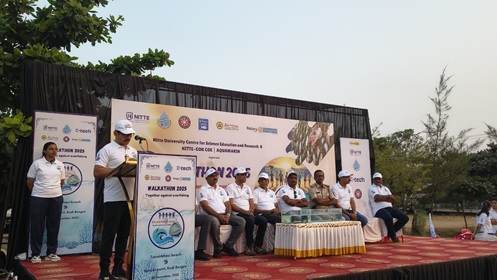
The NITTE–Government of Karnataka Centre of Excellence in Aquamarine Innovation, supported by KTech, Government of Karnataka, and hosted at NUCSER, organized a five-kilometre walkathon titled “Together Against Overfishing” at Tannirbhavi Beach on 28 December 2025 in association with the NSS Cell of Nitte (Deemed to be University) and Rotary Club Mangalore.
The event brought together more than 250 participants, including students, members of the public, environmental enthusiasts, fishermen, university representatives, fisheries experts, and community stakeholders. The programme raised awareness of overfishing, responsible fishing practices, marine biodiversity, and the need for sustainable fisheries.
Links to publicly accessible description/evidence:
https://nittecoeaquamarin.com/news/walkathon-2025--awareness-for-sustainable-oceans"
https://x.com/NUCSER_Official/status/2008790193269338568?s=20
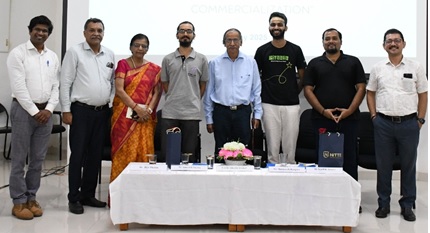
DST-TEC, in association with the Institutions Innovation Council of Nitte (Deemed to be University), the Nitte–Government of Karnataka Centre of Excellence in Aquamarine Innovation, and Section Infin-8, organized a panel discussion titled “Challenges Faced by Start-ups in Technology Commercialization” on 13 May 2025 at the University Auditorium, Paneer Campus, to commemorate National Technology Day.
The discussion was moderated by Prof. Iddya Karunasagar and included representatives from Stelna Designs, Sitaara, Dentronics, and Section Infin-8. The panel addressed challenges encountered by start-ups, including funding, regulatory and technical requirements, commercialization, and business expansion. Participants also discussed available funding mechanisms and support for advancing technologies towards commercialization.
Links to publicly accessible description/evidence:
https://dstnutec.in/user/news/167
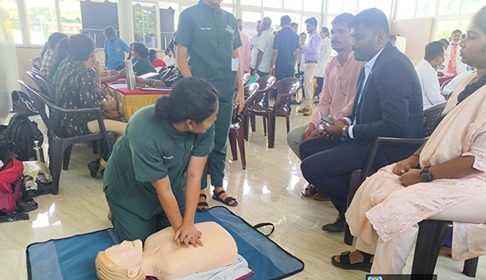
Nitte Usha Institute of Nursing Sciences, under its Vriddhi Industry–Academia Collaboration, organized an industry-sponsored CPR awareness and free health-check-up camp on 19 October 2025 during JCI Zonecon Kahale 2025. The programme was conducted in association with Swastika National Business School and supported by JCI Mangalore Samrat and MSEZ.
The activity involved nursing faculty and interns, representatives of participating organizations, and medical professionals from K. S. Hegde Medical Academy. Activities included CPR demonstrations using mannequins, blood-pressure measurements, blood-glucose screening, and health education. A total of 110 beneficiaries received health services, five of whom were referred for further treatment. Swastika National Business School also sponsored equipment for the nursing institute.
Links to publicly accessible description/evidence:
https://nitte.edu.in/nuins/news-details.php?id=1409
The MSME Development and Facilitation Office, Ministry of Micro, Small and Medium Enterprises, Government of India, in association with the District Small Industries Association, Mangaluru, organized a one-day awareness programme on Intellectual Property Rights on 12 March 2025.
Prof. Dr. Iddya Karunasagar, Advisor for Research and Patents at Nitte (Deemed to be University), was identified as the speaker for a technical session on “Technology Transfer and IPR for MSMEs.” The programme provided a platform for sharing university expertise on intellectual property and technology transfer with the MSME support and industry-association ecosystem.
Links to publicly accessible description/evidence:https://dstnutec.in/user/news/154
- INDO-JAPAN MEXT PROJECT
- Collaboration with Norwegian University of Life Sciences NMBU on developing One Health Approach
- International Collaboration with FAO for Sustainable Development Goals
- International collaboration at FAO Rome advancing aquatic disease early warning systems
- International Collaboration for Food Safety Data and Scientific Evidence
- Collaborative Data Generation for Sustainable Fisheries and Animal Health
- International Collaboration for Evidence Generation on Sustainable Food Systems
- International Collaboration for Global Aquaculture Standards
- International Collaboration in Health Research and SDG Impact
- International Scientific Collaboration for Sustainable Aquaculture and SDG Advancement – 2025
- International Collaboration on Farm-Level Early Warning Systems for Aquatic Animal Diseases – 2025
- Global Knowledge Exchange on Food Safety and Risk Assessment through FSSAI–WHO Collaboration
- Collaboration with FSSAI and WHO to advance food safety risk assessment
- International Cooperation in Aquatic Animal Disease Data Reporting and Monitoring
- India–Netherlands International Research Collaboration for Scientific Knowledge Exchange
- Indo–Norway BIOAQUA project on fish diseases and antimicrobial resistance
- India–Sweden International Academic Collaboration in Public Health
- Nitte University – SDG Data Collaboration with the University of Gothenburg, Sweden
- Nitte University – International Academic Exchange with VIA University College, Denmark
Freja Sand – Bridging Healthcare Perspectives Through International Learning
- International Agricultural Collaboration – Knowledge Exchange with Scientists and Students from the USA
- International Collaboration in Healthcare Education and Knowledge Exchange
- International Nursing Collaboration for Global Health Learning
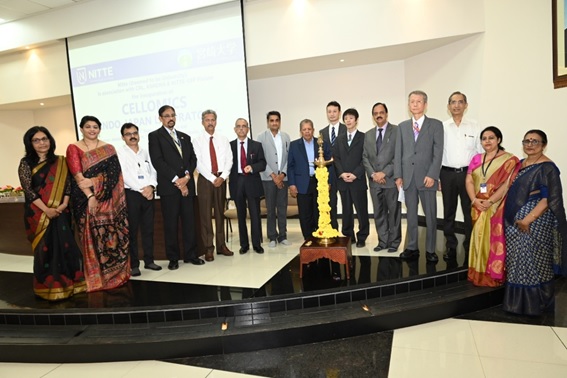
Nitte (Deemed to be University) in collaboration with University of Miyazaki, Japan and supported by Japan Society for Promotion the of Science (MEXT- Government of Japan) is working on project titled “Studies on Pregnancy, delivery and child development pattern in water contaminated area of India”. The study objectives include identifying groundwater contaminated hotspots of Dakshina Kannada and Udupi districts, collecting and analysis of soil and groundwater samples from the hotspots identified and estimating for heavy metal toxicity and also health survey on pregnancy, perinatal outcome and early child development in selected hot-spot area.
Links to publicly accessible description/evidence:
https://nitte.edu.in/international.php#indomext
Nitte (DU) is collaborating with Norwegian University of Life Sciences NMBU on developing One Health Approach for control of antimicrobial resistance in humans, animals & aquatic environments in China, India and Norway. The primary objective is to establish a one health consortium comprising of environmental, animals (aquatic and terrestrial species) and human health experts for the control of antimicrobial resistance (AMR) in China, India and Norway.
The secondary objectives are:
Identify information gaps and needs regarding establishing a one health consortium for the control of antimicrobial resistance (AMR) in aquatic environments, animals (terrestrial and aquatic species), and humans in China, India and Norway
Organize workshops and meetings for the strategic planning and writing of the main project application for the control of antimicrobial resistance in China, India and Norway
Links to publicly accessible description/evidence:https://nitte.edu.in/international.php#onehealth
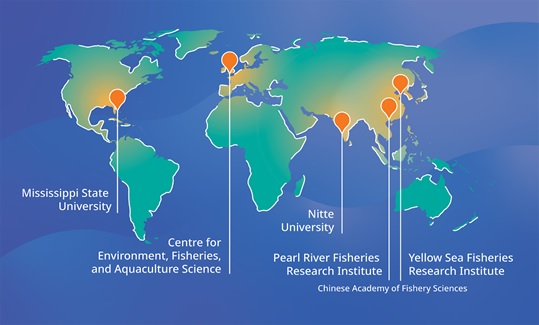
The FAO Reference Centre for Antimicrobial Resistance (AMR) and Aquaculture Biosecurity contributes to international collaboration through global partnerships, knowledge exchange, and scientific data sharing. Collaborative workshops and research initiatives involving international organizations and experts support evidence-based approaches for monitoring, capacity building, and advancing SDG-related goals in health, food security, and sustainable development.
Links to publicly accessible description/evidence:
https://www.nufaocen.in/
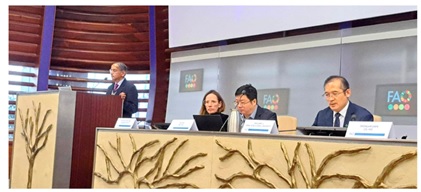
Dr. Iddya Karunasagar participated in the FAO validation workshop on the Technical Roadmap for the Early Warning System (EWS) for Aquatic Diseases, contributing scientific expertise to discussions on disease surveillance, risk assessment, and sustainable aquaculture strategies, Rome, 9–11 December 2025.
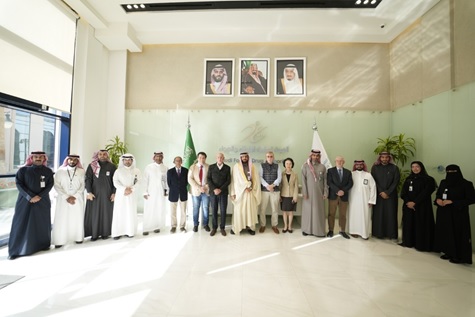
Dr. Iddya Karunasagar was invited by the Saudi Food and Drug Authority to serve as a Member of its International Scientific Advisory Board on Food Safety Risk Assessment. He participated in the Board’s second meeting held in Riyadh, Saudi Arabia, on February 19–20, 2025. During this engagement, Dr. Karunasagar contributed expert guidance on microbiological risk assessment and evaluation, and engaged in focused discussions with SFDA staff. These interactions covered key areas including risk assessment of Pseudomonas aeruginosa in bottled drinking water, laboratory detection methods for Campylobacter and Shigella, strengthening epidemiological linkages, and the application of whole genome sequencing data to predict antimicrobial resistance.
Links to publicly accessible description/evidence:
https://oldsfda.sfda.gov.sa/en/news/2636130
NUCSER, Nitte (Deemed to be University), pursued its research focus on aquatic animal health and sustainable fisheries through its collaboration with the Centre for Environment, Fisheries and Aquaculture Science (CEFAS), UK, under the Ocean Country Partnership Programme (OCPP). The project, “Whole Genome Sequencing of Streptococcus agalactiae Serotypes in Indian Aquatic Systems,” focuses on the genomic characterization of bacterial serotypes found in Indian marine and brackish-water aquaculture systems.
The research aims to investigate antimicrobial resistance, identify genes associated with antimicrobial resistance and toxin production, and compare genomic data with existing information from human, terrestrial animal and aquatic animal sources to improve understanding of potential zoonotic risks. Through collaborative genomic analysis and antimicrobial susceptibility testing, the project seeks to strengthen aquatic disease surveillance, support responsible aquaculture practices, and contribute to seafood safety and public health.
Links to publicly accessible description/evidence:https://ukspending.com/contracts/590
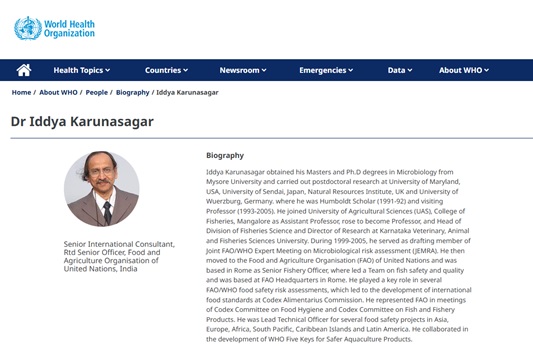
Through membership in the WHO Technical Advisory Group on Risk–Benefit Assessment of Animal-Source Foods, Dr. Iddya Karunasagar contributes to international evidence generation and scientific assessment of dietary transitions. This collaboration supports global data-driven decision-making on sustainable food systems, nutrition, and public health aligned with the SDGs.
Links to publicly accessible description/evidence:
https://www.who.int/groups/technical-advisory-group-on-risk-benefit-assessment-of-optimal-intake-of-animal-source-foods
The World Organisation for Animal Health (WOAH) invited Dr. Iddya Karunasagar to be a member of the Ad hoc Expert Group constituted to review and revise Chapter 6.2 of the WOAH Aquatic Animal Health Code. This chapter deals with the prudent and responsible use of antimicrobial agents in aquaculture. The Ad hoc committee held several rounds of online meetings to review the chapter in view of the current situation with respect to diseases in aquatic animals, antimicrobial residues, antimicrobial resistance (AMR), and mitigation of AMR in aquaculture.
Links to publicly accessible description/evidence:
https://www.woah.org/app/uploads/2025/10/a-ahg-report-chapter-6.2-aquatic-code-29082025-vf.pdf
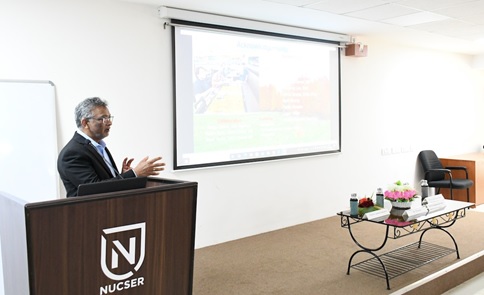
An international academic collaboration initiative was conducted through a distinguished lecture under the One Health Lecture Series with participation from an expert affiliated with the University of Wisconsin School of Veterinary Medicine, USA. The session promoted global knowledge exchange, research networking, and collaborative efforts in health sciences, supporting SDG objectives through international partnerships and scientific cooperation.
Links to publicly accessible description/evidence:
https://dstnutec.in/user/workshopInfo/46%20D%20DST-NUTEC
Dr. Iddya Karunasagar participated as an invited speaker at the Global Agrifood Biotechnologies Conference organised by the Food and Agriculture Organization of the United Nations (FAO) in Rome, Italy, from 16 to 18 June 2025. The conference, themed “Biotechnologies for a Sustainable Future – Driving Agrifood Systems Transformation,” brought together expertise to exchange scientific knowledge and explore the contribution of biotechnology to sustainable agrifood systems.
Dr. Karunasagar delivered a presentation on “Fish Breeding, Diagnostic Tools and Vaccines for Aquatic Animals,” focusing on advances in biotechnology relevant to aquatic animal health and sustainable aquaculture. His participation strengthened international scientific knowledge-sharing and cooperation in aquatic biotechnology, contributing to global efforts towards sustainable food production, the conservation of aquatic resources, and the achievement of the Sustainable Development Goals
Links to publicly accessible description/evidence:https://www.fao.org/biotechnology/resources/fao-global-agrifood-biotechnologies-conference/fish-breeding--diagnostic-tools-and-vaccines-for-aquatic-animals/en
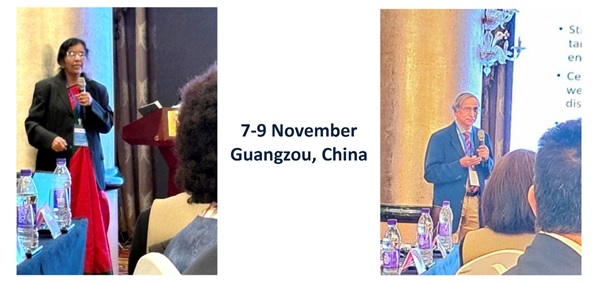
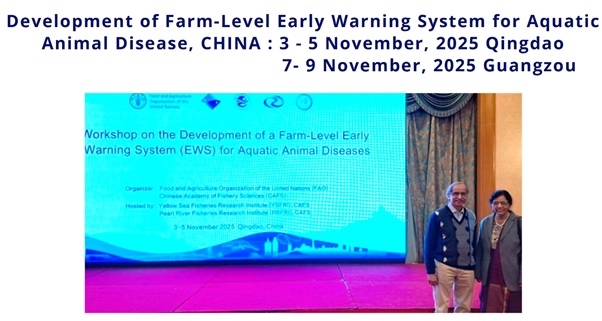
Dr. Indrani Karunasagar delivered an expert talk in the programme “Development of Farm-Level Early Warning System for Aquatic Animal Disease,” contributing technical expertise to the formulation of guidelines and the development of a roadmap for strengthening aquatic animal health surveillance and evidence-based disease management strategies. The programme was organized by the Yellow Sea Fisheries Research Institute (YSFRI; 3–5 November 2025), the Pearl River Fisheries Research Institute (PRFRI; 7–9 November 2025), and the Food and Agriculture Organization (FAO) in collaboration with the Chinese Academy of Fishery Sciences (CAFS).
Dr. Indrani Karunasagar participated in the Global Food Regulators Summit (GFRS) as an invited expert for the round table discussion under the FSSAI–WHO Master Class Programme in Food Safety & Risk Assessment held on 26 September 2025 at Bharat Mandapam, Pragati Maidan, New Delhi. The interaction facilitated exchange of scientific perspectives on emerging food safety issues, regulatory science, and risk assessment strategies among national and international stakeholders. The engagement strengthened collaborative efforts towards advancing food safety systems, harmonized regulatory practices, and knowledge-driven approaches for safeguarding public health.
Dr. Iddya Karunasagar participated as a panellist in the FSSAI–WHO Master Class on Food Safety and Risk Assessment held during the Global Food Regulators Summit at Bharat Mandapam, New Delhi, on 26–27 September 2025. He delivered a technical lecture on "Interpreting Susceptibility Testing Data" and participated in the concluding panel discussion on "The Future of Risk Assessment in India."
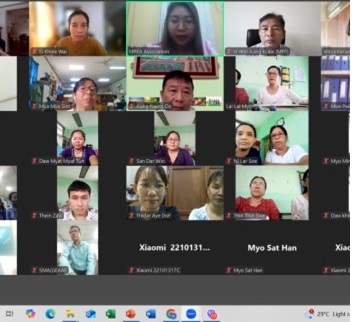
The Myanmar Fishery Products Processors and Exporters Association (MPEA) engaged Dr. Iddya Karunasagar to deliver a training programme on the World Organisation for Animal Health (WOAH) Aquatic Animal Health Code and the WOAH Aquatic Animal Disease Reporting System from 28 July to 1 August 2025. The training covered WOAH requirements for aquatic animal disease reporting, disease reporting platforms, outbreak reporting, half-yearly and annual reporting formats, and procedures for self-declaration of disease freedom. Approximately 30 officers from the Myanmar Department of Aquaculture and representatives from the fisheries industry participated in the programme.
Links to publicly accessible description/evidence:
https://dof.qcrs.gov.mm/2025/07/29/training-course-on-strenghten-capacity-for-surveillance-monitoring-and-diagnosis-of-fish-diseases-to-update-woah-platform-by-myanmar/
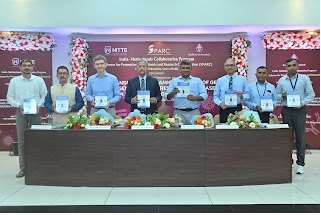
Under the India–Netherlands Collaborative Programme through the SPARC Scheme, Nitte University Centre for Science Education and Research (NUCSER), in association with the Stem Cell Lab at KSHEMA, organised an international symposium on systems biology and disease mechanisms on 19 November 2025. The symposium brought together researchers from India, the Netherlands and Indonesia to exchange scientific knowledge and discuss collaborative approaches to understanding disease processes, promoting international research cooperation and evidence-based scientific investigation.
Links to publicly accessible description/evidence:
https://nitte.edu.in/nucser/news-details.php?id=1458
Nitte (Deemed to be University) participates in DST-funded international research projects, including the Indo–Norway BIOAQUA project with the Norwegian University of Life Sciences (NMBU), focusing on biotechnological control of fish diseases and antimicrobial resistance using a One Health approach, and Indo– Belgium and Indo–Swedish collaborative projects supported by the Department of Science and Technology (India) and the Swedish International Development Agency.
Public Health students of Nitte (Deemed to be University) were selected for a fully funded student exchange programme in Sweden, commencing on 20 March 2025, with academic activities scheduled from 25 March to 12 June 2025. The programme promoted international academic mobility, cross-cultural learning, and exposure to global public health practices through international institutional collaboration, contributing to knowledge exchange and capacity building in public health.
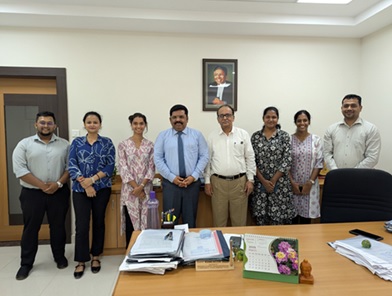
Nitte University’s Department of Public Health, Mangaluru, hosted Linet Pezhumkattil, a Master's student in Global Health from the University of Gothenburg, Sweden, as part of an international academic exchange. The engagement provided an opportunity for cross-cultural learning, academic interaction and knowledge sharing in public health. During her stay, she gained practical insights into India's healthcare system, engaged with community health initiatives and contributed to primary data collection for her research. This collaboration strengthened international academic partnerships, promoted experiential learning and facilitated the exchange of global and local perspectives on public health challenges.
Links to publicly accessible description/evidence:https://www.youtube.com/watch?v=hB-sLX0b5HA
Nitte University, through Nitte Usha Institute of Nursing Sciences, hosted an eight-week international internship in collaboration with VIA University College, Denmark. As part of this exchange, Freja Sand, a student from VIA University College, gained exposure to India's healthcare practices, nursing education and cultural diversity. The programme promoted cross-cultural learning, international knowledge sharing and stronger institutional partnerships in nursing education.
Links to publicly accessible description/evidence:https://www.youtube.com/watch?v=bRb3mHWgpJ4
Freja Sand, a student from VIA University College, Denmark, participated in an eight-week internship at Nitte Usha Institute of Nursing Sciences, Nitte University. Through this international collaboration, she gained insights into India’s healthcare practices, cultural diversity, and nursing education, strengthening cross-cultural learning and global healthcare perspectives.
Links to publicly accessible description/evidence:https://www.youtube.com/watch?v=bRb3mHWgpJ4
Scientists and students from the USA collaborated with Nitte University Centre for Science Education & Research (NUCSER) through an international academic exchange focused on agricultural research, learning, and capacity building. The collaboration involved sharing expertise, exploring agricultural systems, and gaining practical insights into sustainable farming practices. Through this partnership, participants contributed to global knowledge exchange supporting innovation, evidence-based practices, and sustainable development in agriculture.
Links to publicly accessible description/evidence:https://www.youtube.com/watch?v=q-n3XgCaY4c
Jacob, a nursing student from VIA University, Denmark, participated in an international internship at Nitte University, gaining clinical experience in medical-surgical care and insights into healthcare practices in India. Through this global collaboration, he contributed to cross-cultural learning and exchange of healthcare knowledge, supporting the development of globally informed nursing practices.
Links to publicly accessible description/evidence:https://www.youtube.com/watch?v=qtVkDjK0rCc
Four nursing students from the University College of Northern Jutland, Denmark, engaged in a four-week internship at Nitte University, gaining practical exposure to maternal and child healthcare practices. Through this international exchange, students contributed to cross-border learning, shared healthcare perspectives, and strengthened global understanding of nursing practices that support better health outcomes.
Links to publicly accessible description/evidence:https://www.youtube.com/watch?v=WnIkvnModTY
- Collaboration with Food and Agriculture Organization of United Nations for Antimicrobial Resistance (AMR) and Aquaculture Biosecurity:
- Collaboration with FAO/WHO (JEMRA) for Global Food Safety:
- Collaboration with Nord University, Norway:
- WOAH-Led Global Partnership on Responsible Aquaculture Practices
- Strengthening global scientific collaboration on food systems and nutrition through WHO advisory engagement
- Dr. Indrani Karunasagar contributed expert input to FAO-led aquatic disease surveillance roadmap and guideline development.
- Strengthening international partnerships in food safety at SFDA, Riyadh
- Collaboration with FSSAI and WHO to advance food safety risk assessment
- FAO Validation Workshop on Early Warning Systems for Aquatic Diseases, Rome
- Expert contribution to aquatic health partnerships at 12th DAA
- FAO Global Agrifood Biotech Conference: International scientific knowledge exchange
- FAO–Chinese Academy Workshop on Digital Technologies for Aquaculture Disease Early Warning
- International Capacity Building on WOAH Aquatic Animal Disease Reporting Standards in Myanmar
- World Aquaculture 2025: International collaboration for scientific knowledge exchange
Nitte University, designated as one of the FAO Reference Centers for Antimicrobial Resistance (AMR) and Aquaculture Biosecurity (AB) in 2023, with the designation valid until 2026, plays a pivotal role in global efforts to understand, prevent, and reduce the risk of AMR. This collaboration, which includes institutes such as the Pearl River Fisheries Research Institute and the Yellow Sea Fisheries Research Institute in China, and Mississippi State University in the USA, reflects a unified commitment to addressing the global challenge of AMR. The misuse of antimicrobials in agriculture, aquaculture, and healthcare significantly increases the risk of resistance, threatening food security, animal and plant welfare, and human health. To combat this, Nitte University, alongside these international partners, contributes to the One Health goals—a coordinated strategy involving the World Health Organization, the World Organisation for Animal Health, the United Nations Environment Programme, and FAO. Together, these organizations strive to ensure the continued effective use of antimicrobials and address the growing threat of antimicrobial resistance.
Links to publicly accessible description/evidence:
https://dstnutec.in/user/eventInfo/137"
https://www.fao.org/in-action/aquatic-health-management-biosecurity/events/events-detail/launch-of-the-fao-reference-centres-on-antimicrobial-resistance-amr-and-aquaculture-biosecurity-ab/en
https://dstnutec.in/user/eventInfo/127
Dr. Iddya from Nitte University has been recognized as one of the experts on the Roster of Experts for five years, from 2023 to 2027, for the Joint FAO/WHO Expert Meetings on Microbiological Risk Assessment (JEMRA), an international forum that convenes scientific experts to provide critical guidance on microbiological hazards. This collaborative effort, jointly administered by the Food and Agriculture Organization (FAO) and the World Health Organization (WHO), focuses on enhancing food safety through comprehensive scientific advice. Dr. Iddya's expertise significantly contributes to these efforts, enabling Nitte University to actively address crucial challenges related to foodborne pathogens and play a vital role in promoting public health and ensuring food security on a global scale.
Links to publicly accessible description/evidence:https://cdn.who.int/media/docs/default-source/food-safety/jemra/roster_of_experts_for_microbial_risk_assessment.pdf?sfvrsn=59ae2e76_22
NitteDU collaborates with scientists from Nord University, focusing on areas such as vaccine development and phage therapy in aquaculture, microbial pathogens in aquatic systems, and antimicrobial resistance. The collaboration also ensures compliance with international standards set by the World Organization for Animal Health and the Codex Alimentarius Commission (a joint FAO/WHO body), which play a crucial role in safeguarding human health.
The World Organisation for Animal Health (WOAH) invited Dr. Iddya Karunasagar to be a member of the Ad hoc Expert Group constituted to review and revise Chapter 6.2 of the WOAH Aquatic Animal Health Code. This chapter deals with the prudent and responsible use of antimicrobial agents in aquaculture. The Ad hoc committee held several rounds of online meetings to review the chapter in view of the current situation with respect to diseases in aquatic animals, antimicrobial residues, antimicrobial resistance (AMR), and mitigation of AMR in aquaculture.
Links to publicly accessible description/evidence:
https://www.woah.org/app/uploads/2025/10/a-ahg-report-chapter-6.2-aquatic-code-29082025-vf.pdf
Dr. Iddya Karunasagar has been appointed by the World Health Organization as a Member of its Technical Advisory Group on Risk–Benefit Assessment of animal-source foods, contributing to global scientific collaboration on evaluating dietary transitions, including the replacement of red meat with plant-based and aquatic foods, through a series of expert virtual meetings.
Links to publicly accessible description/evidence:
https://www.who.int/groups/technical-advisory-group-on-risk-benefit-assessment-of-optimal-intake-of-animal-source-foods
Dr. Indrani Karunasagar delivered an expert talk in the programme “Development of Farm-Level Early Warning System for Aquatic Animal Disease,” contributing technical expertise to the formulation of guidelines and the development of a roadmap for strengthening aquatic animal health surveillance and evidence-based disease management strategies. The programme was organized by the Yellow Sea Fisheries Research Institute (YSFRI; 3–5 November 2025), the Pearl River Fisheries Research Institute (PRFRI; 7–9 November 2025), and the Food and Agriculture Organization (FAO) in collaboration with the Chinese Academy of Fishery Sciences (CAFS).
Dr. Iddya Karunasagar was invited by the Saudi Food and Drug Authority to serve as a Member of its International Scientific Advisory Board on Food Safety Risk Assessment. He participated in the Board’s second meeting held in Riyadh, Saudi Arabia, on February 19–20, 2025. During this engagement, Dr. Karunasagar contributed expert guidance on microbiological risk assessment and evaluation, and engaged in focused discussions with SFDA staff. These interactions covered key areas including risk assessment of Pseudomonas aeruginosa in bottled drinking water, laboratory detection methods for Campylobacter and Shigella, strengthening epidemiological linkages, and the application of whole genome sequencing data to predict antimicrobial resistance.
Links to publicly accessible description/evidence:
https://oldsfda.sfda.gov.sa/en/news/2636130
Dr. Iddya Karunasagar participated as a panellist in the FSSAI–WHO Master Class on Food Safety and Risk Assessment held during the Global Food Regulators Summit at Bharat Mandapam, New Delhi, on 26–27 September 2025. He delivered a technical lecture on "Interpreting Susceptibility Testing Data" and participated in the concluding panel discussion on "The Future of Risk Assessment in India."
Dr. Iddya Karunasagar was invited by the Food and Agriculture Organization of the United Nations (FAO) as a speaker and participant at the Validation Workshop on the Technical Roadmap for the Development of an Early Warning System for Aquatic Diseases, held at FAO Headquarters, Rome, Italy, from 9–11 December 2025. He delivered an invited talk titled “Addressing Disease Threats from Wild Aquatic Animal Populations.
Dr. Indrani Karunasagar was invited to participate in the 12th Symposium on Diseases in Asian Aquaculture (12th DAA) held in Chennai during 23–27 September 2025 and chaired the technical session on “Aquatic Animal Disease Diagnostics, Prophylactics and Therapeutics.” The engagement fostered collaboration among researchers, academicians, and professionals working in aquatic health by facilitating exchange of expertise on disease surveillance, prevention, and therapeutic approaches. The contribution strengthened partnerships for advancing sustainable aquaculture practices and promoted collective efforts towards improving aquatic animal health management.
Links to publicly accessible description/evidence:
https://eafpbulletin.scholasticahq.com/article/159143-the-12th-symposium-on-diseases-in-asian-aquaculture-daa12
Dr. Iddya Karunasagar was invited by the Food and Agriculture Organization of the United Nations (FAO) to speak at the Global Agrifood Biotech Conference held in Rome (16–18 June 2025). The conference brought together international experts to exchange scientific evidence and biotechnology innovations for sustainable agrifood systems. His presentation on "Fish Breeding, Diagnostic Tools and Vaccines for Aquatic Animals" contributed to global knowledge exchange on sustainable aquaculture and food security, supporting the Sustainable Development Goals.
Links to publicly accessible description/evidence:https://www.fao.org/biotechnology/resources/fao-global-agrifood-biotechnologies-conference/fish-breeding--diagnostic-tools-and-vaccines-for-aquatic-animals/en
Dr. Iddya Karunasagar was invited by the FAO and the Chinese Academy of Fisheries Sciences to participate in the Workshop on Development of Farm-Level Early Warning Systems for Aquatic Animal Diseases, held at the FAO Reference Center on Antimicrobial Resistance, Yellow Sea Fisheries Research Institute, Qingdao, China, from 3–5 November 2025. During the workshop, he delivered an invited talk titled “Digital Technologies in Predicting Disease Emergence and Food Safety in Aquaculture.
The Myanmar Fishery Products Processors and Exporters Association (MPEA) engaged Dr. Iddya Karunasagar to deliver a training programme on the World Organisation for Animal Health (WOAH) Aquatic Animal Health Code and the WOAH Aquatic Animal Disease Reporting System from 28 July to 1 August 2025. The training covered WOAH requirements for aquatic animal disease reporting, disease reporting platforms, outbreak, half-yearly and annual reporting formats, and procedures for self-declaration of disease freedom. Approximately 30 officers from the Myanmar Department of Aquaculture and industry representatives participated in the programme.
As Programme Chair of World Aquaculture 2025, Dr. Iddya Karunasagar led the development and coordination of an international scientific programme comprising oral and poster presentations on aquaculture and aquatic products. The conference brought together more than 500 delegates from across all continents, including representatives from academia, industry, government, and international organisations such as the Food and Agriculture Organization of the United Nations (FAO). The event facilitated the exchange of scientific evidence, research findings, and methodologies, strengthening global collaboration in generating and sharing knowledge that supports the Sustainable Development Goals.
- Collaborations with local Government agencies and NGOs for establishing and running Network of Rural Health Centers
- Collaboration with NGOs for community based de-addiction services.
- Collaboration with Gajria Family Foundation
- Nitte DU Collaborates with NGOs and External Organizations to Promote Community Health and Well-being
- Akanksha Charitable Trust and Nitte DU collaborated to strengthen youth engagement for sustainable development.
- Collaborative outreach by Nitte MPH and Snehadeep Home for Girls promoting student volunteerism and community welfare.
- NGO–university collaboration promoting voluntary blood donation and social responsibility
- Collaboration with JCI Mangalore Samrat for Community Health Promotion through Student Volunteering
- Collaboration with NGOs for Student Volunteering and Community Engagement
- Collaboration with Indian Medical Association / Indian Dental Association for conducting medical and dental health camps.
- Collaboration with Indian Cancer Society
- Collaborations with Smile Train USA and Cleft Children International (CCI) Switzerland
- Collaboration with Famous Youth Club Thokur and Rotary Club Baikampady for Community Health Outreach
- Collaboration with MRPL for Climate Action Education among School Students
- Collaboration with Rotary Club Mangalore for Community Awareness on Overfishing
- Nitte’s collaboration with the Department of Horticulture for Water Conservation Education and Awareness Programs
- Collaborations with Schools of Dakshina Kannada District:
- Collaboration with Sevashrama Old Age Home for Elderly Well-being
- Collaboration with Samagra Shikshana, Karnataka to provide free special health care services to special children:
- Collaboration with NGOs to offer free healthcare services to schools serving underprivileged children:
- Collaboration with Indian Red Cross Society
- Collaboration with Pavoor Gram Panchayat for Lake Rejuvenation
- Collaboration with Ramakrishna Mission for Swacch Mangaluru Abhiyan
- Collaboration with Ramakrishna Mission for Shramadan and Community Cleanliness
- Nitte’s collaboration with the Department of Horticulture for Water Conservation Education and Awareness Programs
- Collaboration with Hosabelaku Seva Trust
- Collaboration with Rotary Club, Surathkal and Mahila Mandala
- Collaboration with Sri Panjandaya Banta Vaidyanatha Aadi Koragathaniya Seva Trust
- Collaboration with Flyhigh Charitable Trust- Hair Donation Drive
- Collaboration with Directorate of Environment and Climate Change
- Collaboration for Community Awareness and Mangrove Restoration
- Collaboration with “Sevanjali Pratistana”
- Collaboration with “Brahmashri Mittur Purohit Timmaiah Bhat Sampratisthana”
- Collaboration with “Gandhinagara Yuvaka Vrunda”
- Collaboration with “Sri Gopalakrishna Devaru Trust”
- Collaboration with “Thalipady Guthu Janakalyana Trust”
Nitte DU has established 23 Rural Satellite Health Centers to reach the rural population with the objective of improving accessibility, availability and affordability of health care and promoting health awareness. Nitte is providing comprehensive free-of-cost care to the patients in these underserved areas. These rural centers have been set up in collaboration with local NGO’s/ philanthropists, like Rotary Club, Dabbekatte, Sharada Dhanvantri Charitable Hospital, Sringeri, Ashwini Hospital, Madikeri, Sri Brahmalingeshwara Temple Trust, Marnakatte, Thalipady Guthu Janakalyana Samithi, Gandhinagara Yuvaka Vrinda, Hejmadi Kodi, Mangalore University, Konaje, Sevanjali Trust, Farangipet, Sri Sathya Sai Hospital, Alike, Government Primary Health Centre Natekal, Government Primary health care Centre Nellyadi, Sri Ramakrishna Primary and Higher Primary School Harekala.
Links to publicly accessible description/evidence:https://www.nitte.edu.in/rural-health-center.php
The Department of Psychiatry of K. S. Hegde Medical Academy has been collaborating with Akhila Karnataka Jana Jagruthi Vedike of Shri Kshethra Dharmasthala Rural Development Project (SKDRDP) Dharmastala in conducting de-addiction camps from the year 1998. The department has participated in 1469 general community de-addiction camps held at Ujire as well as other parts of Karnataka. Medicines and psychiatry consultation are provided free of cost for general community camps by NITTE (Deemed to be University).
Links to publicly accessible description/evidence:https://nitte.edu.in/kshema/department-psychiatry.php#CommunityServices"
https://youtu.be/nAeaN1UadpM?si=aaRSo5uUadGZKr7Q
Nitte (Deemed to be University), Mangalore, and the Gajria Family Foundation have established a 60-bed hospital at Karkala in Udupi district. The NITTE Gajria Hospital located at Karkala is built on a five-acre land, donated by Sri Venkataramana Temple Trust, Karkala. It provides Secondary Health care to the population of Udupi district.
Links to publicly accessible description/evidence:https://nittegajria.in/
NitteDU has partnered with colleges across Karnataka to deliver health awareness programs and healthcare services that prioritize mental health support for students and the community. Through counselling, mental health awareness sessions, and workshops, this initiative fosters a supportive environment for open discussions about mental health. By working to reduce the stigma surrounding mental health issues, the collaboration ensures that both students and the broader community receive timely professional care, promoting mental well-being and academic success. During 2025, the Department of Public Health Dentistry, ABSMIDS, Nitte Deemed to be University, collaborated with external organizations to promote community health. On 15 January 2025, in association with the Indian Cancer Society, an anti-tobacco and oral health awareness camp benefited 64 schoolchildren at Kumpala. On 20 March 2025, in collaboration with Justice KS Hegde Dental Clinic, Nitte, and KSHEMA’s Department of Psychiatry, an oral health awareness camp reached approximately 80 beneficiaries. On 24 August 2025, in partnership with Rotary Club, Surathkal, and Mahila Mandala, Kulai, a free dental treatment and oral health awareness camp screened 26 patients.NitteDU has partnered with colleges across Karnataka to deliver health awareness programs and healthcare services that prioritize mental health support for students and the community. Through counselling, mental health awareness sessions, and workshops, this initiative fosters a supportive environment for open discussions about mental health. By working to reduce the stigma surrounding mental health issues, the collaboration ensures that both students and the broader community receive timely professional care, promoting mental well-being and academic success. During 2025, the Department of Public Health Dentistry, ABSMIDS, Nitte Deemed to be University, collaborated with external organizations to promote community health. On 15 January 2025, in association with the Indian Cancer Society, an anti-tobacco and oral health awareness camp benefited 64 schoolchildren at Kumpala. On 20 March 2025, in collaboration with Justice KS Hegde Dental Clinic, Nitte, and KSHEMA’s Department of Psychiatry, an oral health awareness camp reached approximately 80 beneficiaries. On 24 August 2025, in partnership with Rotary Club, Surathkal, and Mahila Mandala, Kulai, a free dental treatment and oral health awareness camp screened 26 patients.
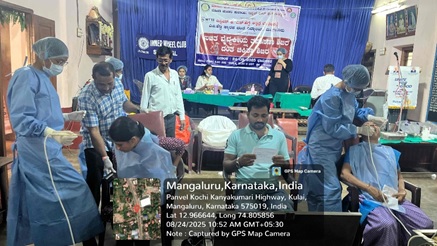
Links to publicly accessible description/evidence:
https://aboutnitte.blogspot.com/2025/01/news-from-absmids-free-anti-tobacco.html
https://aboutnitte.blogspot.com/2025/08/news-from-absmids-free-dental-treatment.html
https://aboutnitte.blogspot.com/2025/03/news-from-absmids-oral-health-awareness.html
The NSS Unit of Nitte (Deemed to be University), in collaboration with Akanksha Charitable Trust, organized a two-day National Youth Conference on 11–12 January 2025. The conference engaged over 300 students from Karnataka and neighbouring states in keynote sessions by start-up founders and CEOs, panel discussions, and a Hackathon addressing real-world challenges. The NGO–university collaboration strengthened student learning, innovation, leadership, and social responsibility, contributing to the Sustainable Development Goals (SDGs).
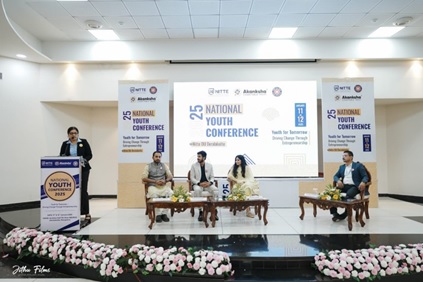
Links to publicly accessible description/evidence:
https://aboutnitte.blogspot.com/2025/02/national-youth-conference.html
Students and faculty of Nitte's Master of Public Health (MPH) programme organized 'High Five for Fun' in collaboration with Snehadeep Home for Girls, Mangaluru. Following a needs assessment, the team conducted the 'ABCD – Any Body Can Donate' fundraising campaign and, on 23 February 2025, visited the home to conduct recreational activities, distribute gifts, and interact with 22 HIV-infected orphan girls. The initiative strengthened NGO–university collaboration through student volunteering, community engagement, and support for vulnerable children, advancing the Sustainable Development Goals (SDGs).
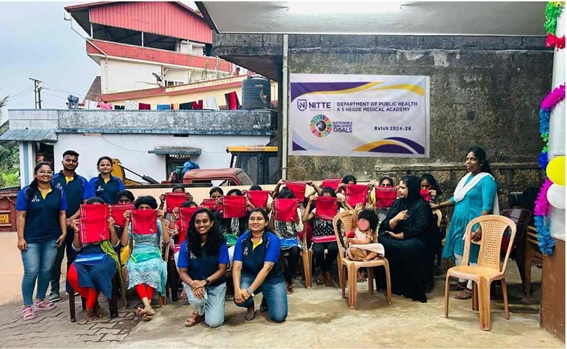
Links to publicly accessible description/evidence:
https://aboutnitte.blogspot.com/2025/02/news-from-kshema-nitte-universitys-mph.html
The NSS Unit, Youth Red Cross, and Red Ribbon Club of Nitte Institute of Professional Education (NIPE) organized a Blood Donation Camp on 25 January 2025 at KSRTC Bus Stand, Mangaluru, in collaboration with Shashwath Seva Foundation and other community partners. The initiative engaged students in voluntary blood donation and community service, strengthening NGO–university collaboration for community well-being and the Sustainable Development Goals (SDGs).
Links to publicly accessible description/evidence:https://aboutnitte.blogspot.com/2025/01/news-from-nipe-blood-donation-drive.html
The Nitte Usha Institute of Nursing Sciences, in collaboration with JCI Mangalore Samrat, a civil-society organisation, and in association with Swastika National Business School and MSEZ under the Vriddhi Industry-Academia Collaboration, conducted a CPR training and free health check-up camp on 19 October 2025. Through student-led community volunteering and collaborative outreach with JCI Mangalore Samrat, the initiative provided CPR training, blood pressure screening and health education to 110 community participants, promoting health awareness, preventive care and community well-being.
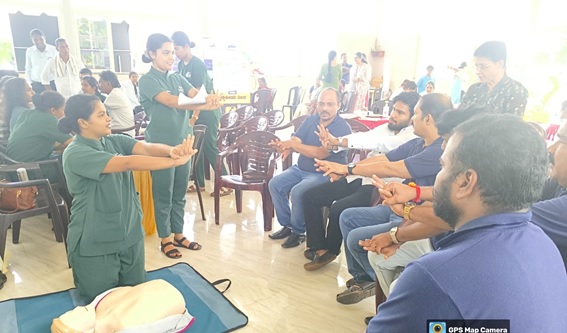
Links to publicly accessible description/evidence:
https://aboutnitte.blogspot.com/2025/10/news-from-nuins-nuins-collaborates-with.html
The NSS Unit of Nitte Institute of Professional Education (NIPE), in collaboration with Global TV, Lions Club Mangaluru, Together We Grow, Nitte Daan Fest, ARM News, Sashwatha Seva, and Global Gyan Academy, organised a 7-day Annual Special Camp from December 27, 2024, to January 2, 2025. The camp was held at Dr. M. Ramanna Shetty Memorial English Medium High School (MRSMEMS), Tapovana, Thokur, Mangaluru. Centered on the theme “Communicating the Sustainable Development Goals,” the program aimed to create awareness and promote community engagement through various educational and outreach activities.
Links to publicly accessible description/evidence:https://www.instagram.com/reel/DEmSk_WyueC/?igsh=MW9oOGl1ajFuaWhucA%3D%3D
https://aboutnitte.blogspot.com/2025/01/news-from-nipe-nss-camp.html
Several hundreds of medical and dental health camps are conducted each year in collaboration with National/ International Professional bodies such as the Indian Medical Association (IMA), Indian Dental Association (IDA), and Indian Red Cross Society. On 27 March 2025, in association with Lions Club, Metro Gold, the Department of Public Health Dentistry conducted a free dental screening camp at Mangala English Medium School, Mannagudda, providing oral health education and screening students. On 20 July 2025, in collaboration with Plastics for Change, the District Health and Family Welfare Department, and the District Surveillance Unit, Dakshina Kannada, a free anti-tobacco awareness and dental treatment camp was conducted for waste managers and scrap workers, screening 81 patients. On 24 August 2025, in partnership with Rotary Club, Surathkal, and Mahila Mandala, Kulai, a free dental treatment camp screened 26 patients. On 21 September 2025, in association with Sri Panjandaya Banta Vaidyanatha Aadi Koragathaniya Seva Trust, Kuthar, another dental treatment camp screened 67 patients.
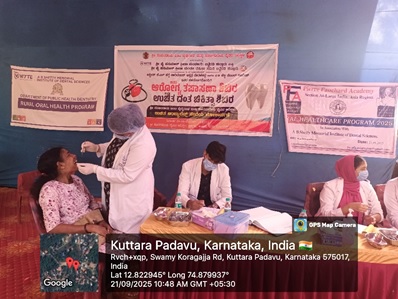
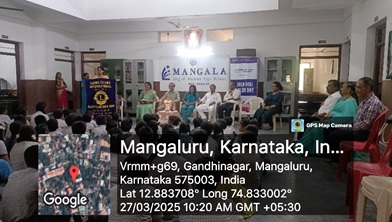
Links to publicly accessible description/evidence:
https://www.nitte.edu.in/health-care-extension.php#camps
Sample activity reports:https://aboutnitte.blogspot.com/2025/03/news-from-absmids-free-dental-screening.html
https://aboutnitte.blogspot.com/2025/08/news-from-absmids-free-dental-treatment.html
https://aboutnitte.blogspot.com/2025/09/news-from-absmids-camp-report.html
https://aboutnitte.blogspot.com/2025/03/news-from-absmids-oral-health-awareness.html
https://aboutnitte.blogspot.com/2025/01/news-from-absmids-free-anti-tobacco.html
https://aboutnitte.blogspot.com/2025/08/news-from-absmids-free-anti-tobacco.html
The Department of Public Health Dentistry, A. B. Shetty Memorial Institute of Dental Sciences (ABSMIDS), in collaboration with the Indian Cancer Society, conducted anti-tobacco and oral health awareness programmes in schools across Dakshina Kannada district during 2025. These initiatives aimed to educate schoolchildren about the harmful effects of tobacco, oral cancer prevention, the influence of the tobacco industry on children, and measures to prevent and quit tobacco use.
On 15 January 2025, an awareness camp was conducted at DK ZP Government Higher Primary School, Kumpala, reaching 64 schoolchildren. A similar programme was organized at Government High School, Permannur, on 22 August 2025, benefiting 88 schoolchildren. Further strengthening this outreach, a free Anti-Tobacco and Oral Health Awareness Camp was conducted at Sri Rama High School, Kalladka, on 5 December 2025, in collaboration with the Indian Cancer Society and the Department of Social Work, Mangalore University. The programme reached 696 students, promoting oral health awareness, oral cancer prevention, and tobacco avoidance and cessation.
Collectively, these collaborative initiatives reached 848 schoolchildren and students across three schools in 2025, demonstrating the institution's commitment to preventive healthcare, cancer awareness, and community health education.
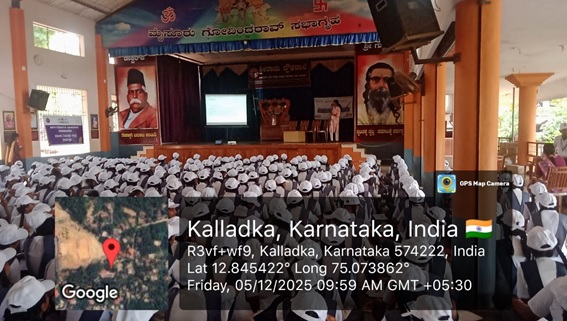
Links to publicly accessible description/evidence:
https://nitte.edu.in/health-care-extension.php#ics
https://aboutnitte.blogspot.com/2025/01/news-from-absmids-free-anti-tobacco.html
https://aboutnitte.blogspot.com/2025/12/news-from-absmids-free-anti-tobacco.html
NitteDU in collaboration with Cleft Children International, Zurich and Smile Train, USA has been involved in free of cost multidisciplinary management of children with cleft and craniofacial deformities for over a decade.
Links to publicly accessible description/evidence:https://nitte.edu.in/cleft.php
The Department of Public Health Dentistry, AB Shetty Memorial Institute of Dental Sciences, in collaboration with Famous Youth Club Thokur, Rotary Club Baikampady, Priyadarshini Cooperative Society Haleyangadi, My Bharath Dakshina Kannada, and other community partners, conducted a free anti-tobacco awareness and dental treatment camp at the Famous Youth Club Office, Thokur, on 29 June 2025. Through collaborative community outreach, the initiative provided anti-tobacco awareness, oral health education, screening and dental care to the general public, with 44 participants receiving screening and dental treatment.
Links to publicly accessible description/evidence: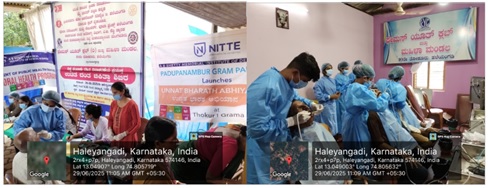
Links to publicly accessible description/evidence:
https://aboutnitte.blogspot.com/2025/06/news-from-absmids-free-anti-tobacco.html
The Nitte Climate Action Programme, a five-year initiative launched in 2023 to provide free climate change education to school students, was implemented in collaboration with Mangalore Refinery and Petrochemicals Limited (MRPL). Through its third edition in 2025, the programme extended climate action education and awareness to 10,000 school students across Mangaluru, supporting student learning and community awareness on climate change and sustainable practices.
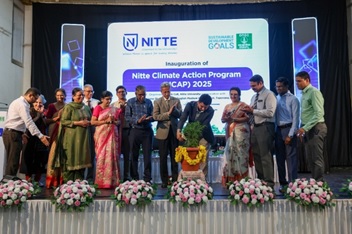
Links to publicly accessible description/evidence:
https://www.daijiworld.com/news/newsDisplay?newsID=1290315
https://www.thehansindia.com/karnataka/nitte-university-launches-flagship-climate-action-programme-1000893#
https://www.mangaloretoday.com/main/Mangaluru-Nitte-launches-Nitte-Climate-Action-Program-2025-.html
https://www.mangaloretoday.com/main/Nitte-Climate-Action-Program-2025-concludes-calls-for-youth-led-sustainable-innovation.html
https://www.youtube.com/watch?v=1P8F9NDddAk
The NITTE–GoK Centre of Excellence in Aquamarine Innovation (NITTE-GOK COE | AQUAMARIN), hosted at the Nitte University Centre for Science Education and Research (NUCSER), in association with the NSS Cell of NitteDU and Rotary Club Mangalore, organised a 5 km walkathon at Tannirbavi Beach on 28 December 2025. Centred on the theme “Together Against Overfishing”, the collaborative community outreach initiative engaged more than 250 students, community members, environmental enthusiasts and fishermen in raising awareness about responsible fishing, marine conservation and protection of ocean resources.
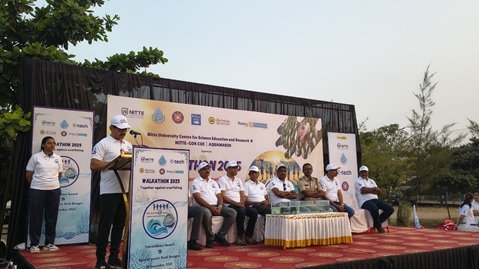
Links to publicly accessible description/evidence:
https://aboutnitte.blogspot.com/2025/12/news-from-nucser-nittes-walkathon.html
https://nitte.edu.in/nucser/news-details.php?id=1484
Nitte University Centre for Science Education & Research (NUCSER), in collaboration with the Department of Horticulture, Bantwal, The Netravati Farmers Development Association Union, Bantwal, and Dakshina Kannada Cooperative Society, Annalike, organised a program on 'Water Conservation and Micro Irrigation' at Navashakthi Yuvaka Mandala on 25 November 2025 under the University's Sustainable Development Goals initiative.The program featured resource persons Mr. Chandrappa Moolya, Mr. Raghavendra Bhat (progressive farmers), and Mr. Joe Pradeep D'Souza, Senior Assistant Director of Horticulture. Farmers, NUCSER postgraduate students, and faculty participated in the event. The sessions focused on water conservation, micro-irrigation technologies, sustainable farming practices, and government schemes supporting efficient irrigation and water management.
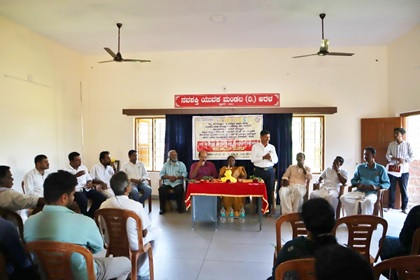
Links to publicly accessible description/evidence:
https://www.facebook.com/share/p/1MZbnWFgzh/ >
https://aboutnitte.blogspot.com/2025/12/news-from-nucser-water-conservation-and.html >
https://nittecoeaquamarin.com/events/awareness-program-on-water-conservation-micro-irrigation >
https://nitte.edu.in/nucser/news-details.php?id=1484
The constituent colleges of Nitte DU collaborate with government, aided and private schools of Dakshina Kannada district to conduct awareness programs and provide free healthcare to the school children. Nitte (Deemed to be University), through its constituent institutions, collaborated with schools across Dakshina Kannada district in 2025 to promote student health and well-being through free medical check-ups, dental screening, oral health education and anti-tobacco awareness. Programmes included a general health check-up at Dr. MRSM English Medium School, a dental screening camp at Mangala English Medium School, Mannagudda, and anti-tobacco and oral health awareness camps at DK ZP Government Higher Primary School, Kumpala (64 students), and Government High School, Permannur (88 students).
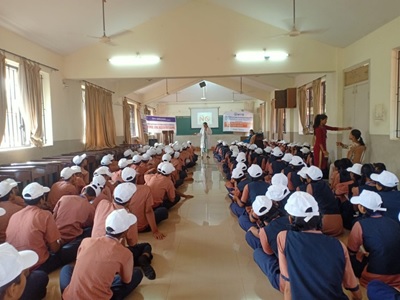
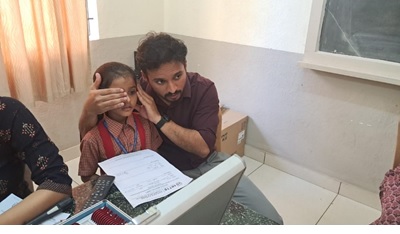
Links to publicly accessible description/evidence:
https://aboutnitte.blogspot.com/2025/01/news-from-mrsmemhs-general-health.html
https://aboutnitte.blogspot.com/2025/03/news-from-absmids-free-dental-screening.html
https://aboutnitte.blogspot.com/2025/01/news-from-absmids-free-anti-tobacco.html
The Alumni Association of Nitte Usha Institute of Nursing Sciences collaborated with Sevashrama Old Age Home, Belma Renjady, to support the well-being of elderly residents. On 19 July 2025, the Association provided essential support through the donation of a wheelchair and an airbed, along with recreational and social engagement activities. Eleven alumni members participated, contributing material and emotional support to the residents and fostering meaningful interaction, companionship and dignity among older persons.
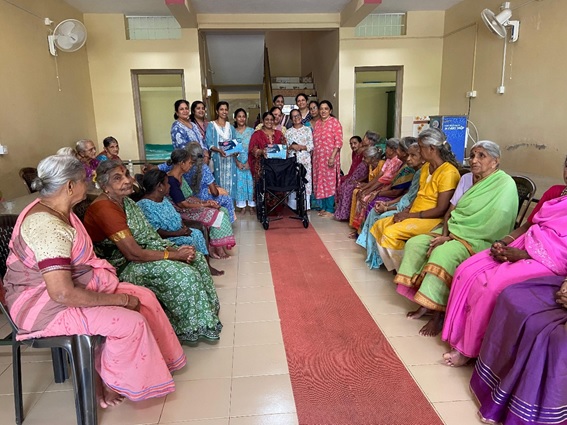
Links to publicly accessible description/evidence:
https://aboutnitte.blogspot.com/2025/07/news-from-nuins-old-age-home-visit.html
Nitte (Deemed to be University) collaborates with Samagra Shikshana, Karnataka to provide free special health care services to children with special needs through its dedicated unit, Nitte Special Child Care (N-SPECC). This initiative benefits children from special schools in the Dakshina Kannada district. On 20th January 2025, an awareness programme on the health impacts of prolonged mobile phone use was conducted in collaboration with the Block Education Office, Mangaluru South, benefiting 125 participants, including 100 children with special needs and their parents. The programme addressed vision care, oral health and mental well-being.
Links to publicly accessible description/evidence:
https://nitte.edu.in/health-care-extension.php#nspecc
https://aboutnitte.blogspot.com/2025/02/news-from-absmids-awareness-programme.html
Nitte University, as part of its commitment to social responsibility and community welfare, has actively collaborated with various NGOs to provide essential healthcare services to schools that cater to underprivileged children. This initiative is designed to address the healthcare needs of children who have limited access to medical facilities, ensuring they receive proper medical attention and preventive care. A free dental screening camp was conducted at DK ZP Government Higher Primary School, Kumpala, on 15 January, reaching 64 schoolchildren. On 27 March, in association with Lions Club Metro Gold, ABSMIDS conducted a free dental screening camp at Mangala English Medium School, Mannagudda, providing oral health education and identifying dental conditions among students.
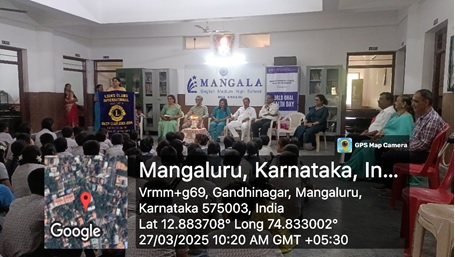
Links to publicly accessible description/evidence:
https://aboutnitte.blogspot.com/2025/03/news-from-absmids-free-dental-screening.html
https://aboutnitte.blogspot.com/2025/01/news-from-absmids-free-anti-tobacco.html
The Youth Red Cross Unit (YRC) of Nitte Deemed to be University (NDU) in association with Indian Red Cross Society (IRCS), Dakshina Kannada district organized blood donation drive at KSRTC Bus Stand, Mangaluru, on 25 January 2025, with over 30 donors.
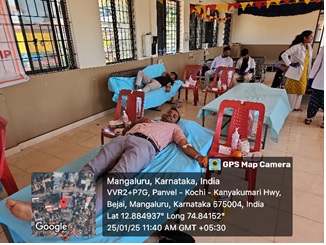
Links to publicly accessible description/evidence:
https://aboutnitte.blogspot.com/2025/01/news-from-nipe-blood-donation-drive.html
Nitte University Centre for Science Education and Research (NUCSER), in collaboration with Pavoor Gram Panchayat, rejuvenated a weed-infested lake at Innoli village, Ullal Taluk, in 30th August 2025. NUCSER professionals and NSS volunteers removed aquatic weeds, plastic waste and debris, with the Gram Panchayat supporting the initiative and committing to the lake's continued maintenance.
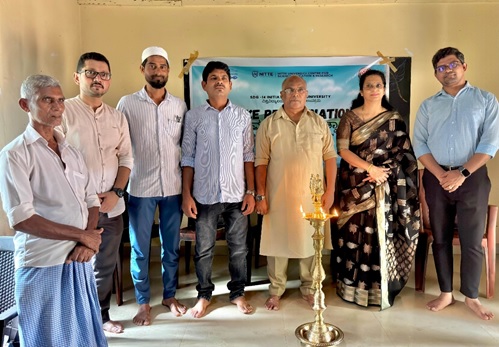
Links to publicly accessible description/evidence:
https://www.facebook.com/share/p/19kGDF8tem/
https://x.com/NUCSER_Official/status/1961704041265991737
https://aboutnitte.blogspot.com/2025/09/news-from-nucser-bringing-back-water.html
Nitte Institute of Physiotherapy students participated in the Ramakrishna Mission’s Swacch Mangaluru Abhiyan on 5 October 2025, cleaning murals at the University College compound and removing plants, algae and dirt to restore the public space.
Links to publicly accessible description/evidence:
https://timesofindia.indiatimes.com/city/mangaluru/volunteers-clean-areas-around-clock-tower-under-swacch-mangaluru-abhiyan/amp_articleshow/124324129.cms
Nitte Institute of Physiotherapy faculty and students participated in the Ramakrishna Mission’s Swacch Mangaluru Abhiyan on 7 September 2025, undertaking cleanliness activities at Kadri Temple Dwara, Mallikatte Park and the Kadri Gopalnath Memorial.
Links to publicly accessible description/evidence:https://timesofindia.indiatimes.com/city/mangaluru/mangaluru-shramadan-volunteers-join-hands-to-clean-kadri-temple-and-memorial/articleshow/123746123.cms
Nitte University Centre for Science Education & Research (NUCSER), in collaboration with the Department of Horticulture, Bantwal, The Netravati Farmers Development Association Union, Bantwal, and Dakshina Kannada Cooperative Society, Annalike, organised a program on 'Water Conservation and Micro Irrigation' at Navashakthi Yuvaka Mandala on 25 November 2025 under the University's Sustainable Development Goals initiative.The program featured resource persons Mr. Chandrappa Moolya, Mr. Raghavendra Bhat (progressive farmers), and Mr. Joe Pradeep D'Souza, Senior Assistant Director of Horticulture. Farmers, NUCSER postgraduate students, and faculty participated in the event. The sessions focused on water conservation, micro-irrigation technologies, sustainable farming practices, and government schemes supporting efficient irrigation and water management.
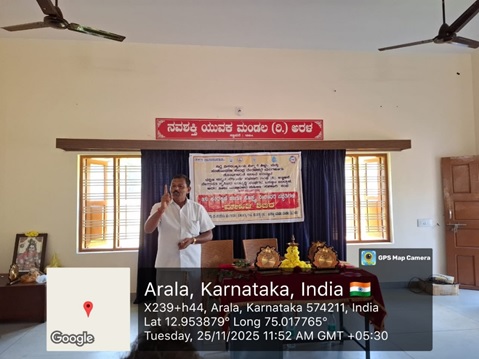
Links to publicly accessible description/evidence:
https://aboutnitte.blogspot.com/2025/12/news-from-nucser-water-conservation-and.html
https://nittecoeaquamarin.com/events/awareness-program-on-water-conservation-micro-irrigation
Nitte University collaborated with Hosabelaku Seva Trust, Bailur, through the student volunteering programme “Nurturing Hope: A Dedication to Caring for Orphans” on 24 February 2025. Students contributed ₹25,000, distributed fruits and engaged with residents through interactive and cultural activities, promoting community well-being and the SDGs.
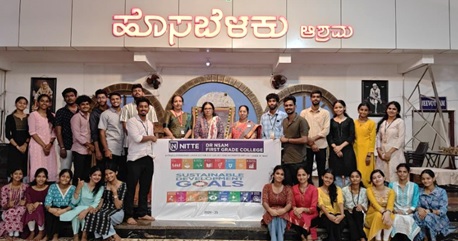
The Department of Public Health Dentistry, AB Shetty Memorial Institute of Dental Sciences, in collaboration with Rotary Club, Surathkal, and Mahila Mandala, Kulai, conducted a free dental treatment camp at Mahila Mandala on 24 August 2025. A total of 26 patients were screened during the camp.
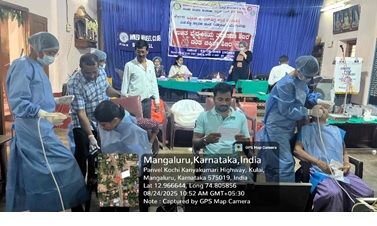
Links to publicly accessible description/evidence:
https://aboutnitte.blogspot.com/2025/08/news-from-absmids-free-dental-treatment.html
The Department of Public Health Dentistry, A B Shetty Memorial Institute of Dental Sciences, in collaboration with Sri Panjandaya Banta Vaidyanatha Aadi Koragathaniya Seva Trust, Kuthar, conducted a free dental treatment camp on 21 September 2025. A total of 67 patients were screened, and preventive and restorative dental treatments were provided.
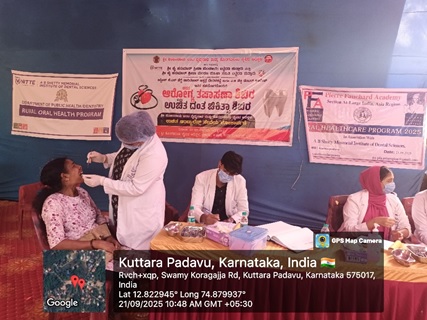
Links to publicly accessible description/evidence:
https://aboutnitte.blogspot.com/2025/09/news-from-absmids-camp-report.html
Nitte University, in collaboration with Mercy Beauty Academy, Mangalore, and Flyhigh Charitable Trust, organized a Hair Donation Drive on 13 October 2025. The initiative aimed to support cancer patients by collecting donated hair to make free wigs for those undergoing treatment. Several students and volunteers actively participated in the drive.
Nitte University, through NUCSER, conducted a six-day training programme on Microplastic Quantification and Characterization from 15–20 December 2025 for staff of the Directorate of Environment and Climate Change. The programme provided hands-on training in field sampling, laboratory analysis, FTIR spectroscopy and fluorescence microscopy, strengthening technical capacity for microplastic monitoring and evidence-based water resource management.
Links to publicly accessible description/evidence:https://aboutnitte.blogspot.com/2025/12/news-from-nucser-nucser-hosts-govt-of.html
NUCSER, NITTE–GOK CoE AQUAMARIN and the Kerala Forest & Wildlife Department collaborated to conduct a mangrove restoration awareness programme at Nagara Vanam, Kasaragod, on 17 October 2025. The programme engaged over 40 participants through environmental education, expert guidance and hands-on mangrove plantation, promoting community participation in coastal ecosystem restoration, marine biodiversity conservation and sustainable management of shared coastal resources.
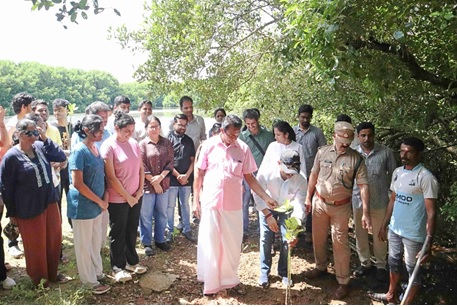
Links to publicly accessible description/evidence:
https://www.facebook.com/share/p/1HX2FYhwcm/
https://www.linkedin.com/posts/nitte-gok-coe-aquamarin_nucser-nitteuniversity-mangroveconservation-activity-7387707131216613376-P7Y6?utm_source=share&utm_medium=member_desktop&rcm=ACoAAAYl71ABq8M1yIGWnDuir2gyBh3jlrn-S38
https://x.com/NUCSER_Official/status/1983715218984440317
https://www.instagram.com/p/DQOBvMNkl2l/?utm_source=ig_web_copy_link&igsh=MzRlODBiNWFlZA==
https://nittecoeaquamarin.com/events/inauguration-and-awareness-session-on-mangrove-restoration
Collaboration with “Sevanjali Pratistana” for extending dental health care to local communities through student volunteering.
Collaboration with “Brahmashri Mittur Purohit Timmaiah Bhat Sampratisthana” for extending dental health care to local communities through student volunteering.
Collaboration with “Gandhinagara Yuvaka Vrunda” for extending dental health care to local communities through student volunteering.
Collaboration with “Sri Gopalakrishna Devaru Trust” for extending dental health care to local communities through student volunteering.
Collaboration with “Thalipady Guthu Janakalyana Trust” for extending dental health care to local communities through student volunteering
Awareness and Educational Programmes on Sustainable Development Goals
During 2025, Nitte (Deemed to be University) organised and supported several awareness programmes, workshops, and educational initiatives to promote understanding of sustainable development among students and the wider community. Notable initiatives included the Nitte Climate Action Programme, which promoted climate literacy among school students; the webinar on The Nexus between Microplastics, Marine Ecosystems, and Human Health conducted on 18 December 2025, attended by 93 participants; and awareness programmes on water conservation, renewable energy, biodiversity, and responsible waste management.
Student Engagement in Practical Sustainability and Community-Based Initiatives
During 2025, students of Nitte (Deemed to be University) actively participated in practical initiatives addressing environmental conservation, biodiversity protection, water management, and community well-being. Notable activities included the adoption and rejuvenation of the weed-infested lake at Innoli village by NUCSER in association with the NSS Unit, involving students and volunteers in freshwater ecosystem restoration. Students also participated in the five-day NSS special camp at Innoli village from 13–17 June 2025, which included educational activities, health initiatives, science demonstrations, and community engagement. Other initiatives included coastal clean-up drives, environmental awareness campaigns, lake conservation activities, and the Together Against Overfishing walkathon held at Tannirbavi Beach on 28 December 2025, involving more than 250 participants. These activities enabled students to connect academic learning with practical sustainability challenges and develop social and environmental responsibility.
Courses, electives and programs that are primarily related to sustainable development themes
| Course | Program | Elective course/Mandatory courses |
|---|---|---|
| Human rights, Gender Equity and Environmental Studies | B.Arch. | Mandatory |
| Environmental Planning and Design | B.Arch. | Elective |
| Environment and Building Physics | B.Arch. | Elective |
| Climate, Site and Superstructure | B.Arch. | Elective |
| Environment and Building Structures | B.Arch. | Mandatory |
| Conservation | B.Arch. | Mandatory |
| Landscape | B.Arch. | Mandatory |
| Sustainability | B.Arch. | Mandatory |
| Conservation and Heritage | B.Arch. | Elective |
| Environmental Studies | B.Arch. | Elective |
| Climatology & Building | B.Arch. | Elective |
| Water & Waste Systems | B.Arch. | Elective |
| Sustainable Architecture | B.Arch. | Elective |
| Energy Efficient Architecture | B.Arch. | Elective |
| Tropical Architecture – 1 | B.Arch. | Elective |
| Tropical Architecture–2 | B.Arch. | Elective |
| Environmental Design Studio | B.Arch. | Elective |
| Landscape Design | B.Arch. | Elective |
| Disaster Management | B.Arch. | Elective |
| Environmental Sciences | B.Arch. | Elective |
| Environmental Science | B.Tech. | Mandatory |
| Media and Environment | BA(MJC) | Mandatory |
| Arts and Culture Communication | BA(MJC) | Mandatory |
| Environment and Development Communication | BA (MC) | Mandatory |
| Media and Society | BA (MC) | Mandatory |
| Arts and Culture Communication | BA (MC) | Mandatory |
| Peace Journalism | BA (MC) | Mandatory |
| Crisis Communication and Reputation Management | BA (MC) | Mandatory |
| Peace Journalism | MA(MC) | Mandatory |
| Public Health Dentistry | BDS | Mandatory |
| Environmental Studies | BSc (Biomed) | Mandatory |
| Biosafety and Bioethics | BSc (Biomed) | Mandatory |
| Basic Life support and First aid | BSc (Biomed) | Mandatory |
| Epidemiology and Surveillance | BSc (Biomed) | Mandatory |
| Food Spoilage and Preservation | BSc (Biomed) | Mandatory |
| Nutrition and Dietetics | BSc (Biomed) | Mandatory |
| Human rights, gender equity and environmental studies | BSc (MIT) | Mandatory |
| Human rights, gender equity and environmental studies | BSc (MLT) | Mandatory |
| Human rights, gender equity and environmental studies | BSc (OTT) | Mandatory |
| Human Rights, Gender Equity and Environmental Sciences | BSc(Nursing) | |
| Applied Nutrition and Dietetics | BSc(Nursing) | Mandatory |
| Adult Health Nursing I with integrated pathophysiology including BCLS module | BSc(Nursing) | Mandatory |
| Applied Microbiology and Infection Control including Safety | BSc(Nursing) | Mandatory |
| Adult Health Nursing II with integrated pathophysiology including Geriatric Nursing + Palliative care module | BSc(Nursing) | Mandatory |
| Community Health Nursing I including Environmental Science & Epidemiology | BSc(Nursing) | Mandatory |
| Nutrition | BSc(Nursing) | Mandatory |
| Community Health Nursing II | BSc(Nursing) | Mandatory |
| Environment and Development Communication | MA(MC) | Mandatory |
| Media, Culture and Society | MA(MC) | Mandatory |
| Science and Health Communication | MA(MC) | Mandatory |
| Community Medicine | MBBS | Mandatory |
| Environmental & Occupational health | MPH | Mandatory |
| Principles and Practices of Public Health | MPH | Mandatory |
| Basic Epidemiology | MPH | Mandatory |
| Demography and Population Sciences | MPH | Mandatory |
| Social and Behaviour Change, Effective Communication in Healthcare | MPH | Mandatory |
| Advanced Epidemiology | MPH | Mandatory |
| Fish Immunology and HealthManagement | M.Sc. Marine Biotechnology | Mandatory |
| Marine Microbiology, Fish Immunology and Health management | M.Sc. Marine Biotechnology | Mandatory |
| Aquatic Environmental Biotechnology | M.Sc. Marine Biotechnology | Mandatory |
| Lab: Aquatic Environmental Biotechnology | M.Sc. Marine Biotechnology | Mandatory |
| Fisheries resources, Conservation and Oceanography | M.Sc. Marine Biotechnology | Mandatory |
| Intellectual Property Rights, Biosafety and Bioethics | M.Sc. Marine Biotechnology | Mandatory |
| Aquaculture Biotechnology | M.Sc. Marine Biotechnology | Mandatory |
| Marine Food Technology | M.Sc. Marine Biotechnology | Mandatory |
| GLP and Biosafety | M.Sc. Microbiology | Mandatory |
| Industrial and Food Microbiology | M.Sc. Microbiology | Mandatory |
| Environmental Microbiology | M.Sc. Microbiology | Mandatory |
| Agricultural Microbiology | M.Sc. Microbiology | Mandatory |
| Plant and Environmental Biotechnology | M.Sc. Microbiology | Mandatory |
| GLP and Biosafety | M.Sc. Microbiology | Mandatory |
| GLP and Biosafety | MSc (Food Safety and Biotechnology) | Mandatory |
| Food Safety and Quality Management | MSc (Food Safety and Biotechnology) | Mandatory |
| Food Additives and Adulterants | MSc (Food Safety and Biotechnology) | Mandatory |
| Food Packaging and Storage | MSc (Food Safety and Biotechnology) | Elective |
| Toxicology | MSc (Food Safety and Biotechnology) | Elective |
| Food Processing and Preservation | MSc (Food Safety and Biotechnology) | Elective |
| Food Toxicology | MSc (Food Safety and Biotechnology) | Elective |
| Bioprocessing and Fermentation Technology | MSc (Food Safety and Biotechnology) | Elective |
| Plant and Animal Food Technology | MSc (Food Safety and Biotechnology) | Elective |
| Food Microbiology | MSc (Food Safety and Biotechnology) | Mandatory |
| Marine Bioprocess Technology | M.Sc. Marine Biotechnology | Mandatory |
| Lab: Aquaculture Biotechnology | M.Sc. Marine Biotechnology | Mandatory |
| Marine Bioprospecting and Drug Discovery | M.Sc. Marine Biotechnology | Mandatory |
| Human Rights, Gender equity & Environmental studies | Pharm D | Mandatory |
| GLP and Biosafety | M.Sc. Biomedical Sciences | Mandatory |
| Food Processing and Preservation | M.Sc. Biomedical Sciences | Elective |
| Microbes and Infection | M.Sc. Biomedical Sciences | Mandatory |
| Community Based Rehabilitation / Vocational Training for Persons with Disability | BASLP | Mandatory |
| Aural Rehabilitation in Adults | BASLP | Mandatory |
| Environmental & Occupational Health | B.Sc. RT | Mandatory |
| Environmental & Occupational Health | B.Sc. RDT | Mandatory |
| Health education and health promotion | M.Sc. RT | Mandatory |
| Public health leadership and management | M.Sc. RT | Mandatory |
| Community Health Nursing | PB B.Sc. Nursing | Mandatory |
| Mental Health Nursing | PB B.Sc. Nursing | Mandatory |
| Hazards and Safety Management | Mpharm (Pharmaceutical Quality Assurance) | Mandatory |
| Regulatory Aspects of Food & Nutraceuticals | Mpharm(Pharmaceutical Regulatory Affairs) | Mandatory |
| Hospital & Community Pharmacy | Mpharm(Pharmacy Practice) | Mandatory |
| Community Based Rehabilitation | BPT | Mandatory |
| Community Medicine | BPT | Mandatory |
| Health and Wellness | BBA | Electives |
| Global Environment for Supply Chain Management | BBA | Electives |
| Community Engagement-NSS/R&R/YRC | BBA | Electives |
| Environmental Studies | BBA | Mandatory |
| Environmental Studies | BCA | Mandatory |
| Community Engagement-NSS/R&R/YRC | BCA | Electives |
| Environmental Studies | Bcom(Honours) | Mandatory |
| Health and Wellness | Bcom(Honours) | Mandatory |
| Community Engagement-NSS/R&R/YRC | Bcom(Honours) | Electives |
| Ethics & Values | Bcom(Honours) | Electives |
| Environmental Studies | Bcom-Professional (Honours) | Mandatory |
| Health and Wellness | Bcom-Professional (Honours) | Mandatory |
| Community Engagement-NSS/R&R/YRC | Bcom-Professional (Honours) | Electives |
| Ethics & Values | Bcom-Professional (Honours) | Electives |
| Environmental Studies | Bcom-Professional (Honours) | Mandatory |
| Health and Wellness | Bcom-Professional (Honours) | Mandatory |
| Community Engagement-NSS/R&R/YRC | Bcom-Professional (Honours) | Electives |
| Ethics & Values | Bcom-Professional (Honours) | Electives |
| Environmental Studies | B.Sc. -Data Analytics | Mandatory |
| Health and Wellness | B.Sc. -Data Analytics | Mandatory |
| Health and Wellness and Yoga | B.Sc. Hospitality Management | Mandatory |
| Community Engagement-I | B.Sc. Hospitality Management | Electives |
| Community Engagement-II | B.Sc. Hospitality Management | Electives |
| Community Engagement-NSS/R&R/YRC | B.Sc. -Data Analytics | Electives |
| Ethics & Values | B.Sc. -Data Analytics | Electives |
| Basic Epidemiology | MHAHSM | Mandatory |
| Health Education and Communication | MHAHSM | Mandatory |
| Safety and Health | MHAHSM | Mandatory |
| Nutrition and Dietetics | MHAHSM | Mandatory |
| Epidemic &Disaster Management | MHAHSM | Mandatory |
| Environmental Studies & Sustainability | B.Sc. Hospitality Management | Mandatory |
| Health, Wellness and Yoga | B.Sc. Culinary Arts & Management | Mandatory |
| Community Engagement - I | B.Sc. Culinary Arts & Management | Electives |
| Community Engagement - II | B.Sc. Culinary Arts & Management | Electives |
| Energy Resources and Management | BCA | Mandatory |
| Environmental Sciences | BCA | Mandatory |
| Yoga, Well-being and Mindfulness | BCA | Electives |
| Community engagement and service | BCA | Electives |
| Working in Multicultural environment | BCA | Electives |
| Social Innovation and sustainable development | BCA | Electives |
| Youth Sensitization on Social Issues | BCA | Electives |
| Environmental Sciences | BBA | Mandatory |
| Energy Resources and Management | BBA | Mandatory |
| Yoga, Well-being and Mindfulness | BBA | Electives |
| Community engagement and service | BBA | Electives |
| Working in Multicultural environment | BBA | Electives |
| Social Innovation and sustainable development | BBA | Electives |
| Youth Sensitisation on Social Issues | BBA | Electives |
| Geopolitics and Globalization | BBA | Electives |
| Social Connect & Responsibility | B.Tech. | Electives |
| Waste Management | B.Tech | Mandatory |
| Introduction to Sustainable Engineering | B.Tech. | Mandatory |
| Sustainable Construction Materials and Methods | B.Tech. | Electives |
| Disaster Management and Mitigation | B.Tech. | Electives |
| Solid Waste Management | B.Tech. | Electives |
| Groundwater Recharge and conservation | B.Tech. | Electives |
| Rural Water Supply & Sanitation | B.Tech. | Electives |
| Environmental Impact Assessment for Civil Engineering | B.Tech. | Electives |
| Geo-informatics in Environmental Engineering | B.Tech. | Electives |
| R S & GIS application in Water Resource Engg. | B.Tech. | Electives |
| Environmental Hygiene, Sanitation and Waste Management | B.Tech. | Electives |
| Sustainable Development Goals | B.Tech. | Electives |
| Environmental Impact Assessment | B.Tech. | Electives |
| Non-Conventional Energy sources | B.Tech. | Electives |
| Industrial Pollution Control | B.Tech. | Electives |
| Total Quality Management for Sustainable Growth | B.Tech. | Electives |
| Energy Management | B.Tech. | Electives |
| Disaster Management | M.Tech. | Electives |
| Reuse & Recycle Technology | M.Tech. | Electives |
| Green Building Design | M.Tech. | Electives |
Mandatory Modules addressing cross cutting sustainability related issues with courses / programs
https://nitte.edu.in/naac/2024/THE_IMPACT/SDG17/CrossCuttingCourses_description3.pdf
| Course / Module Name | Program | Mandatory Courses |
|---|---|---|
| Module - Human Health and Environment | MD Anaesthesiology | Mandatory |
| Module - Human Health and Environment | MD Anatomy | Mandatory |
| Module - Human Health and Environment | MD Biochemistry | Mandatory |
| Module - Human Health and Environment | MD Community Medicine | Mandatory |
| Module - Human Health and Environment | MD Dermatology | Mandatory |
| Module - Human Health and Environment | MS ENT | Mandatory |
| Module - Human Health and Environment | MD Forensic Medicine | Mandatory |
| Module - Human Health and Environment | MD General Medicine | Mandatory |
| Module - Human Health and Environment | MD Microbiology | Mandatory |
| Module - Human Health and Environment | MS OBG | Mandatory |
| Module - Human Health and Environment | MS Ophthalmology | Mandatory |
| Module - Human Health and Environment | MS Orthopaedics | Mandatory |
| Module - Human Health and Environment | MD Paediatrics | Mandatory |
| Module - Human Health and Environment | MD Pathology | Mandatory |
| Module - Human Health and Environment | MD Pharmacology | Mandatory |
| Module - Human Health and Environment | MD Physiology | Mandatory |
| Module - Human Health and Environment | MD Psychiatry | Mandatory |
| Module - Human Health and Environment | MD Radiodiagnosis | Mandatory |
| Module - Human Health and Environment | MS General Surgery | Mandatory |
| Module - Human Health and Environment | MSc Nursing | Mandatory |
| Module - Human Health and Environment | PBBSc Nursing | Mandatory |
| Module - Gender Equity | MD Anaesthesiology | Mandatory |
| Module - Gender Equity | MD Anatomy | Mandatory |
| Module - Gender Equity | MD Biochemistry | Mandatory |
| Module - Gender Equity | MD Community Medicine | Mandatory |
| Module - Gender Equity | MD Dermatology | Mandatory |
| Module - Gender Equity | MS ENT | Mandatory |
| Module - Gender Equity | MD Forensic Medicine | Mandatory |
| Module - Gender Equity | MD General Medicine | Mandatory |
| Module - Gender Equity | MD Microbiology | Mandatory |
| Module - Gender Equity | MS OBG | Mandatory |
| Module - Gender Equity | MS Ophthalmology | Mandatory |
| Module - Gender Equity | MS Orthopaedics | Mandatory |
| Module - Gender Equity | MD Paediatrics | Mandatory |
| Module - Gender Equity | MD Pathology | Mandatory |
| Module - Gender Equity | MD Pharmacology | Mandatory |
| Module - Gender Equity | MD Physiology | Mandatory |
| Module - Gender Equity | MD Psychiatry | Mandatory |
| Module - Gender Equity | MD Radiodiagnosis | Mandatory |
| Module - Gender Equity | MS General Surgery | Mandatory |
| Module - Gender Equity | MSc Nursing | Mandatory |
| Module - Gender Equity | P.B. B.Sc. Nursing | Mandatory |
| Module - Gender Equity | BA Journalism | Mandatory |
| Module - Gender Equity | MA Journalism | Mandatory |
| Indian Constitution and Human Rights | BASLP | Mandatory |
| Indian Constitution and Human Rights | BASLP | Mandatory |
| Environmental Studies and Gender Equity | BASLP | Mandatory |
| Human Rights, Gender Equality | B.Sc. RT | Mandatory |
| Human rights, Gender equality | B.Sc. RDT | Mandatory |
| Human Rights and Gender Equity | B.Sc. Hospitality Management | Mandatory |
| Human Rights and Gender Equity | B.Sc. Culinary Arts & Management | Mandatory |
| Human values and Ethics | BCA | Mandatory |
| Human values and Ethics | BBA | Mandatory |
| Sociology | BPT | Mandatory |
| Universal Human Values | B.Tech. | Mandatory |
| Ethics & Values | B.Com. (Prof.) (Honours) | Mandatory |
| Ethics and Values | BBA (Honours) | Mandatory |
Courses on themes related to sustainable development in partnership with Coursera
| Course Name | Program applicable |
|---|---|
| Act on Climate: Steps to Individual, Community, and Political Action | Open to all |
| Children's Human Rights - An Interdisciplinary Introduction | Open to all |
| Circular Economy - Sustainable Materials Management | Open to all |
| Cities and Consumption: Urban Sustainability and the Sharing Economy | Open to all |
| Climate Change Mitigation in Developing Countries | Open to all |
| Community Change in Public Health | Open to all |
| Confronting Gender Based Violence: Global Lessons for Healthcare Workers | Open to all |
| Design and Interpretation of Clinical Trials | Open to all |
| Ecology: Ecosystem Dynamics and Conservation | Open to all |
| e-Learning Ecologies: Innovative Approaches to Teaching and Learning for the Digital Age | Open to all |
| Energy, Environment, and Everyday Life | Open to all |
| Environmental Management & Ethics | Open to all |
| Ethical Social Media | Open to all |
| Evaluating the Quality of Healthcare Delivery | Open to all |
| Foundations of Public Health Practice: Behaviour & Behaviour Change | Open to all |
| From Climate Science to Action | Open to all |
| Fundamentals of Immunology: Death by Friendly Fire | Open to all |
| Gender, Family, and Social Change in Contemporary South Korea | Open to all |
| Global Environmental Management | Open to all |
| Global Health Policy | Open to all |
| Global Health Security, Solidarity and Sustainability through the International Health Regulations | Open to all |
| Global Warming I: The Science and Modeling of Climate Change | Open to all |
| Greening the Economy: Sustainable Cities | Open to all |
| Hacking Exercise For Health. The surprising new science of fitness. | Open to all |
| Heritage under Threat | Open to all |
| Implementing a Patient Safety or Quality Improvement Project (Patient Safety V) | Open to all |
| Introduction to Environmental Law and Policy | Open to all |
| Introduction to Household Water Treatment and Safe Storage | Open to all |
| Introduction to Indoor Air Quality | Open to all |
| Introduction to Sustainability | Open to all |
| Introductory Human Physiology | Open to all |
| Managing Responsibly: Practicing Sustainability, Responsibility and Ethics | Open to all |
| Measuring the Success of a Patient Safety or Quality Improvement Project (Patient Safety VI) | Open to all |
| Municipal Solid Waste Management in Developing Countries | Open to all |
| Nutrition and Lifestyle in Pregnancy | Open to all |
| Oceanography: a key to better understand our world | Open to all |
| Our Earth: Its Climate, History, and Processes | Open to all |
| Our Energy Future | Open to all |
| Paradoxes of War | Open to all |
| Patenting in Biotechnology | Open to all |
| Patient Safety and Quality Improvement: Developing a Systems View (Patient Safety I) | Open to all |
| Planet Earth...and You! | Open to all |
| Planning a Patient Safety or Quality Improvement Project (Patient Safety III) | Open to all |
| Population Health: Study Design | Open to all |
| Poverty & Population: How Demographics Shape Policy | Open to all |
| Public Health in Humanitarian Crises 1 | Open to all |
| SARS-CoV-2 Protein Modeling and Drug Docking | Open to all |
| Setting the Stage for Success: An Eye on Safety Culture and Teamwork (Patient Safety II) | Open to all |
| Simple Regression Analysis in Public Health | Open to all |
| Solar Energy Systems Overview | Open to all |
| Sports and Society | Open to all |
| Storytelling and influencing: Communicate with impact | Open to all |
| Strategic Innovation: Building and Sustaining Innovative Organizations | Open to all |
| Sustainable Agricultural Land Management | Open to all |
| Sustainable Development in the 21st Century with Ban Ki-moon | Open to all |
| The Age of Sustainable Development | Open to all |
| The Dynamic Earth: A Course for Educators | Open to all |
| The Sustainable Development Goals – A global, transdisciplinary vision for the future | Open to all |
| Understanding Clinical Research: Behind the Statistics | Open to all |
| Violence Against Healthcare | Open to all |
| Women in environmental biology | Open to all |
| Global Energy and Climate Policy | Open to all |
| A Guide to Healthcare Innovation: Principles and Practice | Open to all |
| Alternative Mobility Narratives | Open to all |
| An Introduction to the U.S. Food System: Perspectives from Public Health | Open to all |
| Anti-Racism II | Open to all |
| Artificial Intelligence: Ethics & Societal Challenges | Open to all |
| Arts and Heritage Management | Open to all |
| Being Smart about Cycling Futures | Open to all |
| Business Models For Sustainability | Open to all |
| Childbirth: A Global Perspective | Open to all |
| Classical Sociological Theory | Open to all |
| Community Awareness: What is a Socially Just University | Open to all |
| Data Science in Stratified Healthcare and Precision Medicine | Open to all |
| Dino 101: Dinosaur Paleobiology | Open to all |
| Disability Inclusion in Education: Building Systems of Support | Open to all |
| Diversity and inclusion in the workplace | Open to all |
| Epidemics - the Dynamics of Infectious Diseases | Open to all |
| Driving business towards the Sustainable Development Goals | Open to all |
| Epidemiology: The Basic Science of Public Health | Open to all |
| Equine Welfare and Management | Open to all |
| Foundations of International Psychiatry | Open to all |
| Foundations of Public Health Practice: The Public Health Approach | Open to all |
| Foundations of Public Health Practice: The Public Health Toolkit | Open to all |
| Fundamentals of Immunology: Innate Immunity and B-Cell Function | Open to all |
| Global Health: An Interdisciplinary Overview | Open to all |
| Global Systemic Risk | Open to all |
| Health Informatics For Innovation, Value & Enrichment (Administrative/IT Perspective) | Open to all |
| Healthcare Entrepreneurship: Taking Ideas to Market | Open to all |
| History of Racial Inequity in Healthcare | Open to all |
| Hypothesis Testing in Public Health | Open to all |
| Identifying Patient Populations | Open to all |
| Impact Measurement & Management for the SDGs | Open to all |
| Introduction to Global Health | Open to all |
| Introduction to Integrative Therapies and Healing Practices | Open to all |
| Introduction to Psychology | Open to all |
| Introduction to Self-Determination Theory: An approach to motivation, development and wellness | Open to all |
| Introduction to Statistics & Data Analysis in Public Health | Open to all |
| Leading for Equity, Diversity and Inclusion in Higher Education | Open to all |
| Learning How to Learn: Powerful mental tools to help you master tough subjects | Open to all |
| Life After COVID-19: Get Ready for our Post-Pandemic Future | Open to all |
| Linear Regression in R for Public Health | Open to all |
| Literacy Teaching and Learning: Aims, Approaches and Pedagogies | Open to all |
| Logistic Regression in R for Public Health | Open to all |
| Major Depression in the Population: A Public Health Approach | Open to all |
| Management of Urban Infrastructures – part 1 | Open to all |
| Managing Your Health: The Role of Physical Therapy and Exercise | Open to all |
| Measuring Disease in Epidemiology | Open to all |
| Mindshift: Break Through Obstacles to Learning and Discover Your Hidden Potential | Open to all |
| More on Change and Sustainability | Open to all |
| Multiple Regression Analysis in Public Health | Open to all |
| Organizational Behavior: How to Manage People | Open to all |
| Personality Types at Work | Open to all |
| Population Health: Fundamentals of Population Health Management | Open to all |
| Population Health: Predictive Analytics | Open to all |
| Positive Psychiatry and Mental Health | Open to all |
| Positive Psychology | Open to all |
| Positive Psychology: Applications and Interventions | Open to all |
| Positive Psychology: Character, Grit and Research Methods | Open to all |
| Positive Psychology: Resilience Skills | Open to all |
| Presentations: Speaking so that People Listen | Open to all |
| Principles of Sustainable Finance | Open to all |
| Professional development: Improve yourself, always | Open to all |
| Public Health in Humanitarian Crises 2 | Open to all |
| Race and Cultural Diversity in American Life and History | Open to all |
| Reason and Persuasion: Thinking Through Three Dialogues By Plato | Open to all |
| Resilience in Children Exposed to Trauma, Disaster and War: Global Perspectives | Open to all |
| Risk in Modern Society | Open to all |
| Security & Safety Challenges in a Globalized World | Open to all |
| Service Transformed: Lessons in U.S. Veteran Centered Care | Open to all |
| Smart Cities – Management of Smart Urban Infrastructures | Open to all |
| Social Norms, Social Change I | Open to all |
| Strategy and Sustainability | Open to all |
| Studying Cities: Social Science Methods for Urban Research | Open to all |
| Summary Statistics in Public Health | Open to all |
| Supply Chain Principles | Open to all |
| Survival Analysis in R for Public Health | Open to all |
| Sustainable Food Production Through Livestock Health Management | Open to all |
| Sustainable Vikings: Sustainability & Corporate Social Responsibility in Scandinavia | Open to all |
| Systems Thinking In Public Health | Open to all |
| The Changing Global Order | Open to all |
| Open to all |
|
| The Psychology of Thrill Seekers | Open to all |
| The Science of Well-Being | Open to all |
| Tools and Practices for Addressing Pandemic Challenges | Open to all |
| Traditional herbal medicine in supportive cancer care: From alternative to integrative | Open to all |
| Uncommon Sense Teaching: Part 2, Building Community and Habits of Learning | Open to all |
| Understanding and Strengthening Health Systems | Open to all |
| Understanding Violence | Open to all |
| Valuing nature and people to inform business decision-making | Open to all |
| Why Business? What is the Role of Business in a Just and Humane Society | Open to all |
| Your Future Job in Medicine and Healthcare | Open to all |
| Value added course on “Soil health and its impact on human health” | Open to all |
| Metagenomics applied to surveillance of pathogens and antimicrobial resistance | Open to all |
| Maps and the Geospatial Revolution | Open to all |
| Build personal resilience | Open to all |
| An Introduction to Global Health | Open to all |
| Health Concepts in Chinese Medicine | Open to all |
“M.Sc. Marine Biotechnology – Dedicated Degree Programme Addressing Sustainability
The M.Sc. Marine Biotechnology programme offered by NUCSER, Nitte (Deemed to be University), is a dedicated postgraduate degree that addresses sustainability through specialised mandatory courses, including Aquatic Environmental Biotechnology, Fisheries Resources, Conservation and Oceanography, Aquaculture Biotechnology, Marine Food Technology and Marine Bioprocess Technology. These courses integrate sustainability principles into higher education by focusing on marine biodiversity conservation, sustainable fisheries, aquatic ecosystem protection and responsible utilisation of marine resources.”
Link: https://nitte.edu.in/nucser/master-of-science-msc-marine-biotechnology.php
| Course | Program | Elective course/Mandatory courses |
|---|---|---|
| Human rights, Gender Equity and Environmental Studies | B.Arch. | Mandatory |
| Environmental Planning and Design | B.Arch. | Elective |
| Environment and Building Physics | B.Arch. | Elective |
| Climate, Site and Superstructure | B.Arch. | Elective |
| Environment and Building Structures | B.Arch. | Mandatory |
| Conservation | B.Arch. | Mandatory |
| Landscape | B.Arch. | Mandatory |
| Sustainability | B.Arch. | Mandatory |
| Conservation and Heritage | B.Arch. | Elective |
| Environmental Studies | B.Arch. | Elective |
| Climatology & Building | B.Arch. | Elective |
| Water & Waste Systems | B.Arch. | Elective |
| Sustainable Architecture | B.Arch. | Elective |
| Energy Efficient Architecture | B.Arch. | Elective |
| Tropical Architecture – 1 | B.Arch. | Elective |
| Tropical Architecture–2 | B.Arch. | Elective |
| Environmental Design Studio | B.Arch. | Elective |
| Landscape Design | B.Arch. | Elective |
| Disaster Management | B.Arch. | Elective |
| Environmental Sciences | B.Arch. | Elective |
| Environmental Science | B.Tech. | Mandatory |
| Media and Environment | BA(MJC) | Mandatory |
| Arts and Culture Communication | BA(MJC) | Mandatory |
| Environment and Development Communication | BA (MC) | Mandatory |
| Media and Society | BA (MC) | Mandatory |
| Arts and Culture Communication | BA (MC) | Mandatory |
| Peace Journalism | BA (MC) | Mandatory |
| Crisis Communication and Reputation Management | BA (MC) | Mandatory |
| Peace Journalism | MA(MC) | Mandatory |
| Public Health Dentistry | BDS | Mandatory |
| Environmental Studies | BSc (Biomed) | Mandatory |
| Biosafety and Bioethics | BSc (Biomed) | Mandatory |
| Basic Life support and First aid | BSc (Biomed) | Mandatory |
| Epidemiology and Surveillance | BSc (Biomed) | Mandatory |
| Food Spoilage and Preservation | BSc (Biomed) | Mandatory |
| Nutrition and Dietetics | BSc (Biomed) | Mandatory |
| Human rights, gender equity and environmental studies | BSc (MIT) | Mandatory |
| Human rights, gender equity and environmental studies | BSc (MLT) | Mandatory |
| Human rights, gender equity and environmental studies | BSc (OTT) | Mandatory |
| Human Rights, Gender Equity and Environmental Sciences | BSc(Nursing) | |
| Applied Nutrition and Dietetics | BSc(Nursing) | Mandatory |
| Adult Health Nursing I with integrated pathophysiology including BCLS module | BSc(Nursing) | Mandatory |
| Applied Microbiology and Infection Control including Safety | BSc(Nursing) | Mandatory |
| Adult Health Nursing II with integrated pathophysiology including Geriatric Nursing + Palliative care module | BSc(Nursing) | Mandatory |
| Community Health Nursing I including Environmental Science & Epidemiology | BSc(Nursing) | Mandatory |
| Nutrition | BSc(Nursing) | Mandatory |
| Community Health Nursing II | BSc(Nursing) | Mandatory |
| Environment and Development Communication | MA(MC) | Mandatory |
| Media, Culture and Society | MA(MC) | Mandatory |
| Science and Health Communication | MA(MC) | Mandatory |
| Community Medicine | MBBS | Mandatory |
| Environmental & Occupational health | MPH | Mandatory |
| Principles and Practices of Public Health | MPH | Mandatory |
| Basic Epidemiology | MPH | Mandatory |
| Demography and Population Sciences | MPH | Mandatory |
| Social and Behaviour Change, Effective Communication in Healthcare | MPH | Mandatory |
| Advanced Epidemiology | MPH | Mandatory |
| Fish Immunology and HealthManagement | M.Sc. Marine Biotechnology | Mandatory |
| Marine Microbiology, Fish Immunology and Health management | M.Sc. Marine Biotechnology | Mandatory |
| Aquatic Environmental Biotechnology | M.Sc. Marine Biotechnology | Mandatory |
| Lab: Aquatic Environmental Biotechnology | M.Sc. Marine Biotechnology | Mandatory |
| Fisheries resources, Conservation and Oceanography | M.Sc. Marine Biotechnology | Mandatory |
| Intellectual Property Rights, Biosafety and Bioethics | M.Sc. Marine Biotechnology | Mandatory |
| Aquaculture Biotechnology | M.Sc. Marine Biotechnology | Mandatory |
| Marine Food Technology | M.Sc. Marine Biotechnology | Mandatory |
| GLP and Biosafety | M.Sc. Microbiology | Mandatory |
| Industrial and Food Microbiology | M.Sc. Microbiology | Mandatory |
| Environmental Microbiology | M.Sc. Microbiology | Mandatory |
| Agricultural Microbiology | M.Sc. Microbiology | Mandatory |
| Plant and Environmental Biotechnology | M.Sc. Microbiology | Mandatory |
| GLP and Biosafety | M.Sc. Microbiology | Mandatory |
| GLP and Biosafety | MSc (Food Safety and Biotechnology) | Mandatory |
| Food Safety and Quality Management | MSc (Food Safety and Biotechnology) | Mandatory |
| Food Additives and Adulterants | MSc (Food Safety and Biotechnology) | Mandatory |
| Food Packaging and Storage | MSc (Food Safety and Biotechnology) | Elective |
| Toxicology | MSc (Food Safety and Biotechnology) | Elective |
| Food Processing and Preservation | MSc (Food Safety and Biotechnology) | Elective |
| Food Toxicology | MSc (Food Safety and Biotechnology) | Elective |
| Bioprocessing and Fermentation Technology | MSc (Food Safety and Biotechnology) | Elective |
| Plant and Animal Food Technology | MSc (Food Safety and Biotechnology) | Elective |
| Food Microbiology | MSc (Food Safety and Biotechnology) | Mandatory |
| Marine Bioprocess Technology | M.Sc. Marine Biotechnology | Mandatory |
| Lab: Aquaculture Biotechnology | M.Sc. Marine Biotechnology | Mandatory |
| Marine Bioprospecting and Drug Discovery | M.Sc. Marine Biotechnology | Mandatory |
| Human Rights, Gender equity & Environmental studies | Pharm D | Mandatory |
| GLP and Biosafety | M.Sc. Biomedical Sciences | Mandatory |
| Food Processing and Preservation | M.Sc. Biomedical Sciences | Elective |
| Microbes and Infection | M.Sc. Biomedical Sciences | Mandatory |
| Community Based Rehabilitation / Vocational Training for Persons with Disability | BASLP | Mandatory |
| Aural Rehabilitation in Adults | BASLP | Mandatory |
| Environmental & Occupational Health | B.Sc. RT | Mandatory |
| Environmental & Occupational Health | B.Sc. RDT | Mandatory |
| Health education and health promotion | M.Sc. RT | Mandatory |
| Public health leadership and management | M.Sc. RT | Mandatory |
| Community Health Nursing | PB B.Sc. Nursing | Mandatory |
| Mental Health Nursing | PB B.Sc. Nursing | Mandatory |
| Hazards and Safety Management | Mpharm (Pharmaceutical Quality Assurance) | Mandatory |
| Regulatory Aspects of Food & Nutraceuticals | Mpharm(Pharmaceutical Regulatory Affairs) | Mandatory |
| Hospital & Community Pharmacy | Mpharm(Pharmacy Practice) | Mandatory |
| Community Based Rehabilitation | BPT | Mandatory |
| Community Medicine | BPT | Mandatory |
| Health and Wellness | BBA | Electives |
| Global Environment for Supply Chain Management | BBA | Electives |
| Community Engagement-NSS/R&R/YRC | BBA | Electives |
| Environmental Studies | BBA | Mandatory |
| Environmental Studies | BCA | Mandatory |
| Community Engagement-NSS/R&R/YRC | BCA | Electives |
| Environmental Studies | Bcom(Honours) | Mandatory |
| Health and Wellness | Bcom(Honours) | Mandatory |
| Community Engagement-NSS/R&R/YRC | Bcom(Honours) | Electives |
| Ethics & Values | Bcom(Honours) | Electives |
| Environmental Studies | Bcom-Professional (Honours) | Mandatory |
| Health and Wellness | Bcom-Professional (Honours) | Mandatory |
| Community Engagement-NSS/R&R/YRC | Bcom-Professional (Honours) | Electives |
| Ethics & Values | Bcom-Professional (Honours) | Electives |
| Environmental Studies | Bcom-Professional (Honours) | Mandatory |
| Health and Wellness | Bcom-Professional (Honours) | Mandatory |
| Community Engagement-NSS/R&R/YRC | Bcom-Professional (Honours) | Electives |
| Ethics & Values | Bcom-Professional (Honours) | Electives |
| Environmental Studies | B.Sc. -Data Analytics | Mandatory |
| Health and Wellness | B.Sc. -Data Analytics | Mandatory |
| Health and Wellness and Yoga | B.Sc. Hospitality Management | Mandatory |
| Community Engagement-I | B.Sc. Hospitality Management | Electives |
| Community Engagement-II | B.Sc. Hospitality Management | Electives |
| Community Engagement-NSS/R&R/YRC | B.Sc. -Data Analytics | Electives |
| Ethics & Values | B.Sc. -Data Analytics | Electives |
| Basic Epidemiology | MHAHSM | Mandatory |
| Health Education and Communication | MHAHSM | Mandatory |
| Safety and Health | MHAHSM | Mandatory |
| Nutrition and Dietetics | MHAHSM | Mandatory |
| Epidemic &Disaster Management | MHAHSM | Mandatory |
| Environmental Studies & Sustainability | B.Sc. Hospitality Management | Mandatory |
| Health, Wellness and Yoga | B.Sc. Culinary Arts & Management | Mandatory |
| Community Engagement - I | B.Sc. Culinary Arts & Management | Electives |
| Community Engagement - II | B.Sc. Culinary Arts & Management | Electives |
| Energy Resources and Management | BCA | Mandatory |
| Environmental Sciences | BCA | Mandatory |
| Yoga, Well-being and Mindfulness | BCA | Electives |
| Community engagement and service | BCA | Electives |
| Working in Multicultural environment | BCA | Electives |
| Social Innovation and sustainable development | BCA | Electives |
| Youth Sensitization on Social Issues | BCA | Electives |
| Environmental Sciences | BBA | Mandatory |
| Energy Resources and Management | BBA | Mandatory |
| Yoga, Well-being and Mindfulness | BBA | Electives |
| Community engagement and service | BBA | Electives |
| Working in Multicultural environment | BBA | Electives |
| Social Innovation and sustainable development | BBA | Electives |
| Youth Sensitisation on Social Issues | BBA | Electives |
| Geopolitics and Globalization | BBA | Electives |
| Social Connect & Responsibility | B.Tech. | Electives |
| Waste Management | B.Tech | Mandatory |
| Introduction to Sustainable Engineering | B.Tech. | Mandatory |
| Sustainable Construction Materials and Methods | B.Tech. | Electives |
| Disaster Management and Mitigation | B.Tech. | Electives |
| Solid Waste Management | B.Tech. | Electives |
| Groundwater Recharge and conservation | B.Tech. | Electives |
| Rural Water Supply & Sanitation | B.Tech. | Electives |
| Environmental Impact Assessment for Civil Engineering | B.Tech. | Electives |
| Geo-informatics in Environmental Engineering | B.Tech. | Electives |
| R S & GIS application in Water Resource Engg. | B.Tech. | Electives |
| Environmental Hygiene, Sanitation and Waste Management | B.Tech. | Electives |
| Sustainable Development Goals | B.Tech. | Electives |
| Environmental Impact Assessment | B.Tech. | Electives |
| Non-Conventional Energy sources | B.Tech. | Electives |
| Industrial Pollution Control | B.Tech. | Electives |
| Total Quality Management for Sustainable Growth | B.Tech. | Electives |
| Energy Management | B.Tech. | Electives |
| Disaster Management | M.Tech. | Electives |
| Reuse & Recycle Technology | M.Tech. | Electives |
| Green Building Design | M.Tech. | Electives |
Mandatory Modules addressing cross cutting sustainability related issues with courses / programs
https://nitte.edu.in/naac/2024/THE_IMPACT/SDG17/CrossCuttingCourses_description3.pdf
| Course / Module Name | Program | Mandatory Courses |
|---|---|---|
| Module - Human Health and Environment | MD Anaesthesiology | Mandatory |
| Module - Human Health and Environment | MD Anatomy | Mandatory |
| Module - Human Health and Environment | MD Biochemistry | Mandatory |
| Module - Human Health and Environment | MD Community Medicine | Mandatory |
| Module - Human Health and Environment | MD Dermatology | Mandatory |
| Module - Human Health and Environment | MS ENT | Mandatory |
| Module - Human Health and Environment | MD Forensic Medicine | Mandatory |
| Module - Human Health and Environment | MD General Medicine | Mandatory |
| Module - Human Health and Environment | MD Microbiology | Mandatory |
| Module - Human Health and Environment | MS OBG | Mandatory |
| Module - Human Health and Environment | MS Ophthalmology | Mandatory |
| Module - Human Health and Environment | MS Orthopaedics | Mandatory |
| Module - Human Health and Environment | MD Paediatrics | Mandatory |
| Module - Human Health and Environment | MD Pathology | Mandatory |
| Module - Human Health and Environment | MD Pharmacology | Mandatory |
| Module - Human Health and Environment | MD Physiology | Mandatory |
| Module - Human Health and Environment | MD Psychiatry | Mandatory |
| Module - Human Health and Environment | MD Radiodiagnosis | Mandatory |
| Module - Human Health and Environment | MS General Surgery | Mandatory |
| Module - Human Health and Environment | MSc Nursing | Mandatory |
| Module - Human Health and Environment | PBBSc Nursing | Mandatory |
| Module - Gender Equity | MD Anaesthesiology | Mandatory |
| Module - Gender Equity | MD Anatomy | Mandatory |
| Module - Gender Equity | MD Biochemistry | Mandatory |
| Module - Gender Equity | MD Community Medicine | Mandatory |
| Module - Gender Equity | MD Dermatology | Mandatory |
| Module - Gender Equity | MS ENT | Mandatory |
| Module - Gender Equity | MD Forensic Medicine | Mandatory |
| Module - Gender Equity | MD General Medicine | Mandatory |
| Module - Gender Equity | MD Microbiology | Mandatory |
| Module - Gender Equity | MS OBG | Mandatory |
| Module - Gender Equity | MS Ophthalmology | Mandatory |
| Module - Gender Equity | MS Orthopaedics | Mandatory |
| Module - Gender Equity | MD Paediatrics | Mandatory |
| Module - Gender Equity | MD Pathology | Mandatory |
| Module - Gender Equity | MD Pharmacology | Mandatory |
| Module - Gender Equity | MD Physiology | Mandatory |
| Module - Gender Equity | MD Psychiatry | Mandatory |
| Module - Gender Equity | MD Radiodiagnosis | Mandatory |
| Module - Gender Equity | MS General Surgery | Mandatory |
| Module - Gender Equity | MSc Nursing | Mandatory |
| Module - Gender Equity | P.B. B.Sc. Nursing | Mandatory |
| Module - Gender Equity | BA Journalism | Mandatory |
| Module - Gender Equity | MA Journalism | Mandatory |
| Indian Constitution and Human Rights | BASLP | Mandatory |
| Indian Constitution and Human Rights | BASLP | Mandatory |
| Environmental Studies and Gender Equity | BASLP | Mandatory |
| Human Rights, Gender Equality | B.Sc. RT | Mandatory |
| Human rights, Gender equality | B.Sc. RDT | Mandatory |
| Human Rights and Gender Equity | B.Sc. Hospitality Management | Mandatory |
| Human Rights and Gender Equity | B.Sc. Culinary Arts & Management | Mandatory |
| Human values and Ethics | BCA | Mandatory |
| Human values and Ethics | BBA | Mandatory |
| Sociology | BPT | Mandatory |
| Universal Human Values | B.Tech. | Mandatory |
| Ethics & Values | B.Com. (Prof.) (Honours) | Mandatory |
| Ethics and Values | BBA (Honours) | Mandatory |
Courses on themes related to sustainable development in partnership with Coursera
| Course Name | Program applicable |
|---|---|
| Act on Climate: Steps to Individual, Community, and Political Action | Open to all |
| Children's Human Rights - An Interdisciplinary Introduction | Open to all |
| Circular Economy - Sustainable Materials Management | Open to all |
| Cities and Consumption: Urban Sustainability and the Sharing Economy | Open to all |
| Climate Change Mitigation in Developing Countries | Open to all |
| Community Change in Public Health | Open to all |
| Confronting Gender Based Violence: Global Lessons for Healthcare Workers | Open to all |
| Design and Interpretation of Clinical Trials | Open to all |
| Ecology: Ecosystem Dynamics and Conservation | Open to all |
| e-Learning Ecologies: Innovative Approaches to Teaching and Learning for the Digital Age | Open to all |
| Energy, Environment, and Everyday Life | Open to all |
| Environmental Management & Ethics | Open to all |
| Ethical Social Media | Open to all |
| Evaluating the Quality of Healthcare Delivery | Open to all |
| Foundations of Public Health Practice: Behaviour & Behaviour Change | Open to all |
| From Climate Science to Action | Open to all |
| Fundamentals of Immunology: Death by Friendly Fire | Open to all |
| Gender, Family, and Social Change in Contemporary South Korea | Open to all |
| Global Environmental Management | Open to all |
| Global Health Policy | Open to all |
| Global Health Security, Solidarity and Sustainability through the International Health Regulations | Open to all |
| Global Warming I: The Science and Modeling of Climate Change | Open to all |
| Greening the Economy: Sustainable Cities | Open to all |
| Hacking Exercise For Health. The surprising new science of fitness. | Open to all |
| Heritage under Threat | Open to all |
| Implementing a Patient Safety or Quality Improvement Project (Patient Safety V) | Open to all |
| Introduction to Environmental Law and Policy | Open to all |
| Introduction to Household Water Treatment and Safe Storage | Open to all |
| Introduction to Indoor Air Quality | Open to all |
| Introduction to Sustainability | Open to all |
| Introductory Human Physiology | Open to all |
| Managing Responsibly: Practicing Sustainability, Responsibility and Ethics | Open to all |
| Measuring the Success of a Patient Safety or Quality Improvement Project (Patient Safety VI) | Open to all |
| Municipal Solid Waste Management in Developing Countries | Open to all |
| Nutrition and Lifestyle in Pregnancy | Open to all |
| Oceanography: a key to better understand our world | Open to all |
| Our Earth: Its Climate, History, and Processes | Open to all |
| Our Energy Future | Open to all |
| Paradoxes of War | Open to all |
| Patenting in Biotechnology | Open to all |
| Patient Safety and Quality Improvement: Developing a Systems View (Patient Safety I) | Open to all |
| Planet Earth...and You! | Open to all |
| Planning a Patient Safety or Quality Improvement Project (Patient Safety III) | Open to all |
| Population Health: Study Design | Open to all |
| Poverty & Population: How Demographics Shape Policy | Open to all |
| Public Health in Humanitarian Crises 1 | Open to all |
| SARS-CoV-2 Protein Modeling and Drug Docking | Open to all |
| Setting the Stage for Success: An Eye on Safety Culture and Teamwork (Patient Safety II) | Open to all |
| Simple Regression Analysis in Public Health | Open to all |
| Solar Energy Systems Overview | Open to all |
| Sports and Society | Open to all |
| Storytelling and influencing: Communicate with impact | Open to all |
| Strategic Innovation: Building and Sustaining Innovative Organizations | Open to all |
| Sustainable Agricultural Land Management | Open to all |
| Sustainable Development in the 21st Century with Ban Ki-moon | Open to all |
| The Age of Sustainable Development | Open to all |
| The Dynamic Earth: A Course for Educators | Open to all |
| The Sustainable Development Goals – A global, transdisciplinary vision for the future | Open to all |
| Understanding Clinical Research: Behind the Statistics | Open to all |
| Violence Against Healthcare | Open to all |
| Women in environmental biology | Open to all |
| Global Energy and Climate Policy | Open to all |
| A Guide to Healthcare Innovation: Principles and Practice | Open to all |
| Alternative Mobility Narratives | Open to all |
| An Introduction to the U.S. Food System: Perspectives from Public Health | Open to all |
| Anti-Racism II | Open to all |
| Artificial Intelligence: Ethics & Societal Challenges | Open to all |
| Arts and Heritage Management | Open to all |
| Being Smart about Cycling Futures | Open to all |
| Business Models For Sustainability | Open to all |
| Childbirth: A Global Perspective | Open to all |
| Classical Sociological Theory | Open to all |
| Community Awareness: What is a Socially Just University | Open to all |
| Data Science in Stratified Healthcare and Precision Medicine | Open to all |
| Dino 101: Dinosaur Paleobiology | Open to all |
| Disability Inclusion in Education: Building Systems of Support | Open to all |
| Diversity and inclusion in the workplace | Open to all |
| Epidemics - the Dynamics of Infectious Diseases | Open to all |
| Driving business towards the Sustainable Development Goals | Open to all |
| Epidemiology: The Basic Science of Public Health | Open to all |
| Equine Welfare and Management | Open to all |
| Foundations of International Psychiatry | Open to all |
| Foundations of Public Health Practice: The Public Health Approach | Open to all |
| Foundations of Public Health Practice: The Public Health Toolkit | Open to all |
| Fundamentals of Immunology: Innate Immunity and B-Cell Function | Open to all |
| Global Health: An Interdisciplinary Overview | Open to all |
| Global Systemic Risk | Open to all |
| Health Informatics For Innovation, Value & Enrichment (Administrative/IT Perspective) | Open to all |
| Healthcare Entrepreneurship: Taking Ideas to Market | Open to all |
| History of Racial Inequity in Healthcare | Open to all |
| Hypothesis Testing in Public Health | Open to all |
| Identifying Patient Populations | Open to all |
| Impact Measurement & Management for the SDGs | Open to all |
| Introduction to Global Health | Open to all |
| Introduction to Integrative Therapies and Healing Practices | Open to all |
| Introduction to Psychology | Open to all |
| Introduction to Self-Determination Theory: An approach to motivation, development and wellness | Open to all |
| Introduction to Statistics & Data Analysis in Public Health | Open to all |
| Leading for Equity, Diversity and Inclusion in Higher Education | Open to all |
| Learning How to Learn: Powerful mental tools to help you master tough subjects | Open to all |
| Life After COVID-19: Get Ready for our Post-Pandemic Future | Open to all |
| Linear Regression in R for Public Health | Open to all |
| Literacy Teaching and Learning: Aims, Approaches and Pedagogies | Open to all |
| Logistic Regression in R for Public Health | Open to all |
| Major Depression in the Population: A Public Health Approach | Open to all |
| Management of Urban Infrastructures – part 1 | Open to all |
| Managing Your Health: The Role of Physical Therapy and Exercise | Open to all |
| Measuring Disease in Epidemiology | Open to all |
| Mindshift: Break Through Obstacles to Learning and Discover Your Hidden Potential | Open to all |
| More on Change and Sustainability | Open to all |
| Multiple Regression Analysis in Public Health | Open to all |
| Organizational Behavior: How to Manage People | Open to all |
| Personality Types at Work | Open to all |
| Population Health: Fundamentals of Population Health Management | Open to all |
| Population Health: Predictive Analytics | Open to all |
| Positive Psychiatry and Mental Health | Open to all |
| Positive Psychology | Open to all |
| Positive Psychology: Applications and Interventions | Open to all |
| Positive Psychology: Character, Grit and Research Methods | Open to all |
| Positive Psychology: Resilience Skills | Open to all |
| Presentations: Speaking so that People Listen | Open to all |
| Principles of Sustainable Finance | Open to all |
| Professional development: Improve yourself, always | Open to all |
| Public Health in Humanitarian Crises 2 | Open to all |
| Race and Cultural Diversity in American Life and History | Open to all |
| Reason and Persuasion: Thinking Through Three Dialogues By Plato | Open to all |
| Resilience in Children Exposed to Trauma, Disaster and War: Global Perspectives | Open to all |
| Risk in Modern Society | Open to all |
| Security & Safety Challenges in a Globalized World | Open to all |
| Service Transformed: Lessons in U.S. Veteran Centered Care | Open to all |
| Smart Cities – Management of Smart Urban Infrastructures | Open to all |
| Social Norms, Social Change I | Open to all |
| Strategy and Sustainability | Open to all |
| Studying Cities: Social Science Methods for Urban Research | Open to all |
| Summary Statistics in Public Health | Open to all |
| Supply Chain Principles | Open to all |
| Survival Analysis in R for Public Health | Open to all |
| Sustainable Food Production Through Livestock Health Management | Open to all |
| Sustainable Vikings: Sustainability & Corporate Social Responsibility in Scandinavia | Open to all |
| Systems Thinking In Public Health | Open to all |
| The Changing Global Order | Open to all |
| Open to all |
|
| The Psychology of Thrill Seekers | Open to all |
| The Science of Well-Being | Open to all |
| Tools and Practices for Addressing Pandemic Challenges | Open to all |
| Traditional herbal medicine in supportive cancer care: From alternative to integrative | Open to all |
| Uncommon Sense Teaching: Part 2, Building Community and Habits of Learning | Open to all |
| Understanding and Strengthening Health Systems | Open to all |
| Understanding Violence | Open to all |
| Valuing nature and people to inform business decision-making | Open to all |
| Why Business? What is the Role of Business in a Just and Humane Society | Open to all |
| Your Future Job in Medicine and Healthcare | Open to all |
| Value added course on “Soil health and its impact on human health” | Open to all |
| Metagenomics applied to surveillance of pathogens and antimicrobial resistance | Open to all |
| Maps and the Geospatial Revolution | Open to all |
| Build personal resilience | Open to all |
| An Introduction to Global Health | Open to all |
| Health Concepts in Chinese Medicine | Open to all |
Activities with participation of local community
Breast Cancer Awareness and Education ProgrammeDepartment of Obstetrics & Gynecological Nursing, NUINS, conducted an outreach programme on Breast Cancer Awareness at Kotekar Panchayath Auditorium on 11 March 2025. The programme educated 40 women on breast cancer risk factors, signs and symptoms, prevention, early detection, and Breast Self-Examination (BSE).
Links to publicly accessible description/evidence:https://nitte.edu.in/nuins/news-details.php?id=1236
Awareness Session on Mangrove Restoration
NUCSER, together with NITTE-GOK CoE AQUAMARIN and the Kerala Forest & Wildlife Department, conducted an Awareness Session on Mangrove Restoration at Nagara Vanam, Kasaragod, on 17 October 2025. The programme explicitly aimed to enhance public understanding of the ecological importance of mangroves and encourage community participation in restoration efforts. More than 40 participants attended.
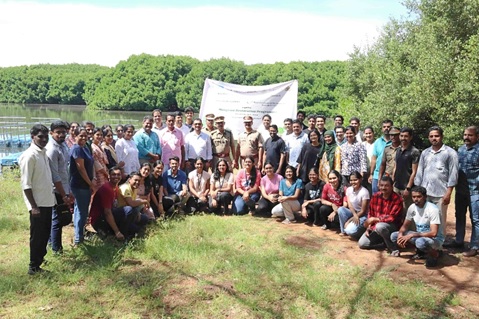
Links to publicly accessible description/evidence:
https://aboutnitte.blogspot.com/2025/10/news-from-nucser-awareness-program-on.html
NSS Annual Special Camp — Moodubelle
NUINS conducted its Annual Special Camp from 3–8 March 2025 at St. Lawrence Aided High School, Moodubelle. Importantly, the activities included community and school awareness programmes, field visits, street plays and first-aid training, along with environmental activities.
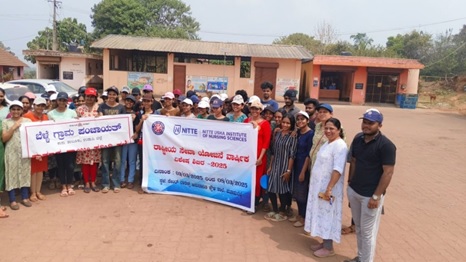
Links to publicly accessible description/evidence:
https://nitte.edu.in/nuins/news-details.php?id=1244
CPR & Free Health Check-up Awareness Camp
NUINS, in association with Swastika National Business School and supported by JCI Mangalore Samrat and MSEZ, conducted an awareness camp on CPR and free health check-up on 19 October 2025. The event reached 110 beneficiaries. Participants received health education and were taught CPR through demonstrations using mannequins.
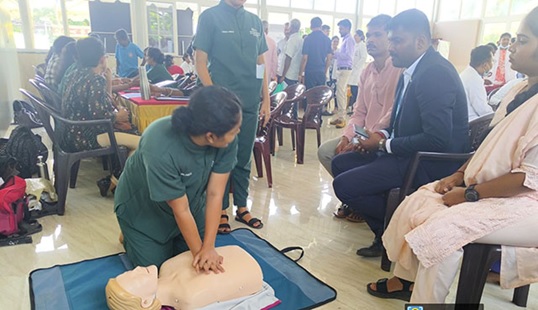
Links to publicly accessible description/evidence:
https://www.daijiworld.com/index.php/news/newsDisplay?newsID=1296074
https://nitte.edu.in/nuins/news-details.php?id=1409
EV Rally – Sustainable Transportation Awareness
The Sustainable Development Cell and NSS Unit of Nitte University organized an Electric Vehicle Rally on 18th November 2025 to raise awareness among the public about sustainable and eco-friendly transportation. The activity explicitly addressed sustainable mobility and was connected with the University's SDG initiatives.
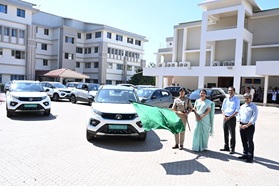
Links to publicly accessible description/evidence:
https://aboutnitte.blogspot.com/2025/12/nitte-university-organizes-electric.html
https://daijiworld.com/news/newsDisplay?newsID=1301056
NSS Special Camp – Government School, Innoli
NUCSER's NSS Cell conducted a five-day special camp from 13–17 June 2025 at DK Zilla Panchayat Higher Primary School, Innoli. The programme included talks, workshops, oral-hygiene education, albinism awareness, nutrition assessment, food-adulteration demonstrations, blood-group testing, science activities, quizzes and other educational activities for school children.
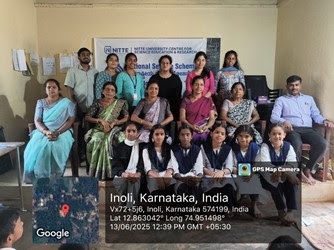
Links to publicly accessible description/evidence:
https://aboutnitte.blogspot.com/2025/07/news-from-nucser-nss-camp-at-government.html
Public Awareness Programme on Plastic and Fabric Waste Management and Tree Planting
Nitte Institute of Physiotherapy organized the “Service to Sacred – Clean Souparnika, Green Kollur” community outreach programme at Kollur on 5 June 2025. The programme educated the general public on the harmful effects of plastic and fabric waste and promoted tree planting for environmental conservation. A total of 110 students and 3 faculty members participated along with local stakeholders.
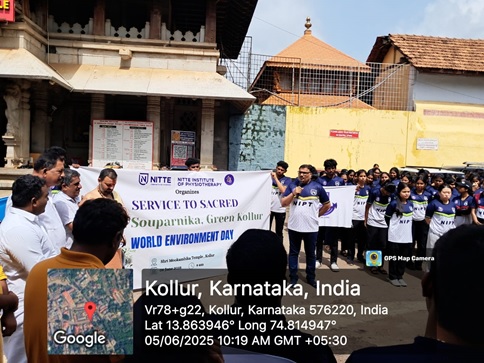
Links to publicly accessible description/evidence:
https://aboutnitte.blogspot.com/2025/06/news-from-nipt-clean-souparnika-green.html
Community Awareness Walkathon on Sustainable Fisheries
NITTE-GOK CoE AQUAMARIN, NUCSER, in association with the NSS Cell of NitteDU and Rotary Club Mangaluru, organized a 5-km walkathon on “Together Against Overfishing” at Tannirbhavi Beach on 28 December 2025. The initiative created public awareness about the impacts of overfishing, promoted sustainable fishing practices, and encouraged community participation in marine conservation. More than 250 students, members of the public, environmental enthusiasts and fishermen participated.
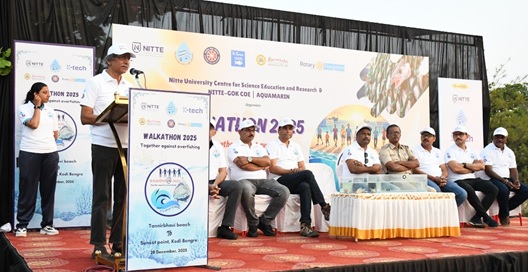
Links to publicly accessible description/evidence:
https://aboutnitte.blogspot.com/2025/12/news-from-nucser-nittes-walkathon.html
https://www.daijiworld.com/news/newsDisplay?newsID=1302150
Community Awareness Programme on Breastfeeding and Eye Health
Nitte Usha Institute of Nursing Sciences, in collaboration with Durgavahini Mahila Mandal, Kuthar, and the Department of Ophthalmology, KS Hegde Medical Academy, conducted a community awareness programme and ophthalmic screening camp on 6 August 2025. The initiative educated the local community on the importance of breastfeeding for maternal and child health and promoted awareness of early detection and prevention of vision-related problems.
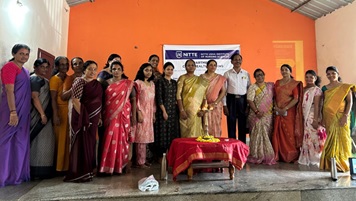
Links to publicly accessible description/evidence:
https://www.daijiworld.com/index.php/news/newsDisplay?newsID=1288541
Free dental screening and oral health awareness program:
Nitte University, in collaboration with Rotary Club, Surathkal, and Mahila Mandala, Kulai, conducted a free dental treatment and oral health awareness camp on 24 August 2025. The programme provided oral health education and dental care to 26 community members.
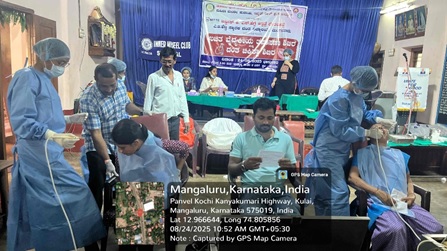
Links to publicly accessible description/evidence:
https://aboutnitte.blogspot.com/2025/08/news-from-absmids-free-dental-treatment.html
Cleanliness drive in association with Ramakrishna Mission - Swachh Mangaluru Abhiyan
Nitte University, through the Nitte Institute of Physiotherapy, in association with Ramakrishna Mission, Mangaluru, conducted a Swachhata Shramadan at the Panchayat Office, Hampankatta, on 7 December 2025, involving the cleaning of areas outside the office premises and the adjacent areas within the compound.
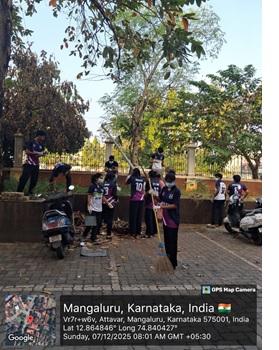
Links to publicly accessible description/evidence:
https://aboutnitte.blogspot.com/2025/12/news-from-nipt-swacch-sena-event.html
Life skill training program
NUCSER conducted a Life Skills Training Programme as part of its NSS Special Camp at Anandashrama Government High School, Kotekar, from 17–21 November 2025. The programme provided basic life-skills training to approximately 165 school students, focusing on personal development and essential life competencies.
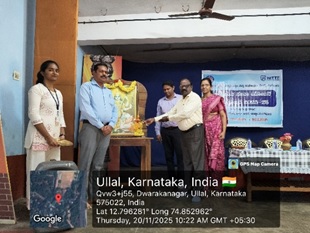
Links to publicly accessible description/evidence:
https://aboutnitte.blogspot.com/2025/12/news-from-nucser-nss-special-camp.html
Blood Donation Awareness and Community Blood Donation Drive
The NSS Unit, Youth Red Cross, and Red Ribbon Club of Nitte Institute of Professional Education organized a Blood Donation Camp on 25 January 2025 at the KSRTC Bus Stand, Mangaluru. The initiative raised awareness about the importance of voluntary blood donation and encouraged students, staff, and members of the public to participate in the drive.
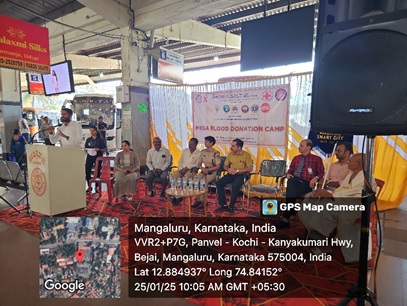
Links to publicly accessible description/evidence:
https://aboutnitte.blogspot.com/2025/01/news-from-nipe-blood-donation-drive.html
Awareness Program on Water Conservation and Irrigation Practices:
NUCSER, in collaboration with the Department of Horticulture, Bantwal, and local farmers’ organizations, conducted a Water Conservation and Micro-Irrigation Programme for farmers at Navashakthi Yuvaka Mandala on 25 November 2025. The programme provided practical awareness on water conservation methods and micro-irrigation technologies, including drip irrigation, micro-jets and filtration systems, while also highlighting government schemes supporting sustainable irrigation practices.
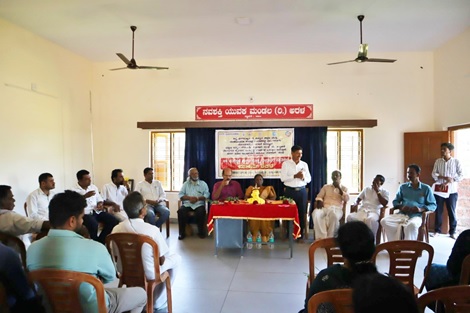
Links to publicly accessible description/evidence:
https://aboutnitte.blogspot.com/2025/12/news-from-nucser-water-conservation-and.html
Anti-Drug Awareness Programme
Nitte Institute of Professional Education, in association with the Mangaluru City Police and Dakshina Kannada District Police, organized an Anti-Drug Awareness Programme on 26 June 2025 at Town Hall, Mangaluru, to mark the International Day Against Drug Abuse and Illicit Trafficking. The programme educated students on the harmful effects of drug abuse and encouraged them to promote a drug-free and healthy lifestyle.
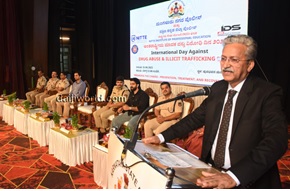
Links to publicly accessible description/evidence:
https://www.daijiworld.com/news/newsDisplay?newsID=1284556
Climate Change Awareness and Action through NCAP 2025
Nitte University conducted NCAP 2025, a community outreach initiative that engaged school students in climate change awareness, sustainability and responsible environmental practices. The programme promoted behavioural change and encouraged young participants to take an active role in climate action and environmental conservation, reaching nearly 10,000 students.
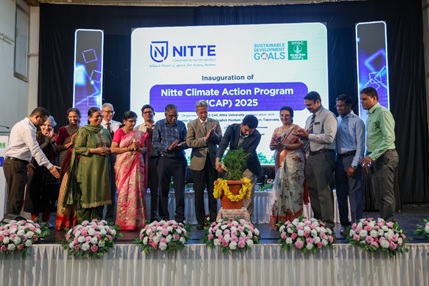
Links to publicly accessible description/evidence:
https://www.daijiworld.com/news/newsDisplay?newsID=1290315
https://www.youtube.com/watch?v=1P8F9NDddAk
Televised Health Education Programme for the General Public – Neevu Kshemave?
Nitte University, through its health professionals, conducts “Neevu Kshemave?”, a weekly television-based health-awareness programme on Daijiworld TV. The programme provides the wider community with accessible information on health, disease prevention and healthy living through expert discussions, question-and-answer sessions and audience interaction.
Links to publicly accessible description/evidence:https://www.youtube.com/watch?v=l2n0oMK4fgw
https://www.youtube.com/watch?v=zbYuvNBmT88
Activities with participation of alumni
Alumni Interaction on Filmmaking, Sustainability and Marine ConservationNitte Institute of Architecture hosted a screening and discussion of Samudrada Motte (Ocean’s Egg), a documentary on coastal communities and marine conservation. Alumnus, architect and filmmaker Mr. Sathvik P S introduced the film and shared insights on environmental challenges, filmmaking and sustainability. The session highlighted social responsibility and encouraged students to align their professional practices with SDGs, particularly Climate Action and Life Below Water.
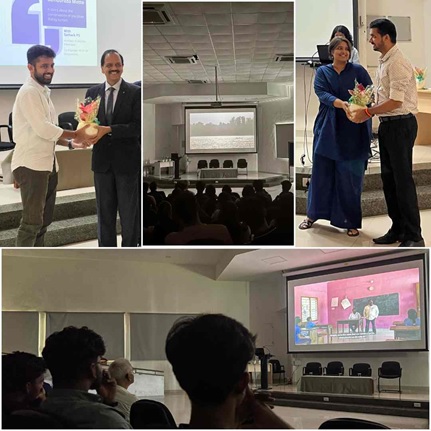
Links to publicly accessible description/evidence:
https://nitte.edu.in/nia/news-details.php?id=1371
Alumni talk on “Neuroplasticity and flat feet: How sensory feedback can influence foot”
The Alumni Relations Cell of NIPT organized an online alumni talk on 27th March 2025 featuring Ms. Susan Catherine Dsouza, MPT 2015 alumna and practicing physiotherapist. She delivered an insightful session on neuroplasticity, flexible flat feet, and recent advancements in physiotherapy. A total of 39 MPT students participated.
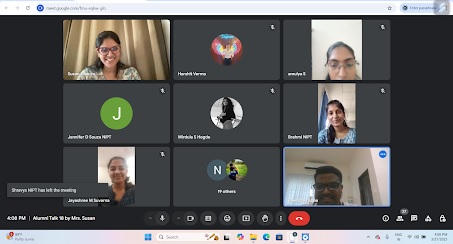
Links to publicly accessible description/evidence:
https://aboutnitte.blogspot.com/2025/03/news-from-nipt-alumni-talk-18.html
Alumni talk on Contemporary Assessment and Evidence-Based Physiotherapy for Knee Osteoarthritis: Leveraging Modern Tools and Technologies
The Alumni Relations Cell of Nitte Institute of Physiotherapy organized a webinar on “Contemporary Assessment and Evidence-Based Physiotherapy for Knee Osteoarthritis” on 15th May 2025 via Google Meet. Ms. Anjaly Anna Biju, MPT 2014 alumna and Assistant Professor at Lourde Institute of Allied Health Sciences, shared insights on assessment and evidence-based management of knee osteoarthritis using modern tools and technologies. A total of 64 postgraduate students actively participated in the session.
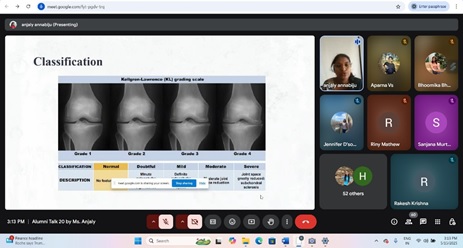
Links to publicly accessible description/evidence:
https://aboutnitte.blogspot.com/2025/03/news-from-nipt-alumni-talk-18.html
Alumni talk on Industry Meets Clinical Need: Equidor’s Innovations in Vestibular Science
Nitte Institute of Speech & Hearing organized an Industry-Academia Collaborative Alumni Interaction on 8th August 2025 at Pragyan Hall, ABSMIDS. Mr. Arjun Namboothiri K, alumnus and Audio Vestibular Consultant at Equidor Medtech, Bengaluru, delivered a session on “Industry Meets Clinical Need: Equidor’s Innovations in Vestibular Science.” The interaction aimed to connect industry innovations with clinical practice, with active participation from 3rd year B.ASLP, MSc. Audiology students and faculty.
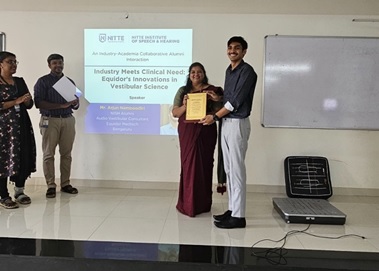
Links to publicly accessible description/evidence:
https://aboutnitte.blogspot.com/2025/08/news-from-nish-industry-meets-clinical.html
Alumni Interaction on Behavioral Auditory Processing Tests
The Alumni Association of Nitte Institute of Speech & Hearing organized an Alumni Interaction on 8th November 2025. Mr. Aditaya Narayana Singh, MSc Audiology alumnus and practising audiologist, shared his expertise on the demonstration and interpretation of Behavioral Auditory Processing Tests. Postgraduate students and faculty participated in the session.
Links to publicly accessible description/evidence:https://nitte.edu.in/nish/news-details.php?id=1419
Alumni Interaction on ABA in Speech-Language Therapy
The Alumni Association of Nitte Institute of Speech and Hearing organized an Alumni Interaction on 24th September 2025 at Chintana Hall, Justice K S Hegde Charitable Hospital. Ms. Sadaf Fareed, BASLP alumna and practicing Paediatric Speech Language Pathologist in Kuwait, shared insights on Applied Behavioural Approach (ABA) and its integration into speech-language therapy, including DTT, AAC and FCT. Undergraduate and postgraduate students and faculty participated in the session.
Links to publicly accessible description/evidence:https://nitte.edu.in/nish/news-details.php?id=1388
Activities with participation of displaced people
Koraga Dictionary – Documentation and Preservation of Koraga Folk KnowledgeThe Dr. K. R. Shetty Centre for Tulu Studies, Nitte, undertook the Documentation of Koraga Folk Knowledge and Koraga Dictionary project to preserve the language, traditional knowledge and cultural heritage of the Koraga community. The project documented Koraga vocabulary, oral traditions, annual rituals and cultural practices and resulted in the development of a digital Koraga Dictionary. The project was carried out from April 2022 to March 2025, providing a lasting resource for linguistic and cultural preservation.
Links to publicly accessible description/evidence:
https://tulucentre.nitte.edu.in/koraga
Educational Outreach to the Tibetan CommunityOn 17 July 2025, NITTE hosted Venerable Geshe Lhakdor for an educational outreach session on the four principal commitments of His Holiness the 14th Dalai Lama. The session facilitated knowledge exchange on human values, interfaith harmony, cultural and environmental preservation, and ancient wisdom, promoting compassion, ethical responsibility and social harmony among students and the wider community.
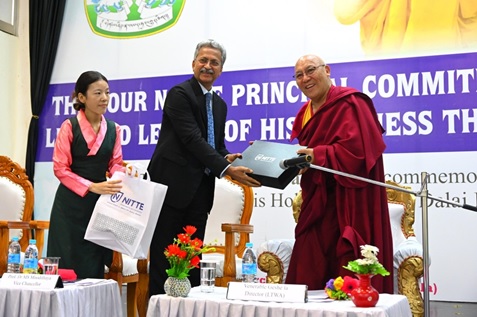
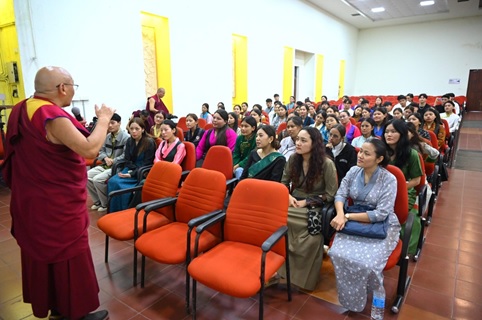
Links to publicly accessible description/evidence:
https://tibet.net/geshe-lhakdor-discusses-on-four-principal-commitments-of-his-holiness-at-nitte-and-yenepoya-university/
Health Outreach and Genetic Study on Tuberculosis among the Tibetan refugees
The Nitte Usha Institute of Nursing Sciences (NUINS) organized a community-based health program for the Tibetan population residing in Mundgod, Hubli District, on 22nd November 2025. The primary objective of the initiative was to assess the participants’ health status, health behaviors, and nutritional practices, and to identify genetic markers associated with Tuberculosis (TB) among the Tibetan community.
In addition to the assessment, the program aimed to raise awareness about TB and lifestyle-related disorders, emphasizing preventive healthcare and healthy living practices. The activities were conducted at the Mundgod DTR Health Centre and in the old age homes of the Tibetan community.
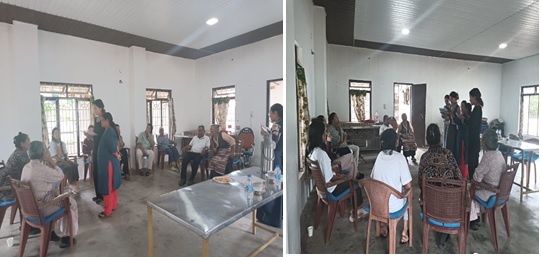
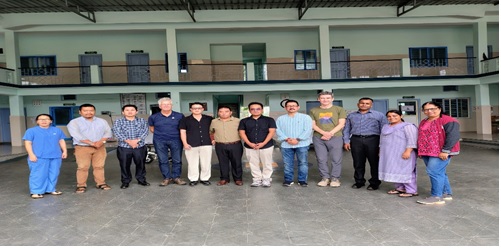
Awareness Programme for Children with Special Health Care Needs
On 20 January 2025, N-SPECC, in collaboration with the Block Education Office (Mangalore South) and ABSMIDS, conducted an educational outreach programme for children with special healthcare needs and their caregivers on the health risks of prolonged mobile phone use. With 125 participants, including 100 children with special needs and their parents, the programme provided practical guidance on protecting visual, oral and mental health and reducing excessive screen exposure.
Links to publicly accessible description/evidence:https://aboutnitte.blogspot.com/2025/02/news-from-absmids-awareness-programme.html
Holistic Health Education for Children with Special Healthcare Needs
On 8 January 2025, N-SPECC and the Block Education Office, Moodbidri, conducted an awareness programme for 140 parents and 10 special educators on the holistic well-being of children with special healthcare needs. The session covered oral hygiene, interdisciplinary therapies, balanced nutrition, emotional support and the impact of excessive screen time and unhealthy eating habits, equipping caregivers and educators with practical strategies for healthier lifestyles.
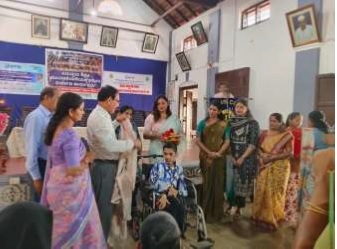
Awareness Programme on Mobile Addiction and Its Effects on Children with Special Healthcare Needs
The awareness programme held on 20 February 2025 at Vimshathi Bhavan brought together 100 children with special healthcare needs, their parents and special educators. Organised by N-SPECC and ABSMIDS in collaboration with the Block Education Office, Mangalore South, and the Departments of Ophthalmology and Psychiatry, KSHEMA, the programme addressed the impact of excessive screen use on vision, behaviour, learning, emotional well-being, eating habits and oral health, equipping caregivers and educators with practical strategies for healthier lifestyles.
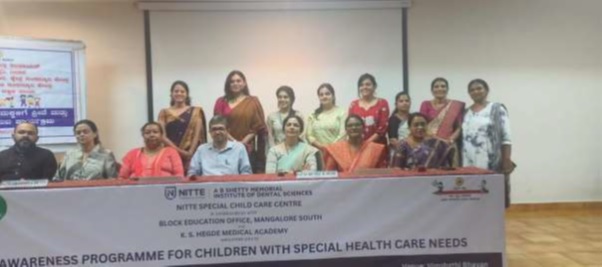
Distribution of Aids and Appliances for Children with Special Healthcare Needs
A programme held on 9 October 2025 at Avishkar Hall enabled N-SPECC, in collaboration with the Department of Pediatric and Preventive Dentistry, ABSMIDS, with support from MRPL, to distribute aids and appliances to children with special healthcare needs. The initiative included dental and paediatric screening and promoted disability awareness, inclusion and access to essential healthcare support for children with physical disabilities.
Regular Medical Camp for the Endosulfan Victims
Nitte DU organizes monthly free medical camps specifically for Endosulfan victims in Puttur Taluk, aiming to provide essential healthcare services to those affected by the toxic exposure. These camps offer free consultations with specialized doctors, ensuring that victims receive tailored medical advice for their ongoing health concerns. Comprehensive health check-ups are conducted to monitor the victims' overall well-being, with a particular focus on conditions such as neurological disorders, chronic diseases, and physical disabilities. Blood pressure monitoring is regularly done to detect and manage any cardiovascular issues, which are common among the affected population. The victims are also provided with free medications to address both acute and chronic health issues, making these camps a crucial part of their healthcare and rehabilitation journey. Through these consistent efforts, Nitte DU aims to improve the quality of life for Endosulfan victims by ensuring accessible and continuous healthcare support. During 2025 Regular medical camps were conducted on 15 February, 15 March, 19 April, 21 June, 19 July, 20 September, 18 October, 15 November and 20 December 2025 at Panaje Primary Health Centre, Puttur Taluk, in collaboration with Panaje PHC and the District Health Officer, Dakshina Kannada.
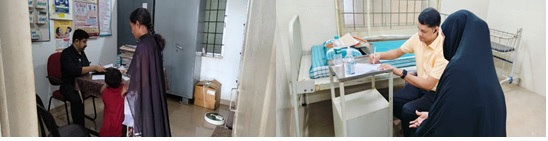
Nitte University recognizes the critical role its students will play in shaping a sustainable future, both locally and globally. By measuring sustainability literacy, the university aims to gauge the level of understanding among students regarding sustainable practices and identify areas for improvement, ensuring that its academic programs remain aligned with global sustainability standards. This initiative is a step toward fostering a culture of environmental responsibility and preparing graduates who are equipped to make meaningful contributions to a sustainable society.
To help assess and enhance your own sustainability literacy, we invite you to participate in a brief survey. Your insights will not only benefit your personal growth but also contribute to shaping a more sustainable campus community. Click the link below to take the survey now!

Sustainability Literacy Survey Report 2025
- Introduction
- Methodology Students were encouraged to actively participate in the online survey through the following link:
- What is the purpose of the United Nations Sustainable Development Goals (SDGs)?
- How many Sustainable Development Goals (SDGs) are there in total?
- What are the goals of sustainable development?
- Which gas is the largest contributor to climate change?
- What does the term “carbon footprint” refer to?
- Which of the following practices is most effective in reducing water usage?
- Which of the following is a renewable energy source
- What is the significance of the Paris Agreement adopted in 2015 by the United Nations?
- What does “sustainable agriculture” primarily aim to achieve?
- What is the primary purpose of recycling?
- Results
- Analysis and Interpretation
- Questions 6 (93.09%) and 7 (93.09%), followed by Question 5 (92.82%), recorded high percentages of correct responses, reflecting good awareness of rainwater harvesting, renewable energy sources, and carbon footprint.
- Questions 9 (91.99%), 8 (91.16%), and 10 (91.16%) also showed high accuracy, indicating sound knowledge of sustainable agriculture, the Paris Agreement, and recycling practices, respectively.
- Question 3 (89.78%) demonstrated good understanding of sustainable development principles, while Question 4 (86.19%) indicated that most students could correctly identify carbon dioxide as a major greenhouse gas contributing to climate change.
- However, Question 2 (78.73%) recorded the lowest accuracy, revealing a relative knowledge gap regarding the total number of SDGs (17). This suggests a need to strengthen students’ familiarity with the complete SDG framework.
- Overall, the average correct response rate was 90.31%, indicating a strong level of sustainability awareness among the participating students. Further awareness activities could focus on reinforcing knowledge of all 17 SDGs and strengthening understanding of individual SDG targets.
The Sustainability Literacy Survey was conducted among students to assess their awareness and understanding of sustainability concepts and practices. The initiative aimed to evaluate students’ familiarity with global sustainability frameworks such as the United Nations Sustainable Development Goals (SDGs), climate change, renewable energy, and environmental conservation. This activity reflects the university’s commitment to promoting sustainability education and fostering environmentally responsible behavior among students.
https://form.jotform.com/242742728687066
The survey consisted of ten multiple-choice questions (MCQs) covering key aspects of sustainability literacy. The questions focused on areas such as global sustainability goals, carbon footprint, renewable energy, climate change, water conservation, and sustainable agriculture.
The questions included were as follows:
The responses were compiled and analysed to determine the percentage of correct answers for each question. The results are depicted in the Figure 1.
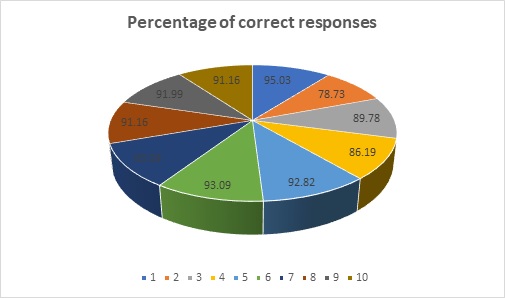
The survey results indicate a generally strong level of sustainability awareness among the participating students.
The highest accuracy was observed for Question 1 (95.03%), demonstrating that most students clearly understood the purpose of the United Nations Sustainable Development Goals (SDGs).
Conclusion
The SDG awareness survey revealed a high overall level of sustainability awareness among the participating students, with an average correct response rate of 90.31% across the 10 questions. Students demonstrated good understanding of the purpose of the SDGs, climate change, renewable energy, water conservation, sustainable agriculture, and recycling practices. However, comparatively lower accuracy in identifying the total number of SDGs indicates scope for further improvement. It is recommended that the institution strengthen SDG awareness through educational programmes, interactive sessions, quizzes, and student-led sustainability activities to enhance understanding of all 17 SDGs and encourage their practical application in daily life.